
What is the Feynman Technique, and does it really work?
Have you ever wished how you can learn any concept with ease and retain it for a long time? Well, I tried the Feynman's learning technique for my exams, and here's my honest opinion about it.

If you can't explain it simply, you don't understand it well enough.-Albert Einstein
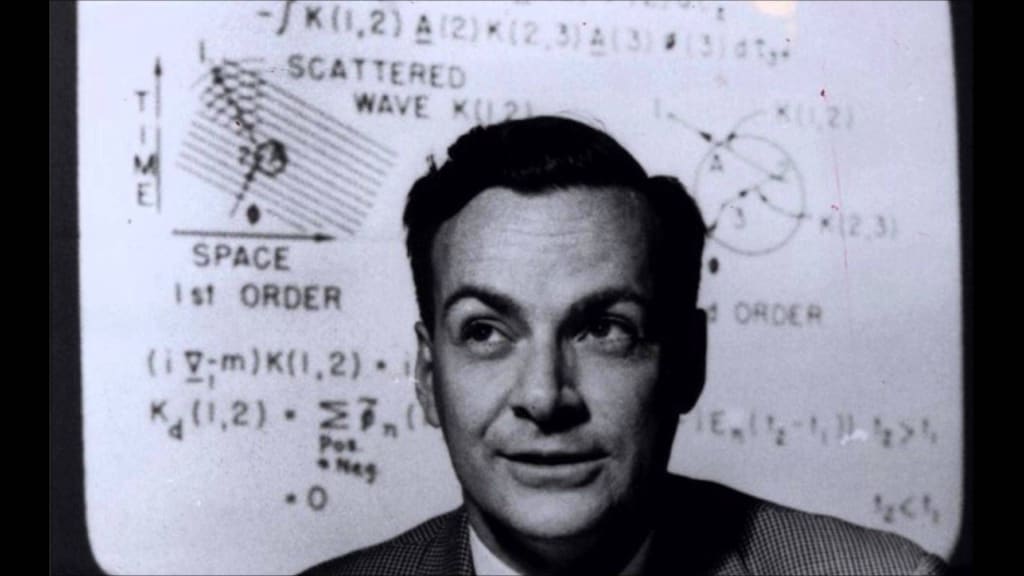
Richard Feynman (1918 – 1988) was an American theoretical physicist.
Throughout his career, he has contributed a lot to the scientific community and worked on many projects though still, the one thing that makes him memorable in our times is his unique way of teaching.
Students from his class would often describe that he always taught in a way that was so simple that even someone with a meager scientific background could easily grasp the problematic scientific concepts
His reputation as a teacher rose during the early '60s when he did an introductory course which was later combined into the three-part- The Feynman Lectures on Physics.
He was someone whose intellect as compared to the likes of Newton and Einstein and I believe that his teaching profession helped him to be such an impactful individual in the scientific world and the whole Feynman's technique is an amazing byproduct of this.
There are four parts to this technique and it's a constant cycle that makes sure you get a clear picture of the topic.
1. Learn about the topic
In the first step we obviously have to choose a subject to study, and for this, you can select anything under the wide bright sky.
Now start going through it, In this step, you can simply go through the topic and just make sure to get the basic foundations into your mind.
One thing I like to do at this part is to write down small capsules or pointers of what I've learned into a notepad and that helps me a lot. There are some people who'd like to read it out loud to get their minds on track.
Use whatever way that suits your personal preference but make sure you get a clear basic idea about the subject.
2. Explain the topic to a sixth-grader
This is where the whole magic of Feynman's technique takes place, and you could even say this part is the heart and soul of the entire Feynman's technique.
So, imagine a sixth-grader in front of you, he has come to his favorite class of the day and is looking at you for something to learn.
You then start explaining to him what you've just learned, try to keep your language simple, use stories, drawings to make him fully understand the topic.
As I mentioned earlier teaching assisted Feynman to be a great scientist and that is because that teaching improves the teacher’s learning because it compels the teacher to retrieve what they’ve previously studied.
It's also known as the testing effect.
3. Review and Refine
After we've done our teaching let's now go and revisit that discussion with our imaginary 12-year-old.
Were you able to able teach him well? Did you have any difficulties in getting your ideas into words? Or was it explained in a way that's too complicated that our sixth-grader found it hard to grasp?
If your answer to any one of these is 'Yes' then you gotta work on your subject, because if you couldn't explain it to another person in simple words; my dear friend, you yourself have not understood it quite well enough.
To get more insight about the subject whether it be books, research papers, or any kind of resource that you can use.
4. Simplify and Continue
After you've got all that you've need, let's now make it a better version of what we intended to teach in step two.
For this last step, you'll leave all the gimmicks, the fancy pansy wordplay and come up with your own definition of this specific subject.
To do this, you will want to use simple terms when you write the ideas or concepts in your own words. While complex, subject-specific jargon sounds cool, it confuses people and stops them from paying attention.
Replace technical terms with simpler words, and think of how you could explain to our sixth-grader. Also, make use of some analogies to make it more clear.
Why does this technique work so well?
I actually wanted to write this article for over two months now and the reason I stopped was to really make sure it's really effective in learning and not a fad.
So I had my exams last month and in preparation for those I used these 4 step processes and I created a routine for my days.
I would do each of the four steps and take a break in between them. It was hard at first to keep the commitment to follow it. But still, I did it and I did this prior to each of my exams, and guess what, I scored full A's on all my subjects.
Now I can confidently say that this is something that any student or just anyone should definitely try out once in a while.
But I do admit, It's not something that helps you to byheart everything, but a way to understand concepts and have that 'aha' moment.
Conclusion
The Feynman Technique is a helpful learning tool that breaks down the complexity of a subject into easily understandable points and gives you an opportunity to really grasp learning materials and concepts.
When you are just byhearting stuff what happens is that after a while it just fades away whereas when you truly understand and learn it by your own language it's gonna stick much longer.
By constantly practicing the Feynman Technique, I am sure that you will be able to develop the skill of understanding concepts and coming up with your new unique ideas with it.
Thanks for reading.
About the Creator
Jevmar Hex
Musician/ Writer
Keep reading
More stories from Jevmar Hex and writers in Journal and other communities.
Hindustan Power Accelerates India’s Clean-Energy Push with New 150 MW Solar and Storage Project Under Ratul Puri’s Leadership
New Delhi — In a significant move that underlines India’s accelerating transition to cleaner power, Hindustan Power has secured a major renewable energy contract to develop a 150 MW solar project integrated with advanced battery storage — a development that Chairman Ratul Puri says reinforces the company’s commitment to future-ready energy infrastructure.
By Chinmaya Singh6 days ago in Journal
Silver Screen Magic with Mae West
American actress and singer Mae West became a popular film actress during the Great Depression. She started entertaining in vaudeville, then performed on Broadway, and finally went to Hollywood. She signed up with Paramount Pictures and made her debut in the 1932 film “Night After Night.” She also starred in musicals, comedies, and crime dramas. The American Film Institute named her one of the best classic Hollywood actresses.
By Rasma Raisters5 days ago in Geeks



Comments