
The Untold Sides of 'The Hobbit Trilogy'
The Lord of the Rings and The Hobbit are masterpieces by J.R.R. Tolkien.

Th
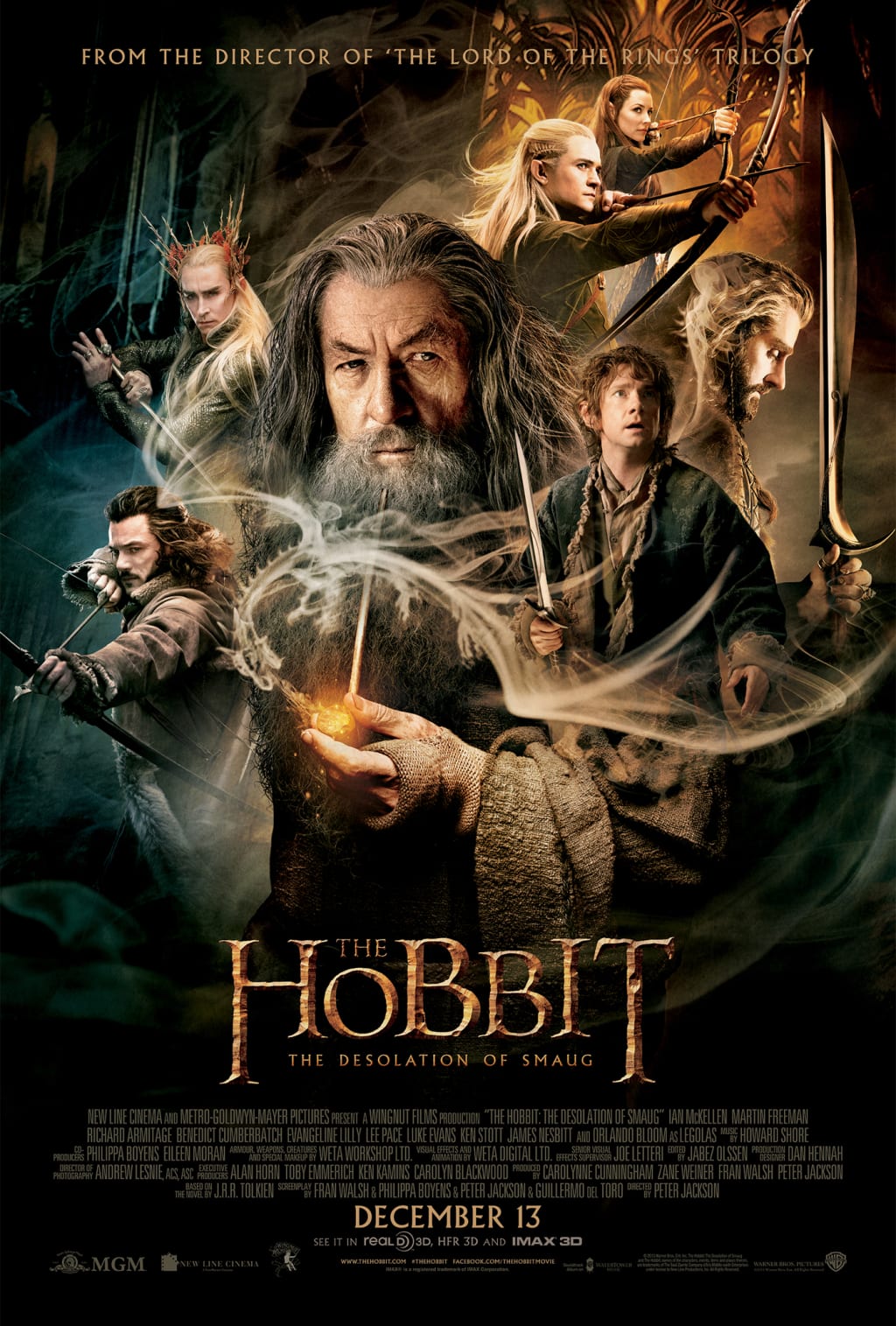
The globally acclaimed fantasy saga The Lord of the Rings and The Hobbit are masterpieces by J.R.R. Tolkien. Brought to life on the silver screen by director Peter Jackson, The Lord of the Rings trilogy focused on Frodo Baggins of the Shire. A decade later came its prequel, The Hobbit Trilogy, with Frodo's uncle Bilbo Baggins taking center stage. Though it didn’t quite match The Lord of the Rings in success, The Hobbit Trilogy was fairly well-received. Today’s piece explores some lesser-known facts about The Hobbit Trilogy, which is set 77 years before The Lord of the Rings.
1. Tolkien started drafting The Hobbit around 1928. This means the story predates The Lord of the Rings and serves as its prequel. Interestingly, Tolkien had left the story half-finished. A student of his, Elaine Griffith, brought the unfinished manuscript to a publisher friend, who was highly impressed. Upon Griffith’s encouragement, Tolkien completed the tale. Hence, she played a crucial role in bringing Middle-earth’s enchanting fantasy to the world.
2. In 1994, director Peter Jackson wanted to adapt The Hobbit into a film after being inspired by the 1978 animated The Lord of the Rings. His original plan was to follow up with two Lord of the Rings films. However, due to creative differences with the production house Miramax, the project stalled. Eventually, New Line Cinema stepped in, helping bring both trilogies to the big screen.
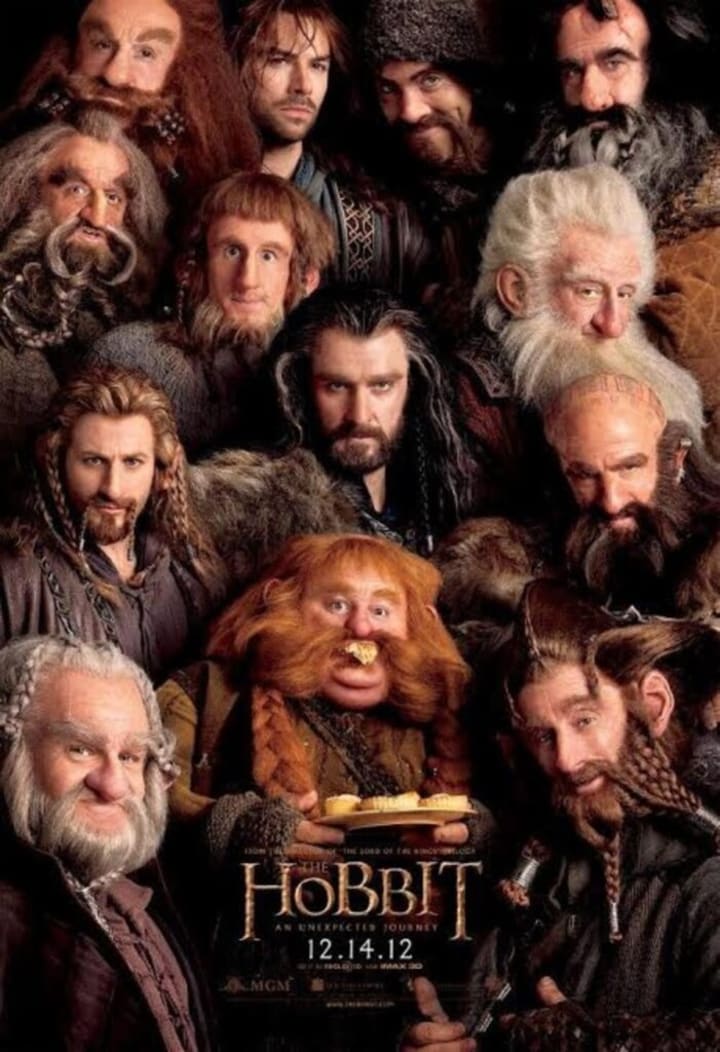
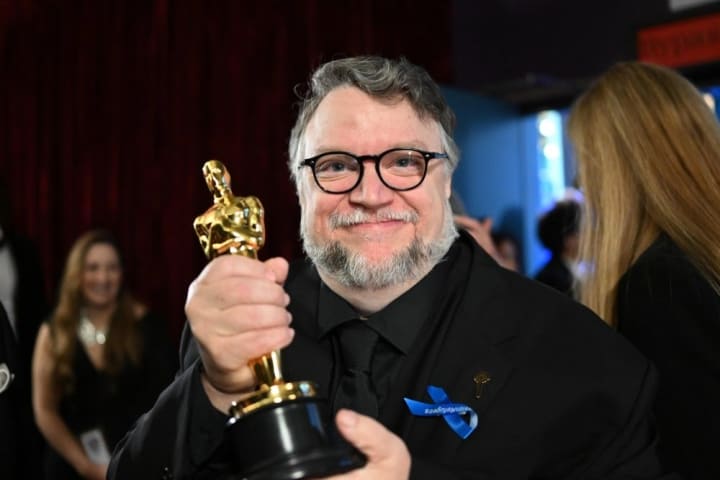
3. In 2010, the project was offered to acclaimed director Guillermo del Toro. But a series of problems—especially financial issues—arose before filming could begin. There wasn’t enough budget for the multiple shooting locations. Meanwhile, Tolkien’s book publishers filed a lawsuit against Warner Bros. over royalty disputes. Faced with mounting issues, del Toro exited the project, leaving the reins to Peter Jackson.
4. Many major actors were considered for the role of Bilbo Baggins, including Shia LaBeouf, James McAvoy, Daniel Radcliffe, and Tobey Maguire. However, Peter Jackson eventually cast British actor Martin Freeman. Freeman’s schedule, packed with BBC’s Sherlock, posed a challenge
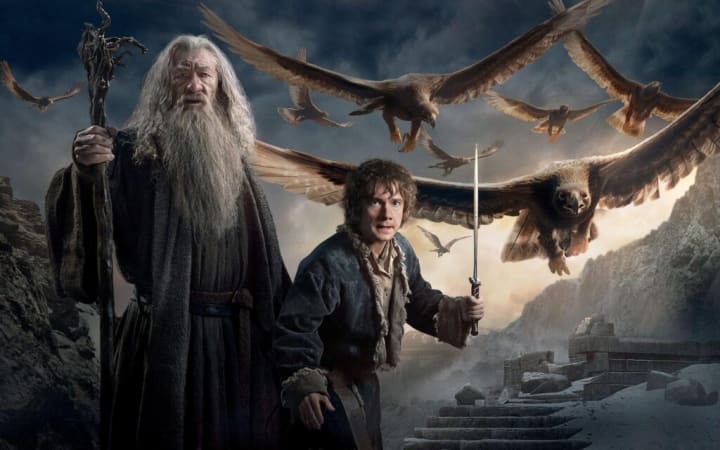
5. Del Toro had initially imagined Ron Perlman voicing the mighty dragon Smaug. But Jackson gave the role to Doctor Strange star Benedict Cumberbatch. Not only did Cumberbatch voice Smaug, but he also performed the motion capture for the character.
6. One of the trilogy’s prominent characters, the elven warrior Tauriel, never appeared in Tolkien’s original The Hobbit. She was a creation of Peter Jackson, added for cinematic effect and played brilliantly by Evangeline Lilly. Despite auditioning for several roles in The Lord of the Rings, she hadn’t been cast—yet Jackson remembered her and gave her this opportunity. The same goes for Legolas. Though his lineage is mentioned in The Hobbit, he himself isn’t part of the original story. Still, Jackson added both characters, and they became fan favorites.
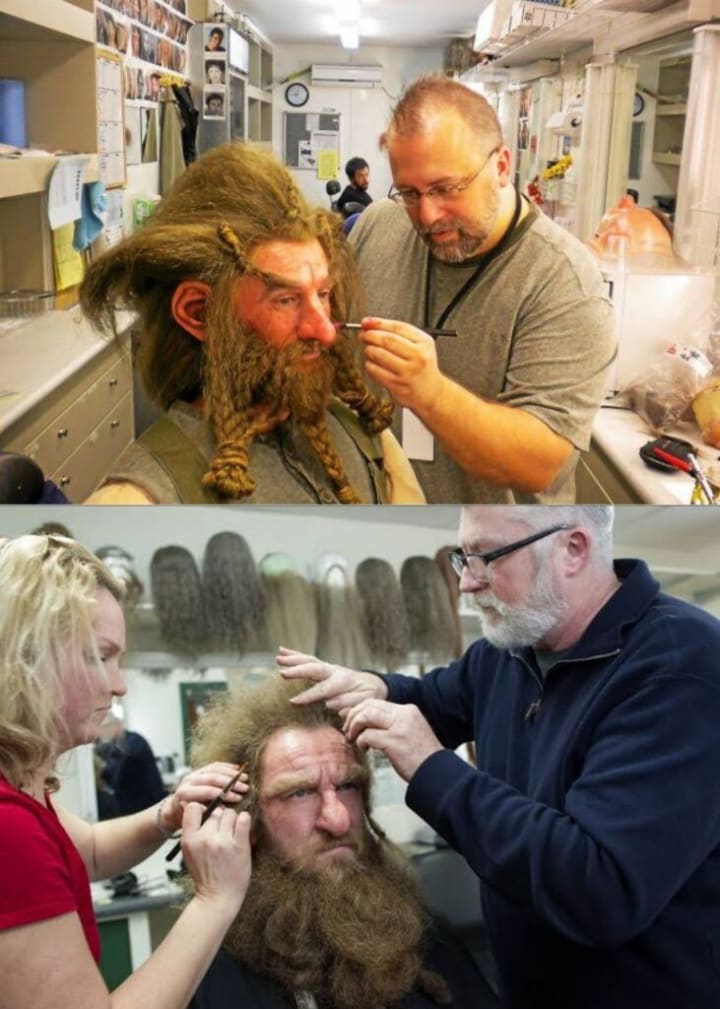
7. The dwarves’ signature bushy beards and hair in the trilogy were not human hair. They were made from the wool of yaks. The production house spent around $10,000 on hair extensions.
8. In An Unexpected Journey, Gollum returns, played again by Andy Serkis. Thanks to advances in motion capture and CGI, Serkis and Martin Freeman could film the mountain scene together. It took ten days to complete the shoot. Serkis also worked as a second unit director for that scene, drawing from his experience as Gollum in The Lord of the Rings.
9. Smaug the dragon was one of the trilogy’s biggest attractions. Rendering a single scale of the dragon digitally took a full week per processor. New Zealand’s VFX company Weta Digital used a system with 50,000 CPUs and 170 terabytes of RAM—equivalent to the power of about 30,000 computers—to handle the visual effects and meet production deadlines.
10. Frodo Baggins does not appear anywhere in the original The Hobbit book, since it was published before The Lord of the Rings. Yet, Peter Jackson gave Frodo a cameo for nostalgic reasons. Elijah Wood returned to play Frodo after a decade. VFX was used to remove age lines and present him as his younger self.
11. FPS, or frames per second, refers to how many frames appear each second in a video. Standard films are shot at 24–30 fps. Increasing the frame rate makes the video look smoother. Peter Jackson made An Unexpected Journey the first Hollywood film to be shot at 48 fps, aiming for a more immersive experience. However, it backfired for some viewers, who felt it looked more like a behind-the-scenes documentary. Still, Jackson remained optimistic, believing 48 fps would one day become Hollywood’s standard.
12. With this innovation came challenges. Shooting in 48 fps made flaws more visible, overexposing makeup. Actors’ makeup appeared yellow, and facial shadows turned bluish. To fix this, an additional layer of light orange makeup was applied to all actors.
13. Following The Lord of the Rings, The Hobbit Trilogy also dominated the box office. The first film, with a budget of $180 million, grossed $1.17 billion. The second film cost $252 million and earned $960 million. The final film, made for $250 million, earned $962 million. However, unlike The Lord of the Rings, The Hobbit did not win any Oscars, receiving only three nominations in total.
About the Creator
Riham Rahman
Writer, History analyzer, South Asian geo-politics analyst, Bengali culture researcher
Aspiring writer and student with a deep curiosity for history, science, and South Asian geopolitics and Bengali culture.
Asp
Keep reading
More stories from Riham Rahman and writers in Journal and other communities.
Bayt al-Hikmah: Where Stars of Knowledge Once Shone
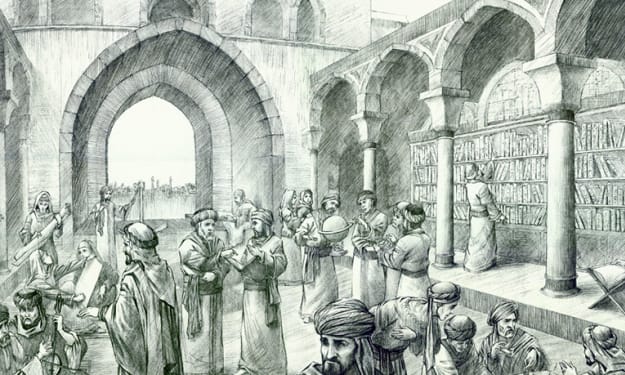
During the Abbasid Caliphate, Baghdad emerged as a center of intellectual and economic excellence. One of the most iconic examples of their support for scientific advancement was the famous library of Baghdad, Bayt al-Hikmah—known in English as the House of Wisdom. From around the 5th to at least the 9th century, its collection was considered the largest in the world. The halls of this institution were always abuzz with the presence of prominent scholars of the time.
By Riham Rahman 9 months ago in Journal
How to Begin a Relationship with Jesus
Step 1: Find a quiet space Begin in a place where you can notice yourself. This could be a room, a park, or the space between heartbeats. The quiet is not about absence of sound but about presence of attention. Bring no agenda, only awareness. The first step is to show up.
By Sound and Spirit3 days ago in Journal


Comments
There are no comments for this story
Be the first to respond and start the conversation.