fact or fiction
Is it a fact or is it merely fiction? Fact or Fiction explores the lesser known truths in the corporate culture of Journal.
Iran–Israel–U.S. War 2026: Gulf Cities on Edge as Missiles, Drones, and Airstrikes Shake the Middle East
The Middle East is once again at the center of global tension as the conflict between Iran, Israel, and the United States has escalated dramatically in 2026. In the past few days, coordinated airstrikes, ballistic missile launches, and drone attacks have pushed the region into one of its most dangerous moments in years. Gulf cities such as Abu Dhabi and Dubai have felt the shockwaves, while global markets and oil prices react to the rising instability.
By Waqar Khana day ago in Journal
The Numbers Behind the Name: Echos News ZA
Got myself into blogging, again. So I dusted my desk, laptop in front of me, cup of fresh tea. I searched for my blog account which had been sitting there for years — blank. Instead of writing a blog like everyone else, a News Hub idea came to me, and it sounded nice. Suddenly, a name appeared: ECHOS.
By Vongani Bandi2 days ago in Journal
The Queue That Never Ends. AI-Generated.
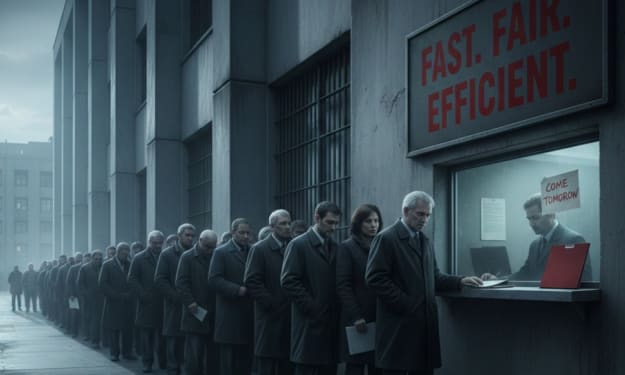
The line began before sunrise. By six in the morning, hundreds of people were already standing outside the gray concrete building. Some carried files wrapped carefully in plastic. Others held envelopes close to their chests, protecting them from dust, sweat, and the possibility of losing their only proof that their problem existed. At the front gate, a metal board read: Citizen Service Center — Fast, Fair, Efficient. Inside, only one window was open. Ahmed had arrived at 4:30 a.m. He was a schoolteacher. His problem was simple: his salary had been stopped for three months because the system showed him as inactive. Inactive. He taught five classes every day. His students still stood when he entered the classroom. They still asked him questions. They still called him sir. But the system did not recognize him. So he stood in the line. At 9:15 a.m., the gate opened. A guard stepped out and shouted, “Only the first fifty today!” The line broke instantly. Order turned into movement, movement into pushing. Files slipped from hands. Papers scattered across the ground. Voices rose in protest, then faded into tired silence. Ahmed checked his number. 73. The gate closed. “Come tomorrow,” the guard said without looking at anyone. “But we’ve been here since morning,” an elderly man pleaded. “Tomorrow,” the guard repeated. Ahmed came again the next day. And the day after that. On the fourth day, he finally reached the window. The clerk didn’t look up. “Form?” Ahmed handed over his application. “Wrong format.” “But this is the form from your website.” “Updated last week.” “Where can I get the new one?” “Counter 6.” Counter 6 was closed. By the time Ahmed found the correct form from a photocopy shop outside, the office was closing. “Come tomorrow,” the clerk said. Tomorrow had become a system. Weeks passed. His savings disappeared slowly — first the extra things, then the necessary ones. At home, he stopped turning on unnecessary lights. He postponed buying groceries until the last possible day. At school, nothing changed. He still explained lessons with patience. He still encouraged weak students. He still smiled. Only at night did he sit quietly, calculating how long he could continue like this. Still, the system showed him as inactive. One morning, while waiting in the line again, Ahmed began noticing the faces around him. A woman applying for her husband’s death certificate — rejected twice because one letter in the name didn’t match. A young graduate trying to correct his date of birth so he could apply for a job. An old pensioner who had traveled four hours just to prove he was still alive. The system had a different problem for each of them. But the solution was always the same. Wait. Return. Come tomorrow. Then Ahmed saw something strange. A man walked past the entire queue and went straight inside. No form. No waiting. Ten minutes later, he came out smiling. “Work done?” someone asked. “Yes,” the man replied casually. “I know someone inside.” The line grew quiet. No one reacted. Everyone understood. The next day, a man approached Ahmed. “You’ve been coming for many days,” he said softly. Ahmed nodded. “For a small service fee, your file can move faster.” “How fast?” Ahmed asked. “Today.” Ahmed looked at the building. At the closed counters. At the board that promised Fast, Fair, Efficient. “How much?” The amount equaled one week of the salary he hadn’t received. Ahmed hesitated. Then he paid. His case was resolved within hours. The system now showed him as active. Three months of salary were approved. Everything worked perfectly. The next morning, Ahmed returned to school. He stood before his students and began the lesson. “Today,” he said, writing on the board, “we will discuss honesty and fairness in society.” The chalk stopped. For a moment, he didn’t know how to continue. That evening, Ahmed passed the Service Center again. The line was still there. Long. Silent. Patient. A new banner had been installed outside: Digital Transformation Initiative — Making Services Faster Than Ever. Inside, only one window was open. And outside, tomorrow was already waiting.
By Sahar Rayyan3 days ago in Journal
SpongeBob Review
The episode “Employee of the Month” opens with a sun‑kissed burst of Bikini Bottom’s bustling morning, a kaleidoscope of pastel‑colored storefronts and the gentle hum of sea‑foam traffic that immediately immerses the viewer in the town’s whimsical routine. SpongeBob’s pineapple home, rendered in meticulous detail, glistens with dew‑spattered windows, while the ever‑cheerful glow of the Krusty Krab’s neon sign beckons like a lighthouse for the hungry and the hopeful. The animators employ a palette of saturated blues and bright yellows that echo the episode’s central theme of optimism, and the subtle background gags—such as a nervous sea cucumber nervously clutching a clipboard—layer the scene with a richness that rewards multiple viewings. This opening tableau sets a tone of earnest anticipation, foreshadowing the inevitable clash between genuine enthusiasm and corporate competition that forms the episode’s narrative spine.
By Forest Green3 days ago in Journal
SpongeBob Review
“The Chaperone,” a gem tucked within the first season of SpongeBob SquarePants, unfurls like a bright‑hued sea‑foam tapestry, each frame drenched in the buoyant optimism that defines the series while simultaneously slipping a sly, almost parental, commentary into the mix. The episode opens with Mr. Krabs anxiously appoints SpongeBob as the designated chaperone for his wide‑eyed school‑aged daughter Pearl for the prom after her date had stood her up. Also this is after everyone in the Krusty Krab including employee Squidward had said no. This is a role that both honors and lampoons the classic “big brother” trope. As SpongeBob dutifully agrees to be a chaperone for Pearl’s prom for a wonderful night, the viewer is treated to a cascade of meticulously animated details: the iridescent shimmer of coral arches, the gentle sway of kelp that seems to echo the nervous tremor in each child’s spine, and the ever‑present, reassuring glow of the school's neon sign that feels like a lighthouse guiding lost souls. The writing skillfully balances slapstick chaos—students darting into a fish‑food line, the inevitable slime‑splatter misadventure—with tender moments of affection, such as SpongeBob’s earnest, wide‑grinned encouragement that feels as warm as a summer tide. The episode’s pacing is deliberate yet breezy, allowing each visual gag to settle before moving to the next, thereby amplifying the comedic impact while keeping the narrative buoyant and coherent.
By Forest Green3 days ago in Journal
SpongeBob Review
From the moment the episode’s opening riff swells, “Squidward the Unfriendly Ghost” plunges viewers into a delightfully eerie, yet unmistakably Bikini Bottom‑centric, ambience that feels both nostalgic and freshly inventive. The water‑logged streets, tinged with an uncanny violet hue, pulse with a low‑key hum that mimics the thrum of an old‑school haunted house, while the familiar pastel houses take on a shadowy glow that suggests something mischievously supernatural is afoot. The animation team masterfully layers subtle visual cues—dripping kelp, flickering lantern‑like coral, and the occasional translucent wisp curling around the reef—to heighten the sense of otherworldly intrigue without abandoning the bright, cartoonish charm that defines the series. This atmospheric groundwork is not merely decorative; it deftly primes the audience for the episode’s thematic blend of comedy and gentle spookiness, making the ensuing ghostly escapades feel both plausibly spooky and comfortably absurd.
By Forest Green4 days ago in Journal
SpongeBob Review
The episode “MuscleBob BuffPants” bursts onto the screen with a kinetic splash of neon‑bright animation and a soundtrack that thrums like a workout playlist, instantly immersing the viewer in the sweaty, salty world of Bikini Bottom’s seaside gym. From the opening shot of SpongeBob’s modest, pineapple‑shaped abode, the camera glides through the bustling streets, pausing to linger on the meticulously rendered ripples of kelp‑swaying seaweed and the glittering reflections on the coral‑capped storefronts, all of which establish a vivid, tactile atmosphere that feels both familiar and freshly invigorating. The episode’s opening gag—SpongeBob’s earnest attempt at a “healthy lifestyle” montage, complete with exaggerated push‑ups, high‑kicks and a comically over‑sized protein shake—sets a tone of hyper‑exaggerated optimism that the show will both parody and celebrate, while the crisp, buttery line work on the characters’ muscles and the subtle, buttery sheen on the water’s surface hints at an underlying visual ambition that exceeds the series’ typical simplicity.
By Forest Green4 days ago in Journal