
The Hermès Secret: Why a Birkin Bag is Worth More Than Gold
Scarcity, exclusivity, and the psychology of desire in luxury fashion.

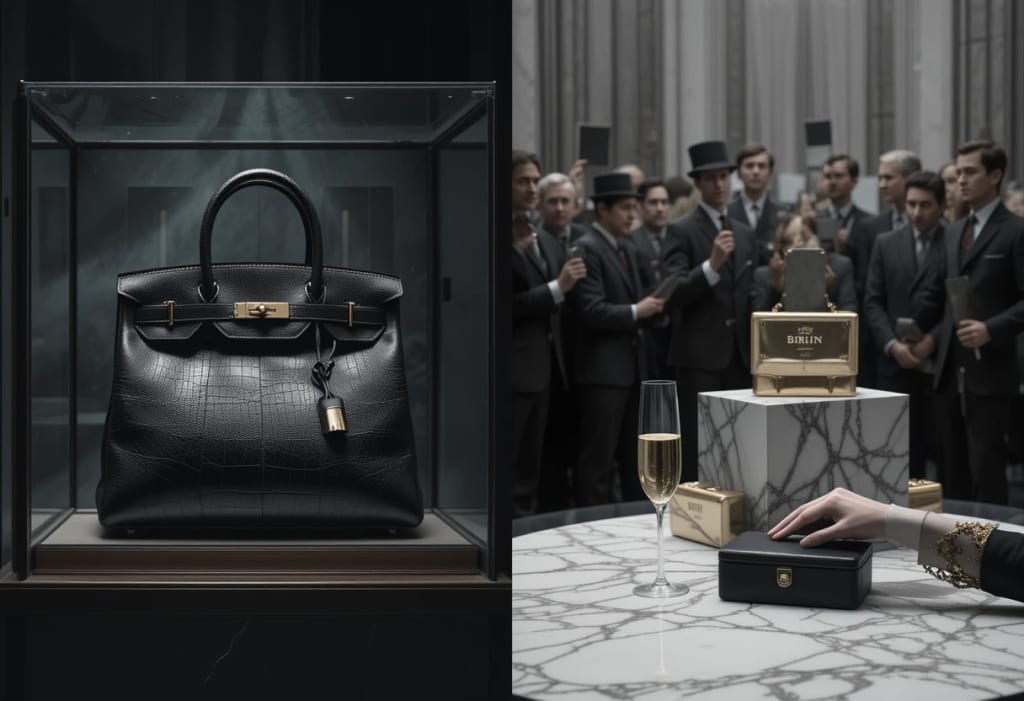
The Hermès Secret: Why a Birkin Bag is Worth More Than Gold
Scarcity, exclusivity, and the psychology of desire in luxury fashion.
In the world of luxury, where timepieces gleam with diamonds and sports cars roar with horsepower, there exists one object that sits above them all in quiet supremacy: the Hermès Birkin bag.
Unlike a Ferrari, it doesn’t speed. Unlike a Rolex, it doesn’t tick. It is a handbag — leather, stitching, and hardware. And yet, it can command prices that rival not only fine art but the most precious of metals. In fact, pound for pound, a Birkin has been valued higher than gold.
But why? How did a single accessory become not only a fashion statement, but a cultural symbol of wealth, exclusivity, and desire?
The answer lies in a story woven with scarcity, craftsmanship, and psychology — the carefully guarded Hermès secret.
The Birth of the Birkin
The legend begins in 1984. On a flight from Paris to London, actress and singer Jane Birkin sat next to Jean-Louis Dumas, the then-chief executive of Hermès. Birkin lamented that she could never find a weekend bag large enough yet elegant enough for her needs.
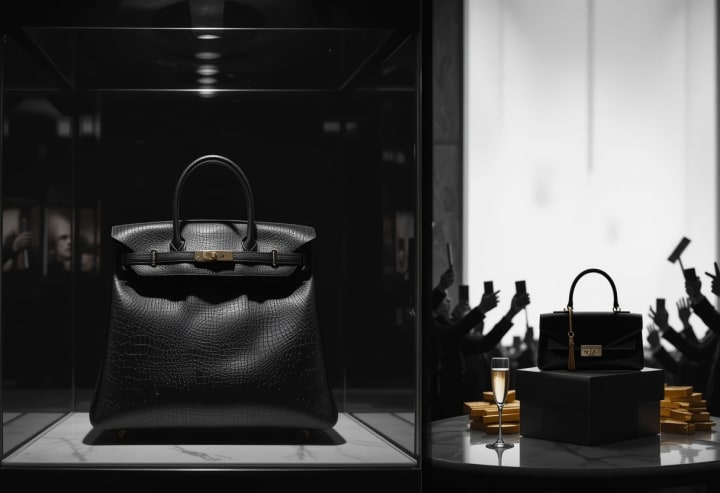
Dumas, listening intently, sketched a design on an airplane napkin. That sketch became the Birkin bag: structured yet soft, utilitarian yet chic, crafted with Hermès’ storied leatherwork.
From its inception, the Birkin was never just another handbag. It was an invitation-only luxury, built on a foundation of artisanal tradition that Hermès had cultivated since 1837.
Exclusivity by Design
At the heart of the Birkin’s mystique is its scarcity. Unlike mass-produced luxury items, Birkins are hand-stitched by a single artisan, each taking 15–20 hours to complete. Materials range from supple calfskin to exotic crocodile, finished with palladium or even diamond-encrusted hardware.
Hermès never mass-produces. Instead, it controls supply with surgical precision, releasing just enough bags each year to fuel desire but never enough to meet demand.
Walk into a Hermès boutique and ask for a Birkin, and you’re likely to be politely denied. Instead, the bags are offered to select clients — often after they’ve spent years building purchase history with scarves, jewelry, or smaller leather goods.
The result? Owning a Birkin isn’t just about money; it’s about access.
The Waiting Game
The waiting list for a Birkin can stretch from months to years. Paradoxically, this delay is part of what makes the bag irresistible. The longer the wait, the stronger the desire.
Psychologists call it the scarcity principle: when something is hard to obtain, its perceived value increases. Hermès has perfected this game.
While brands like Gucci or Louis Vuitton thrive on visibility, Hermès thrives on invisibility. The Birkin is not advertised. There are no billboards, no glossy campaigns splashed across fashion magazines. Instead, Hermès lets whispers do the work. The Birkin’s legend grows because you cannot simply buy one — you must earn the right to buy one.
Birkins as Investment
Unlike most luxury goods, which depreciate the moment they leave the boutique, Birkins often appreciate in value. On the resale market, a rare Birkin can sell for two, three, or even ten times its retail price.
In 2017, a Himalaya Niloticus Crocodile Birkin with diamond hardware sold for $380,000 at auction in Hong Kong, setting a record for the most expensive handbag ever sold.
Studies have shown that over a 35-year period, the value of Birkins increased by more than 500%, outpacing gold and even the S&P 500. For many collectors, a Birkin is not just an accessory but a financial asset — a wearable investment.
The Psychology of Desire
What makes a Birkin more than just a bag is not only its rarity but what it symbolizes. In the age of “quiet luxury,” the Birkin is the ultimate status signifier.
For billionaires and celebrities, it whispers rather than shouts. Unlike logos splashed across cheaper luxury items, the Birkin requires no label to be recognized. It’s a language only insiders speak — a form of social currency.
Carrying one signals membership in an elite club, a community of the wealthy and well-connected. And because not everyone can get one, the bag becomes not just desirable, but almost mythical.
The Cultural Icon
The Birkin’s place in culture has been cemented by countless appearances in television and film. On Sex and the City, Samantha famously schemed her way onto the Hermès waiting list. In Gossip Girl, a Birkin was shorthand for old-money privilege. Even Kim Kardashian, Victoria Beckham, and Cardi B have flaunted Birkin collections worth millions.
The bag is no longer just a handbag. It is a character in the story of wealth and power — a prop that instantly tells you everything about the person carrying it.
Criticism and Controversy
Of course, the Birkin is not without criticism. Animal rights groups have condemned Hermès for its use of exotic skins. Others argue that the exclusivity and pricing of Birkins perpetuate inequality, turning handbags into a game of conspicuous consumption.
Yet controversy only seems to strengthen the bag’s allure. After all, the Birkin has never been about practicality. It is about myth-making — and myths thrive on both admiration and outrage.
The Hermès Secret
So, why is a Birkin worth more than gold? Because Hermès has mastered the alchemy of luxury: transforming leather and thread into symbols of desire, status, and permanence.
Gold can be weighed and measured, traded on global markets. But the value of a Birkin lies in the intangible: the longing it creates, the exclusivity it commands, the whispers it inspires.
It is not just a bag. It is a passport to another world — one where beauty, scarcity, and power collide.
And that is the Hermès secret.
About the Creator
Keep reading
More stories from waseem khan and writers in Journal and other communities.
“The Science of Small Things”
“The Science of Small Things” When I was seven, I thought science was magic. Not metaphorically. I believed scientists were a special breed of sorcerers who had just learned how to speak the language of the earth better than anyone else.
By waseem khan6 months ago in Journal
The goals I did not achieve
Every writing goal I made for the year is a wash. It has been this way for a while, but I think it's important to be open about my failures and the reality of how life can get in the way. This is especially true considering the several times I have posted on Vocal about my writing goals, how I was changing my approach, and where I was hoping to be for the upcoming year. I will probably do that again in a couple months, but for now, it is time to acknowledge where I am today.
By Kay Husnick22 days ago in Journal
The Role of Confession in Spiritual Growth
Confession, also called the Sacrament of Reconciliation, is one of the most powerful and transformative practices in Catholic life. Through this sacrament, Catholics seek God’s forgiveness for sins, experience His mercy, and receive spiritual guidance. Far from being a routine obligation, confession is a vital pathway to spiritual growth, healing, and deeper communion with God. Understanding its purpose, benefits, and proper approach can enrich a believer’s faith and daily life.
By Sound and Spirit4 days ago in Journal


Comments
There are no comments for this story
Be the first to respond and start the conversation.