business wars
Iconic and sometimes notorious business wars between key thought leaders and competitors in multiple categories, genres, and topics. From Nintendo and Sega to Penthouse and Playboy.
Fake Deepfake Video Links Modi and Netanyahu to Afghan Taliban Support
A fake video of Israeli Prime Minister Benjamin Netanyahu has gone viral during Indian Prime Minister Narendra Modi’s visit to Israel, in which he is allegedly heard saying that India and Israel will provide every possible support to the Afghan Taliban.
By Real contenta day ago in Journal
Powerful Mindsets That Separate Rich Entrepreneurs
Success in entrepreneurship is often attributed to funding, connections, or timing. While these factors can help, research and real-world case studies consistently show that mindset plays a more decisive role than resources.
By Stories Today5 days ago in Journal
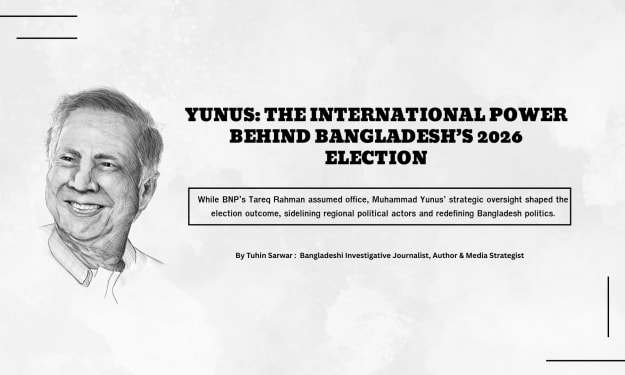
Yunus: The International Power Behind Bangladesh’s 2026 Election
By: Tuhin Sarwar। Dhaka । February 18, 2026 । Eight months after Bangladesh’s caretaker government assumed power following the collapse of the previous administration in August 2024, the nation experienced one of its most closely watched democratic transitions in recent memory. On 12 February 2026, the country concluded a general election that delivered a two-thirds parliamentary majority to the Bangladesh Nationalist Party (BNP), enabling Tarique Rahman to take office as Prime Minister. Yet an analysis by India Today reflected across global media outlets frames the story differently: the true strategic victor of Bangladesh’s 18‑month political transition was Muhammad Yunus, the Nobel laureate economist whose international stature and tactical maneuvering shaped the nation’s political landscape in ways no conventional politician has before.
By Tuhin Sarwar9 days ago in Journal
Adriana Kostov Appointed to Lead Australian Chapter of the Hedge Fund Association
The appointment of Adriana Kostov as head of the Hedge Fund Association’s newly established Australian chapter marks a significant milestone not only in her career but also in the continued evolution of Australia’s alternative investment landscape. With a background that bridges law, commerce, and high-level financial strategy, Kostov’s professional journey reflects the kind of global perspective and disciplined expertise required in today’s complex hedge fund environment.
By Financial Services Media10 days ago in Journal
Content Without Context Is Just Noise
In the digital world, everyone's screaming for attention. There are posts, ads, and videos everywhere, and all are screaming to get seen. But let's get down to brass tacks: all that content means squat if it's not being seen by the right eyes or telling a useful story. Without context, good intent can turn to waste quickly. It is just noise being sent directly into space.
By Ahsan Raza11 days ago in Journal
If God Is Not Physically Here, How Are We Supposed to Have a Relationship With Him?
If God is not physically standing in front of us… if we cannot see Him, hear Him audibly, or sit across from Him at a table… then how are we supposed to have a real relationship with Him?
By Sound and Spirit12 days ago in Journal
Are You Going to Hell for Being Gay?
If someone came up to me and asked, “Does being gay mean I’m going to hell?” I would not answer quickly. That question usually comes from fear. It comes from someone who is not trying to argue, but who is honestly worried about their soul.
By Sound and Spirit13 days ago in Journal