business
Articles, videos, and related content associated with all aspects of Business and the culture surrounding business.
New Year 2026
Introduction Though it’s still 2025, people are already searching for “New Year 2026 upcoming”—planning celebrations, setting goals, and even booking travel. Why? Because New Year’s Eve 2025 marks the transition into 2026, and for many, preparation begins months in advance.
By KAMRAN AHMAD23 days ago in Journal
How Exploring Old-School Manufacturing Led Me to Appreciate Standardized Components. AI-Generated.
Whenever I reflect on how modern production works, I always come back to a simple insight: standardization changed everything. I first became curious about this idea while researching companies like Fitz Manufacturing Industries Ltd. not because I’m obsessed with any one product they make, but because their presence in standardized part registries made me think about how and why standardized components became a backbone of so many industries.
By Beckett Dowhan23 days ago in Journal
10 Restaurant Online Ordering System. AI-Generated.
Online ordering has become a standard part of restaurant operations rather than a competitive advantage. Customers now expect the ability to place orders directly from a website or mobile interface, whether for pickup or delivery. For restaurants, this shift has created both opportunities and challenges.
By Ashish Sudra23 days ago in Journal
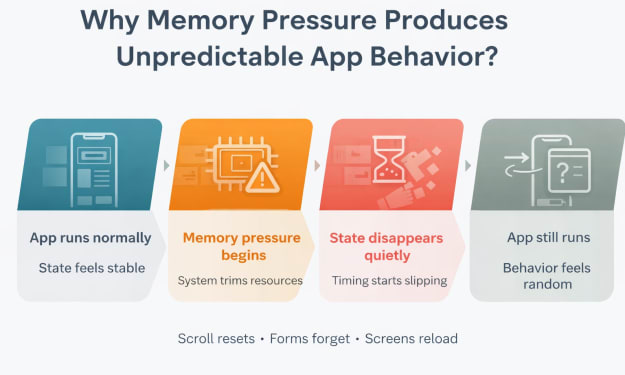
Why Memory Pressure Produces Unpredictable App Behavior?
earn For a long time, I blamed users. Not openly, of course. Quietly. Internally. When someone said the app “lost their place” or “reset for no reason,” I assumed edge cases. Bad networks. Unlucky timing. Maybe they switched apps too fast.
By Samantha Blake23 days ago in Journal
Opendoor’s Sudden 25% Surge: A Real Opportunity or a Familiar Trap?
In a market where most stocks grind forward inch by inch, a sudden 25% jump grabs attention. That’s exactly what happened with Opendoor Technologies (NASDAQ: OPEN), a company many investors had quietly written off after years of volatility, losses, and broken promises. In a single trading session, Opendoor shares surged dramatically, climbing from deeply depressed levels to around $2.50. Trading volume spiked far above average, lighting up retail trading forums, financial Twitter, and speculative investor circles. For some, it looked like the beginning of a long-awaited comeback. For others, it felt uncomfortably similar to rallies that fizzled just as fast in the past. The question now is simple but critical: Is this the early stage of a genuine turnaround—or just another short-lived bounce in a difficult business model? Understanding What Opendoor Actually Does Opendoor operates in the iBuying space—short for “instant buying.” Instead of listing a home traditionally, sellers can receive an algorithm-generated cash offer within days, skip showings, and close quickly. Opendoor then renovates the home, relists it, and attempts to sell it for a profit. At its best, the model promises speed, certainty, and convenience in an industry often criticized for inefficiency. At its worst, it exposes the company to massive capital risk, housing market cycles, and razor-thin margins. Opendoor has lived through both extremes. During the pandemic housing boom, the company expanded aggressively, buying homes at scale as prices surged. When interest rates rose sharply in 2022 and demand cooled, Opendoor was left holding expensive inventory that quickly lost value. Losses ballooned, cash burned fast, and confidence evaporated. By early 2025, the stock was trading near penny-stock territory, with many investors assuming the iBuying dream had failed. Why the Market Suddenly Paid Attention Again The recent rally didn’t come from nowhere. Several factors aligned at once. First, expectations around interest rates shifted. As inflation cooled and economic data softened, markets began pricing in the possibility of rate cuts. Lower mortgage rates don’t just help buyers—they directly impact housing liquidity. For a company like Opendoor, even modest improvements in transaction volume can significantly change the outlook. Second, Opendoor’s operational metrics showed signs of stabilization. Inventory turnover improved, pricing accuracy increased, and losses narrowed compared to the worst quarters of 2022–2023. The company became more selective about purchases, reduced exposure to volatile markets, and leaned heavily on data to manage risk. Third, short interest remained elevated. With many traders betting against the stock, any positive catalyst had the potential to trigger a short squeeze. When volume surged, those short positions were forced to cover, amplifying the upward move. Finally, sentiment shifted. Investors began reconsidering whether Opendoor had quietly survived the worst and emerged leaner, smarter, and better positioned for a more balanced housing environment. The Technology Advantage—Real or Overstated? Opendoor’s core claim has always been that data and automation can outperform human judgment in residential real estate. Over time, the company has accumulated data from more than 150,000 home transactions across dozens of U.S. markets. That dataset feeds machine-learning models that estimate fair value, renovation costs, resale timelines, and demand patterns with increasing precision. Recent disclosures suggest pricing accuracy has improved substantially compared to earlier years, reducing the risk of catastrophic overpayment. Operational improvements—such as faster inspections, standardized renovations, and tighter resale windows—have also helped control costs. The company is no longer chasing growth at any price; instead, it appears focused on survival and discipline. Whether that’s enough to generate sustainable profits remains an open question—but it’s a meaningful change from past behavior.
By The Insight Ledger 23 days ago in Journal
Understanding FDA Food Regulations
Food businesses in the United States are required to follow strict compliance to federal regulations intended to safeguard public health. In order to make sure that all food business manufacturers align with the Federal regulations, the U.S. Food and Drug Administration (the “FDA”) was established. FDA keeps eye on all the processes involved in food business operations. That is from start to finish. They keep a watch from how food is manufactured and labelled to how it is packaged and imported.
By Cristina Baker23 days ago in Journal
Using Data to Enhance Quality of Care
Introduction In the clinical landscape of late 2025, data has transitioned from a dry administrative byproduct into a vibrant tool for improving patient outcomes. The move toward "Precision Behavioral Health" relies on the systematic collection and interpretation of data points that were once left to clinical intuition alone. By leveraging real-time analytics, patient-reported metrics, and longitudinal tracking, a practice can identify precisely what works for whom and when. This data-driven approach does not replace the therapeutic alliance; rather, it provides a factual foundation that allows clinicians to adjust their strategies with greater accuracy. When used effectively, data serves as a mirror, reflecting the true impact of care and highlighting the specific paths toward clinical excellence.
By Abdul Mueed23 days ago in Journal