Latest Stories
Most recently published stories in Journal.
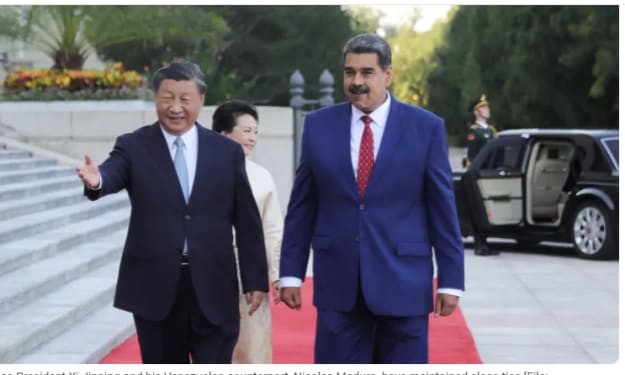
China requests that the US "stop toppling" the Venezuelan government and free Maduro.
China has urged the US to free Venezuelan President Nicolas Maduro right away after Washington launched huge military attacks on Caracas, the country's capital, and other areas, kidnapping the leader.
By Francis Dami22 days ago in Journal
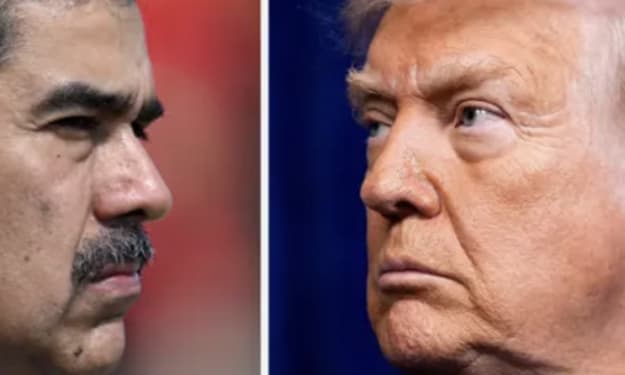
WILL THE CAPTURE OF MADURO BY THE US CREATE A NEW ZONE OF INFLUENCE AMONG THE SUPERPOWERS?
Last night, the US Army along with other US Law Enforcement agents, conducted a critical and fast invasion in Venezuela to capture the country’s dictator, Nicolás Maduro. The US Army’s Delta Force was responsible for carrying out the capture of Maduro in Caracas. The US Army deployed specific aircraft to target key infrastructure and capture Maduro and his wife, such as the CH-47 Chinook and the AH-64 Apache. Taking into consideration the information available, the goal of the present article is to analyze whether this situation is opening the door for the superpowers begin to claim their influence in each respective region.
By Pedro Cagnoni 22 days ago in Journal
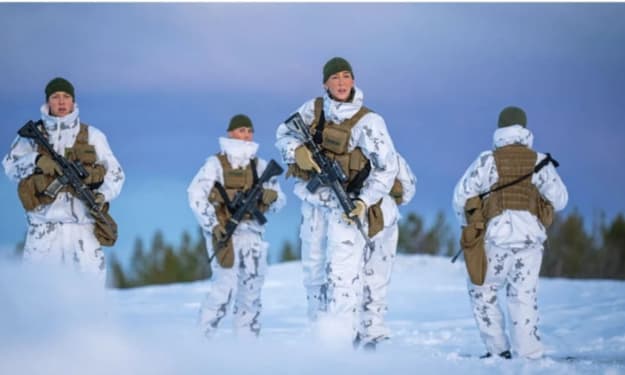
Europe’s Generals Are Warning People to Prepare for War. AI-Generated.
In recent months, a striking message has been emerging from Europe’s top military leadership: the continent must prepare for the possibility of war. Statements from generals, defense chiefs, and security officials across NATO and the European Union have been unusually direct, urging governments and civilians alike to rethink assumptions about long-term peace. While these warnings are not calls for panic, they reflect a sobering reassessment of Europe’s security environment in a world marked by growing instability. A Changing Security Landscape For decades after the end of the Cold War, much of Europe enjoyed what many believed was a permanent peace dividend. Defense budgets were reduced, armies were downsized, and the idea of large-scale conflict on European soil seemed increasingly remote. That confidence has now been shaken. Russia’s war in Ukraine is the most immediate catalyst behind the renewed warnings. The conflict has demonstrated that conventional warfare between states is no longer a theoretical concern but a real and ongoing threat. European generals frequently point out that the war has reshaped strategic thinking, proving that borders can still be challenged by force and that prolonged, high-intensity conflict is possible even in the modern era. Beyond Ukraine, military leaders also cite broader global tensions. Rivalries between major powers, instability in the Middle East, cyber warfare, disinformation campaigns, and the weaponization of energy and supply chains all contribute to a sense that Europe is entering a more volatile period. Why Generals Are Speaking Out It is relatively rare for military leaders to address the public so openly about the risk of war. Traditionally, such discussions are confined to closed-door briefings with political leaders. The fact that generals are now speaking publicly signals the seriousness of their concerns. One reason for this openness is preparedness. European defense officials argue that societies must understand the realities of modern conflict in order to respond effectively. War today, they warn, would not only involve soldiers on the front lines but also civilians, infrastructure, and digital systems. Power grids, communication networks, transportation hubs, and even food supplies could be affected. Another motivation is political. By highlighting potential risks, generals hope to influence policymakers to invest more in defense and resilience. Many European countries are increasing military spending, modernizing equipment, and strengthening alliances, but defense leaders argue that progress must be faster and more coordinated. Preparing Society, Not Just Armies One of the most notable aspects of recent warnings is the emphasis on civilian readiness. Generals stress that preparing for war does not mean expecting it tomorrow, but rather building resilience so societies can withstand shocks. This includes strengthening civil defense systems, improving emergency planning, and ensuring that citizens know how to respond during crises. In some countries, discussions have revived around shelters, emergency supplies, and public awareness campaigns—measures that were common during the Cold War but later fell out of favor. Cybersecurity is another key concern. Military leaders warn that future conflicts will likely begin long before any shots are fired, through cyberattacks on hospitals, banks, and government services. Preparing for war, in this sense, means investing in digital defenses and educating the public about misinformation and hybrid threats. NATO, the EU, and Collective Defense Europe’s generals consistently emphasize that no country can face these challenges alone. NATO remains the cornerstone of European security, and recent developments—including the expansion of the alliance and increased joint exercises—reflect a renewed commitment to collective defense. At the same time, the European Union is playing a growing role in security matters. Initiatives aimed at boosting defense cooperation, coordinating arms production, and reducing reliance on external suppliers are gaining momentum. Military leaders argue that a stronger, more self-reliant Europe will be better positioned to deter aggression and manage crises. Deterrence, they stress, is the ultimate goal. By demonstrating readiness and unity, Europe hopes to prevent conflict rather than provoke it. The warnings from generals are framed not as predictions of inevitable war, but as reminders that peace must be actively maintained. Public Reaction and Debate The public response to these warnings has been mixed. Some citizens see them as realistic and necessary, given recent events. Others worry that such rhetoric could increase fear or contribute to militarization. Critics argue that focusing too heavily on war risks diverting resources from social needs and diplomacy. Military leaders respond by emphasizing balance. They acknowledge the importance of diplomacy, economic stability, and social cohesion, but insist that these efforts must be backed by credible defense capabilities. In their view, preparedness is not the opposite of peace—it is a condition for preserving it. Looking Ahead As Europe navigates an uncertain future, the warnings from its generals serve as a wake-up call. The assumption that large-scale conflict is a relic of the past no longer holds. Instead, defense leaders urge a realistic understanding of risks and a collective effort to strengthen resilience. Preparing for war, they argue, does not mean surrendering to fear. It means acknowledging the complexities of the modern world, investing in security and unity, and ensuring that societies are strong enough to withstand pressure. Whether these warnings lead to lasting change will depend on political will, public engagement, and Europe’s ability to learn from the challenges of the present. In the end, the message from Europe’s generals is clear: peace is not guaranteed, but with foresight, cooperation, and preparedness, it can still be protected.
By Muhammad Hassan22 days ago in Journal
Maduro Arrives in the U.S. After Stunning Capture. AI-Generated.
The sudden arrival of Venezuelan President Nicolás Maduro on U.S. soil has sent shockwaves through global politics. According to American officials, Maduro was taken into custody following a covert international operation described as “precise, coordinated, and historic.” Within hours of the news breaking, former U.S. President Donald Trump made a bold declaration, stating that this dramatic development would allow the United States to effectively “run” Venezuela and guide it toward a new political future. The claim has sparked intense debate, celebration in some circles, and deep concern in others. Whether seen as a turning point for Venezuela or a dangerous escalation in international power dynamics, the event marks one of the most extraordinary political moments of the decade. A Capture That Few Saw Coming Details surrounding Maduro’s capture remain deliberately limited. U.S. officials have confirmed that the operation involved international cooperation but have avoided naming partner countries or revealing tactical specifics. What is known is that Maduro was reportedly intercepted while traveling under heavy security, then transferred to U.S. custody and flown to a secure detention facility in New York. The speed of the operation stunned observers. For years, Maduro had managed to maintain tight control over his movements, relying on loyal military units and strong alliances with foreign governments. His sudden detention raises questions about fractures within his security apparatus and the possibility of internal betrayal. For many Venezuelans living abroad, especially those who fled economic collapse and political repression, the news was almost unimaginable. Social media filled with disbelief, cautious hope, and emotional reactions from people who never thought they would see this day. Trump’s Declaration and Its Meaning Donald Trump wasted little time framing the capture as a major geopolitical victory. In a statement shared with U.S. media, he suggested that Maduro’s removal would open the door for American-led restructuring of Venezuela’s political and economic systems. His phrase that the U.S. would now “run” Venezuela was widely quoted—and just as widely criticized. Supporters interpreted the statement as symbolic rather than literal, arguing that Trump meant the U.S. would help oversee a transition to democracy. Critics, however, saw it as an alarming suggestion of foreign control over a sovereign nation. The rhetoric reflects a long-standing U.S. position that Maduro’s presidency lacked legitimacy following disputed elections and allegations of corruption, human rights abuses, and drug trafficking. Still, openly suggesting direct control pushes the conversation into far more controversial territory. Venezuela Reacts in Shock and Silence Inside Venezuela, the official response has been muted. State television initially dismissed reports of Maduro’s capture as “foreign misinformation.” Hours later, however, senior government figures acknowledged that Maduro was “temporarily unavailable” and that Vice President Delcy Rodríguez would assume interim leadership duties. The streets of Caracas told a more complicated story. Some neighborhoods reportedly erupted in quiet celebration, while others remained tense, uncertain about what might follow. For many citizens, years of instability have taught them to be wary of sudden change, even when it appears hopeful. The Venezuelan military now stands at the center of attention. Analysts suggest that its next move—whether to support an interim government, resist foreign pressure, or fracture internally—will shape the country’s immediate future. International Community Divided Global reactions have been sharply divided. Several Western nations called for calm and stressed the importance of respecting international law and Venezuelan sovereignty. Others cautiously welcomed the development, arguing that Maduro’s detention could finally allow free elections and humanitarian relief to reach a population in desperate need. Countries aligned with Caracas, including Russia and Iran, condemned the operation as an illegal seizure and warned of serious consequences. The United Nations has requested clarification on the legal basis for Maduro’s detention and urged all parties to avoid actions that could destabilize the region. This division underscores a broader reality: Venezuela has long been more than a national crisis. It has been a chessboard for global influence, energy interests, and ideological rivalry. What This Means for Ordinary Venezuelans Beyond political statements and diplomatic disputes lies the real question: will this change daily life for Venezuelans? Years of hyperinflation, food shortages, and mass emigration have left the country exhausted. For millions, the capture of Maduro represents a possible end to a painful chapter—but not yet a solution. Any meaningful recovery will require rebuilding institutions, restoring trust, and addressing deep economic wounds. Even if Maduro faces trial in the U.S., Venezuela’s problems will not vanish overnight. Leadership transitions are only the beginning of long, uncertain processes. Humanitarian organizations have emphasized the need for immediate support, warning that political turmoil often worsens conditions for vulnerable populations before improvements are felt. A Precedent With Global Implications The operation that led to Maduro’s arrival in the United States could set a powerful precedent. If confirmed as lawful under international agreements, it may embolden similar actions against other controversial leaders. If not, it risks undermining established norms of sovereignty and diplomatic resolution. Trump’s framing of the event adds another layer of complexity. His language resonates with supporters who favor decisive action, but it also fuels fears of neo-imperial overreach. How current U.S. leadership navigates these perceptions will be critical. An Unwritten Ending As Maduro sits in U.S. custody, the world watches for what comes next. Court proceedings, diplomatic negotiations, and potential power shifts in Caracas will unfold in the coming weeks. For now, certainty remains elusive. What is clear is that this moment will be studied for years to come. It challenges assumptions about power, accountability, and intervention in the modern world. For Venezuela, it could mark the start of renewal—or another period of uncertainty.
By Saboor Brohi 22 days ago in Journal
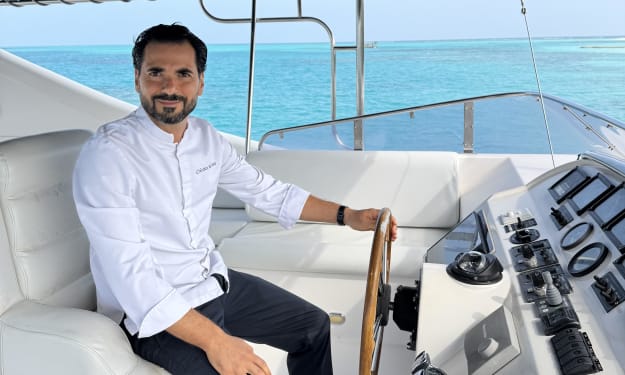
Setting Sails for 2026
The first days of January are often quieter in hospitality. The rush of the festive season fades, dining rooms return to a more familiar rhythm, and the intensity that defines the end of the year slowly settles. Yet responsibility does not disappear with the celebrations. If anything, it becomes more visible.
By Cristian Marino22 days ago in Journal
My healthcare discipline led me to god
There are moments in life when God does not call us through thunder or spectacle, but through quiet obedience—through daily work done with compassion, humility, and care. My journey into healthcare began with a desire to help people feel better. I did not initially realize that through healing others, God Himself was gently healing me, drawing me closer to Him through every patient I met, every story I held, and every limitation I faced as a practitioner.
By Tahira Ikram22 days ago in Journal
Venezuela: Latest Events, Military Tensions, and Current Situation
Venezuela is currently experiencing one of the most critical periods in its recent history. From escalating political instability to economic pressure and reported military actions, the country is facing rapid and serious developments.
By Daily Motivation22 days ago in Journal
Nicolás Maduro: From Bus Driver to Venezuela’s Most Powerful Man. AI-Generated.
Nicolás Maduro is one of the most controversial leaders in modern Latin American history. His life story is unusual. He began as a working-class bus driver and trade union activist. Later, he became the chosen successor of Hugo Chávez, one of Venezuela’s most famous presidents. Today, Maduro is known around the world for leading a country in deep political and economic crisis and for facing strong pressure from the United States and other nations.
By dua fatima22 days ago in Journal
The Smart Aussie Pivot: Navigating the New Era of E-commerce Automation
G’day everyone. If you’ve looked at the retail landscape lately, you’ve probably noticed that things are moving at a bit of a cracking pace. We’re standing right in the middle of a massive market shift. It’s a time where the traditional "brick and mortar" grit is meeting the high-speed world of business automation, and the result is a total transformation of the e-commerce business Australia knows and loves.
By Kate Brownell22 days ago in Journal