
WILL THE CAPTURE OF MADURO BY THE US CREATE A NEW ZONE OF INFLUENCE AMONG THE SUPERPOWERS?
The rising of the regionalism among the superpowers

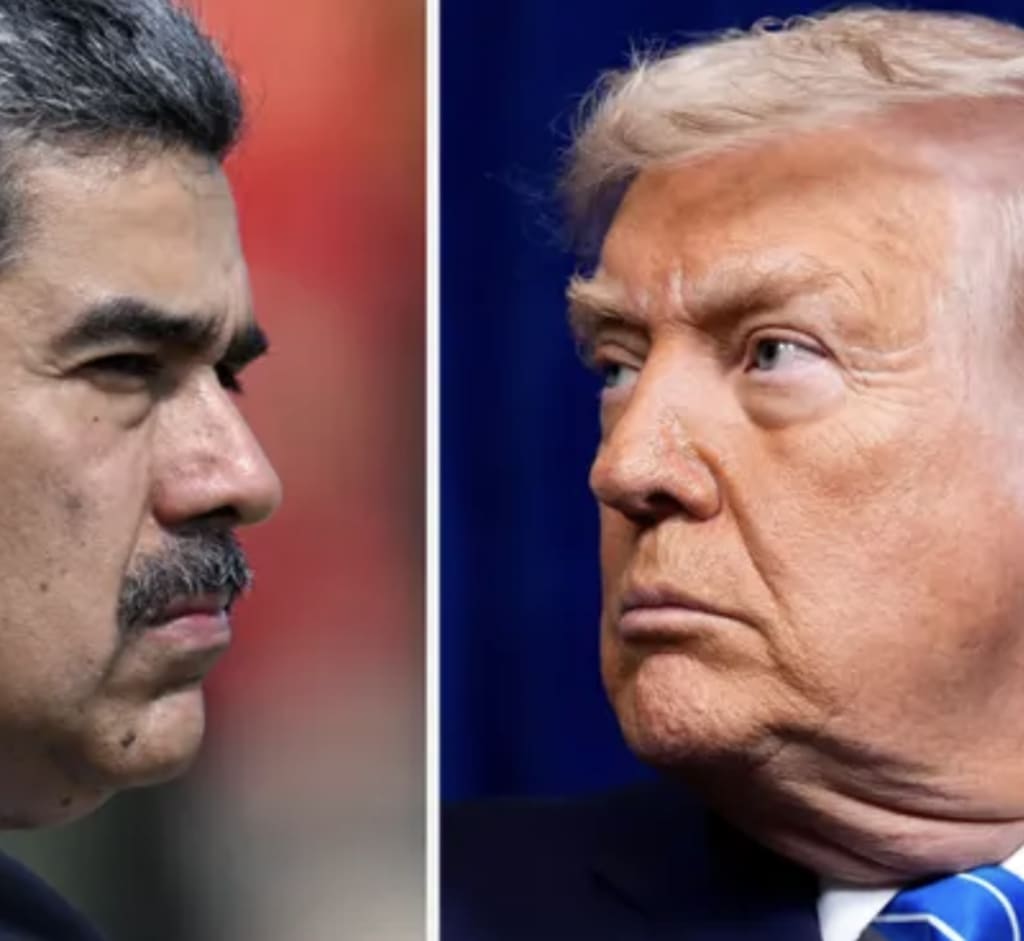
Last night, the US Army along with other US Law Enforcement agents, conducted a critical and fast invasion in Venezuela to capture the country’s dictator, Nicolás Maduro. The US Army’s Delta Force was responsible for carrying out the capture of Maduro in Caracas. The US Army deployed specific aircraft to target key infrastructure and capture Maduro and his wife, such as the CH-47 Chinook and the AH-64 Apache. Taking into consideration the information available, the goal of the present article is to analyze whether this situation is opening the door for the superpowers begin to claim their influence in each respective region.
First of all, one of the main aspects which should be analyzed is the domestic situation in Venezuela. The capture of the Venezuelan leader holds an important factor within the national politics, due to the fact is the head of the Chavist movement. Although, Trump claimed that the United States will keep the country under control in order to create a solid transition to a democratic regime. There are some dubious factors since the presence of Chavist generals, such as Diosdado Cabello, in Venezuela may influence the American control over the country. Also, the reaction of the people in Venezuela remains unclear, which is an important aspect, and how the American authorities will carry out such a transition.
However, it is certain that what is going on in Venezuela is a sign for other Latin American leaders, such as the Colombian president Petro, Lula in Brazil or Miguel Díaz in Cuba or even Claudia in Mexico, that the United States’ priority is to reclaim control (or influence) over its 'backyard, the American Continent. Trump already clarified that the situation in Venezuela is not over and that Petro might be the next, in the name of the fight against drugs.
THE MOVEMENTS TO DEFINE THE REGIONALISM:
In light of these considerations, it is important refresh the meeting in Alaska last year between Putin and Trump and also the change in the behavior from the Americans in what regards to China against Taiwan, since last Chinese military exercise was one of the biggest and closest around Taiwan. Also, the inactivity from Russia when United States began a more intense approach around Venezuela. All these movements and signs combined show that the world is witnessing a regionalism among the main superpowers: China, United States and Russia. The superpowers hold similar interests, which is to obtain again the influence around their territories, creating again a safe zone. Also, the interest in natural resources in countries such as Ukraine, Taiwan and Venezuela is high among these superpowers.
THE PERFECT EXCUSE:
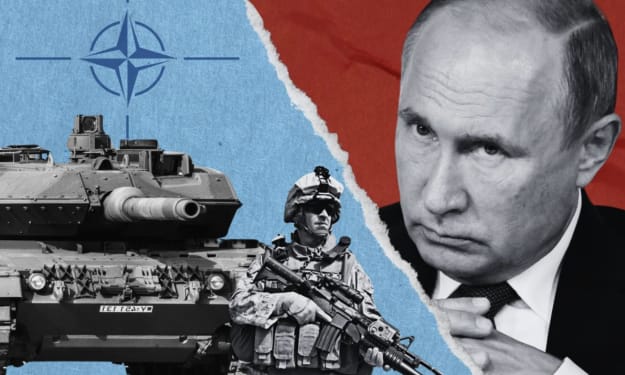
Similar to Putin with Ukraine, the United States sought a pretext to invade another country, which might be true, but not the only goal. In Russia, the world watched Putin expressing that Ukraine needed to be invaded in order to eliminate the remaining neo-Nazis groups. However, the main goals were clearly the creation of a “safe zone” so Russia can hold an influence in the East against NATO, the interest in land and the exit to the Black Sea, an important area for commercial activities and geopolitical aspects.
China seeks to occupy Taiwan under a historical pretext, arguing that the island belongs to China and that they are rebels. However, the main goals which China owns with invading Taiwan are to break the US-led “First Island Chain” with Japan, Taiwan, Korea, and Philippines that, at any moment, could be susceptible to closure and suffocate the Chinese economy. Also, China holds the desire to rule the semiconductor sector, since Taiwan is the only producer.
Finally, the United States holds the excuse of trying to eliminate the drug trafficking connections from Venezuela, mainly, to the US, which is true. Yet, such an operation holds other goals, apparently. Considering the press conference conceded by Donald Trump, the United States intends to control the oil production in the country, thereby resolving US energy security concerns and giving Americans influence in that market, since Venezuela holds the biggest number of oil reserves in the world. Also, the US desires to regain the influence and the control over the Latin American, which since 2009 was under Chinese hands.
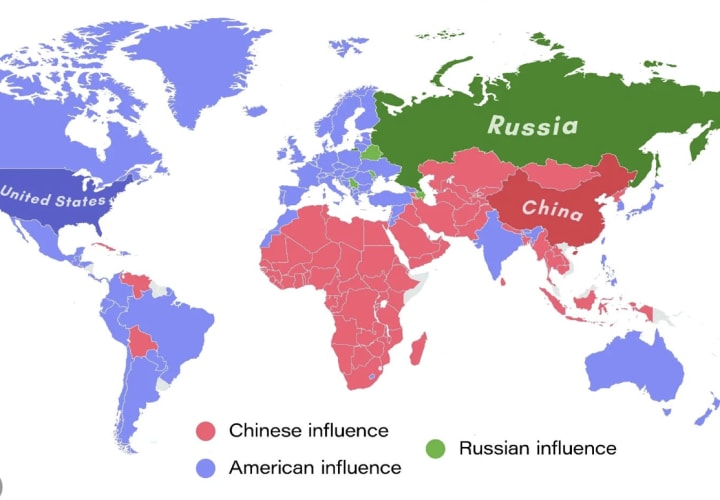
In conclusion, the race for regional influence, geopolitical advantages, and natural resources among the three superpowers has reached its peak. This invasion may be the next step—following the invasion of Ukraine—toward China's invasion of Taiwan, making this new regionalism a reality. The primary question remains the potential for further escalation: will this capture be an isolated incident, or will superpowers view it as a green light to expand their territories?
About the Creator
Pedro Cagnoni
Geopolitical consultant, political science expert. My aim is to optimize banks, private companies and average individuals decision making process, by providing information, in order to achieve their goals in diversified scenarios.
Keep reading
More stories from Pedro Cagnoni and writers in Journal and other communities.
Are We Approaching World War III?
The majority of the breaking news of the last two months, at least, from the geopolitical sector, were about the idea of the escalation of the regional conflicts existing around the world and, consequently, how fast are we approaching to the next world war. The Western media has also been debating how the Western Nations were getting ready for such an event, especially after the Russian provocations on NATO air space.
By Pedro Cagnoni 3 months ago in Journal
The Evolution of Aerospace Connectors From Analog to Digital
The aerospace industry has undergone a remarkable transformation over the past few decades, driven by a relentless pursuit of efficiency, reliability, and innovation. One of the unsung heroes of this revolution is the humble aerospace connector a component so small yet essential to the safe and seamless operation of modern aircraft. From the early days of aviation to today’s digital, highly automated aircraft, aerospace connectors have evolved significantly. Let’s take a journey through this evolution, exploring how they’ve progressed from analog simplicity to the sophisticated digital systems that power today’s aircraft.
By Beckett Dowhan4 days ago in Journal


Comments
There are no comments for this story
Be the first to respond and start the conversation.