
Nicolás Maduro: From Bus Driver to Venezuela’s Most Powerful Man
A simple story of rise, rule, and global controversy


Nicolás Maduro is one of the most controversial leaders in modern Latin American history. His life story is unusual. He began as a working-class bus driver and trade union activist. Later, he became the chosen successor of Hugo Chávez, one of Venezuela’s most famous presidents. Today, Maduro is known around the world for leading a country in deep political and economic crisis and for facing strong pressure from the United States and other nations.
This article explains Maduro’s journey in clear and simple English, following the style used by Vocal Media.
Early Life: A Working-Class Beginning
Nicolás Maduro was born in 1962 in Caracas, the capital of Venezuela. He grew up in a modest family with limited money. As a young man, he did not attend a famous university or come from a political dynasty. Instead, he worked as a bus driver for the Caracas Metro system.
While working as a driver, Maduro became active in labor unions. He spoke for workers’ rights and fair treatment. These early years shaped his political identity. He saw himself as a man of the people, someone who understood the struggles of ordinary Venezuelans.
During this time, he also became interested in left-wing politics and revolutionary ideas that were popular in parts of Latin America.
Meeting Hugo Chávez: A Turning Point
Maduro’s life changed when he joined the political movement of Hugo Chávez, a former army officer who promised to transform Venezuela. Chávez led a failed military uprising in 1992 but later became very popular.
Maduro supported Chávez early and stayed loyal to him. When Chávez won the presidency in 1998, Maduro slowly rose through the political system. Loyalty was one of his strongest qualities in Chávez’s eyes.
This relationship became the foundation of Maduro’s future power.
Rise Through Politics
After Chávez became president, Maduro was given important roles:
Member of the National Assembly
President of the National Assembly
Minister of Foreign Affairs
As foreign minister, Maduro traveled widely and defended Venezuela’s socialist policies on the world stage. He built close ties with countries like Cuba, Russia, China, and Iran.
In 2012, when Chávez was very ill with cancer, he made a historic announcement. He publicly named Nicolás Maduro as his chosen successor.
Becoming President
Hugo Chávez died in March 2013. Shortly after, Venezuela held a presidential election. Maduro won, but by a very narrow margin. The opposition questioned the results, and protests broke out.
From the beginning, Maduro faced doubts about his leadership. Many people saw him as lacking Chávez’s charisma and strong connection with the public. Still, he held onto power.
Economic Collapse and Daily Struggles
Under Maduro’s rule, Venezuela entered one of the worst economic crises in its history.
Key problems included:
Hyperinflation, making money almost worthless
Severe shortages of food, medicine, and fuel
Massive unemployment and poverty
Millions of Venezuelans left the country to search for better lives elsewhere. Families were separated, and public services collapsed.
Maduro blamed these problems on falling oil prices and heavy U.S. sanctions. Critics blamed corruption, poor management, and strict government control of the economy.
Political Repression and Power Control
Maduro also faced strong criticism for how he handled opposition.
Human rights groups accused his government of
Arresting political opponents
Limiting free speech and media
Using security forces to crush protests
Several elections under Maduro were labeled unfair by international observers. Many countries stopped recognizing his government as fully democratic.
Despite this, Maduro kept the support of the military and key institutions, helping him remain in power.
Conflict With the United States
Relations between Maduro and the United States became increasingly hostile.
The U.S. government accused Maduro of corruption, drug trafficking, and links to criminal networks. American authorities issued indictments and offered rewards for information related to these charges.
Maduro strongly denied all accusations. He said the U.S. was trying to overthrow his government and control Venezuela’s vast oil resources.
This conflict turned Venezuela into a major point of tension in global politics.
A Dividing Figure
To supporters, Maduro is a symbol of resistance against foreign influence. They see him as a leader standing up to powerful nations.
To critics, he is an authoritarian ruler responsible for economic disaster and human suffering.
Both views exist strongly, making Maduro one of the most polarizing figures in the world today.
Conclusion: A Story Still Unfolding
Nicolás Maduro’s journey from bus driver to president is extraordinary. Few world leaders have such humble beginnings. Yet his time in power has been marked by crisis, conflict, and controversy.
Whether history will remember him as a defender of sovereignty or as a leader who failed his people is still unclear. What is certain is that Maduro’s story reflects the deep struggles of Venezuela itself—a nation rich in resources but divided by politics and pain.
The final chapter of Nicolás Maduro’s life and leadership has not yet been written.
About the Creator
Keep reading
More stories from dua fatima and writers in Journal and other communities.
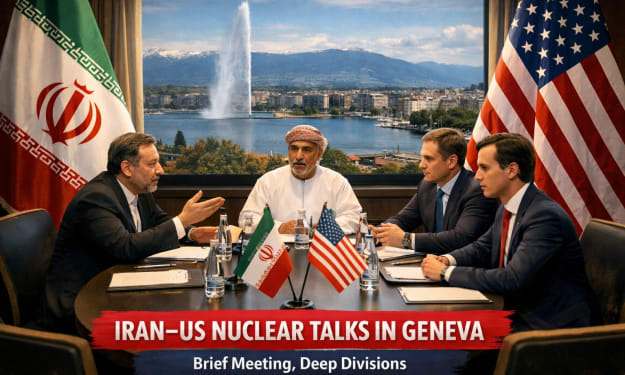
Iran–US Nuclear Talks in Geneva End Quickly, but Tensions Remain High
The second round of nuclear talks between Iran and the United States ended in Geneva after only four hours, showing both the urgency of the situation and the deep disagreements that still divide the two sides. Geneva hosted the indirect negotiations, which were mediated by Oman and focused on Iran’s nuclear program and the future of sanctions.
By dua fatima24 days ago in Journal
Author’s Advice
If you would’ve asked me 20 years ago did I know I’d become a writer and an author, I would’ve said “nope, ain’t happening”. As fate would have it I did become an author and I can honestly say I’m loving it so far. It really does feel good to be a writer. I’ve learned a lot on this journey and I feel like with even me being as new to this world as I am, there’s some wisdom I need to share with every other aspiring author.
By Joe Patterson2 days ago in Journal


Comments
There are no comments for this story
Be the first to respond and start the conversation.