
La Belle Époque: A Journey to the Past Through the Lens of Love
French flim: "Where Memory Becomes Stagecraft and Love Defies Time"


La Belle Époque is a time-travel film—without actual time travel! Just as practical effects are created by hand on set without computer manipulation, this film stages time travel in a similar, theatrical way. No CGI-rendered futuristic worlds here, only a meticulously handcrafted recreation of the past. There’s no machine to whisk someone back in time, yet there exists a way to touch the past while remaining in the present. Sounds confusing? Let’s explore.
Amid the relentless march of time, people—consciously or unconsciously—wish to return to the past, even if just for a moment. Sometimes it’s to change something, sometimes it’s to relive a feeling, to refresh a memory. As it’s not possible in reality, time travel enters the realm of imagination

Though traveling to the past isn't scientifically possible, researchers are exploring possibilities of traveling into the future—‘Premonition’ being one kind of fictional representation, though that itself has many interpretations. But let’s leave that aside and return to our film discussion.
Since one can’t go back in time in real life, this film imagines a brilliant alternative. A company facilitates these trips—not through time machines, but through immersive, theatrical recreations. This company has a highly skilled team: set designers, actors, directors, makeup artists, and visual creators. For a hefty sum, they recreate moments from a client’s past based on detailed personal information.
Some clients want one more evening with their late father, others want to relive the first time they met their spouse, or the tender moment of sipping coffee while locking eyes with their lover. Someone even wants to have a family dinner with Hitler (the film begins with such a bizarre scene), while another longs to chat with Buñuel. At this point, readers might recall Midnight in Paris (2011). But La Belle Époque takes a different path.
Each request is fulfilled by actors performing the roles of people from the client’s memory. From William Faulkner and Hemingway to Salvador Dalí and Mussolini—encounters with any of them are possible, crafted to perfection by the company’s team.
The story introduces us to Victor, a man in his 60s, whose long marriage is on the verge of collapse. His wife, Marianne, leaves him. Disoriented and reluctant, Victor agrees to try the company's services—thanks to an old connection with its founder. He wishes to revisit a single week in May 1974, the week he met the love of his life, Marianne, at a café named La Belle Époque.
Everything is recreated exactly as Victor remembers it. An actress is hired to play the younger Marianne. But things take a turn when Victor begins to see the real, youthful Marianne within the actress. Entranced by his idealized version of the past, Victor starts losing grip on reality, confusing the lines between past and present. Even at his age, a deep emotional turmoil takes hold of him, giving rise to an internal conflict—between who he was, and who he has become.
La Belle Époque (2019) is, without a doubt, a film driven by a bold and ambitious concept. Yet it doesn’t merely romanticize the dreaminess of first love; rather, it investigates the psychology of falling in love. Nicolas Bedos, who directed the film, also wrote its screenplay—which is its strongest asset.
Love and relationships don’t always stay the same, especially in their outward expressions. As time progresses, so do complexities. That’s natural. But what remains central in the film is how love can endure despite all odds.
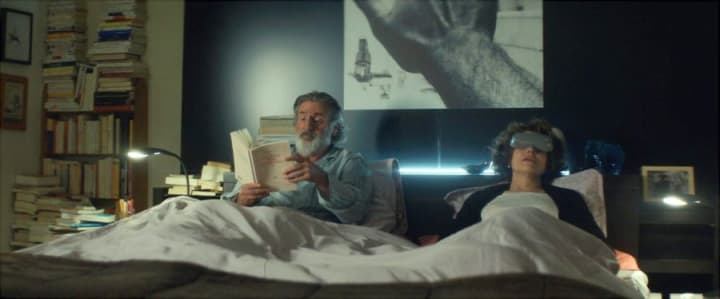
Bedos’s screenplay evokes the style of Charlie Kaufman, with echoes of Being John Malkovich, Adaptation, Confessions of a Dangerous Mind, Eternal Sunshine of the Spotless Mind, Synecdoche, New York, and I’m Thinking of Ending Things. Like Kaufman, Bedos crafts ideas soaked in poetic and philosophical depth. That’s why the term "Kaufmanesque" applies.
The film’s exploration of memory creates a counterpoint to Eternal Sunshine of the Spotless Mind. It also carries the crowd-pleasing charm and humor of Richard Curtis screenplays (Four Weddings and a Funeral, Love Actually). Toward the end, the blurry line between fantasy and reality even recalls The Truman Show, with Victor channeling a touch of Jim Carrey’s pathos.
Though Victor might seem like a stereotypical character with his distaste for modernity and technology, he emerges as a deeply human figure, portrayed with nuance and realism. The female characters are assertive and independent, reflective of the post-MeToo era. Even the supporting characters are well-developed, making the world of La Belle Époque feel richly textured and believable.
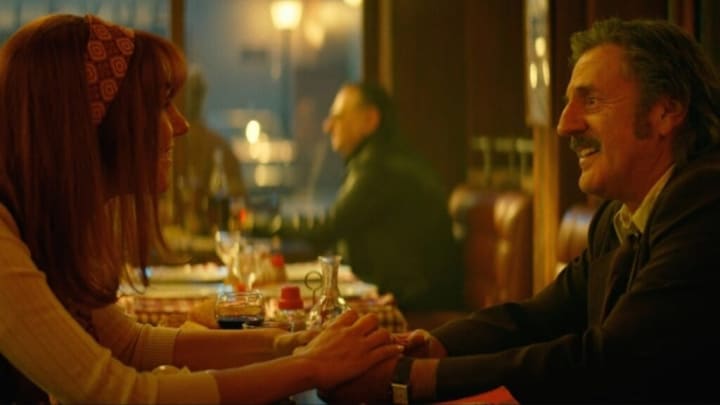
Alongside its strong screenplay and acting, the film features an effortlessly charming filmmaking style. Nicolas Bedos surpasses his earlier work here, offering a more mature cinematic vision. Every visual element carries both stylistic flair and a classic vibe. The brisk, rhythmically paced editing makes the storytelling smoother and more enjoyable. And the expansive, skillful production design lends the film a visual splendor—each set piece carefully constructed to serve the narrative.
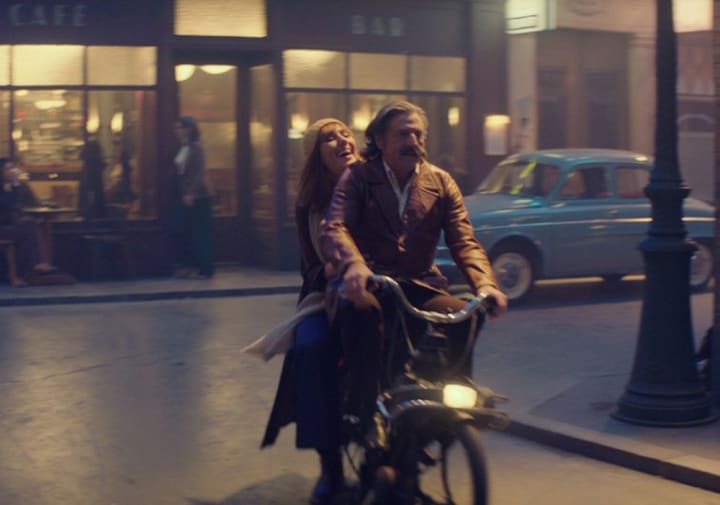
Altogether, La Belle Époque (2019) offers not only smiles and sentiment but a truly moving cinematic experience.
About the Creator
Riham Rahman
Writer, History analyzer, South Asian geo-politics analyst, Bengali culture researcher
Aspiring writer and student with a deep curiosity for history, science, and South Asian geopolitics and Bengali culture.
Asp
Keep reading
More stories from Riham Rahman and writers in Journal and other communities.
Unanswered Questions from the Harry Potter Series | Part 2
A whole generation grew up under the magical spell of Harry Potter’s world. Amidst the sea of movies, series, and books, the luminous flame of the Harry Potter saga still burns brightly. Potterheads have wandered time and again through the courtyards of Hogwarts, cast their favorite spells with a flick of the wand, and experimented eagerly with various potions. Countless people, despite being mere Muggles, have sighed in frustration and dreamt of soaring through the sky on a broomstick in their childhood.
By Riham Rahman 9 months ago in Journal
How to Succeed at the Benson Directory®
Congratulations and welcome to the Benson Directory® employee #22391! As our newest call handler, you will have the privilege of speaking with dozens of unique and interesting people on a daily basis as well as the opportunity to earn bonuses for high performance. Contained within this handbook you will find a set of ease to follow instructions designed to help you settle in to your new role and begin paving the way to success.
By S. A. Crawford2 days ago in Fiction



Comments
There are no comments for this story
Be the first to respond and start the conversation.