
Unanswered Questions from the Harry Potter Series | Part 2
answers to some unknown questions about the Harry Potter

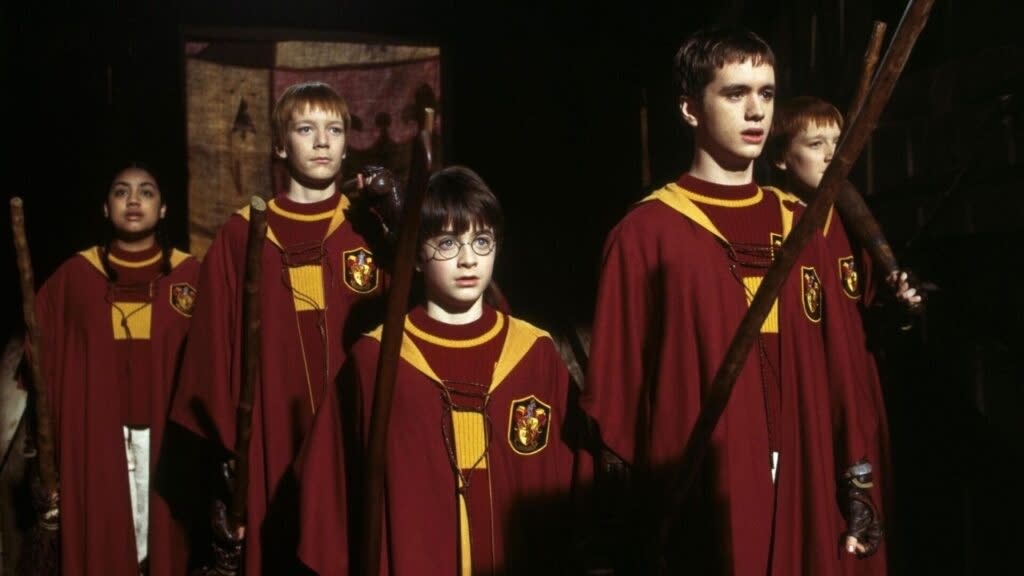
A whole generation grew up under the magical spell of Harry Potter’s world. Amidst the sea of movies, series, and books, the luminous flame of the Harry Potter saga still burns brightly. Potterheads have wandered time and again through the courtyards of Hogwarts, cast their favorite spells with a flick of the wand, and experimented eagerly with various potions. Countless people, despite being mere Muggles, have sighed in frustration and dreamt of soaring through the sky on a broomstick in their childhood.
Yet, within the pages and frames of these stories, there remain questions—questions that were never directly answered. This segment seeks to uncover those mysteries by combining logic, clues, and fan theories that have sparked curiosity over the years.
After 1st -
1) How do magical abilities appear in Muggle-borns despite being born into non-magical families?
The answer lies in understanding Squibs, who are the exact opposite of Muggle-borns. Squibs are born into magical families but lack any magical ability. On the other hand, Muggle-borns are children of non-magical parents who themselves possess magical powers.
Notable Squibs include Hogwarts caretaker Argus Filch, two of Gilderoy Lockhart’s sisters, Dolores Umbridge’s brother, and Marius Black. Squibs are typically not permitted to exist within the wizarding world and are instead absorbed into Muggle society. Many of them eventually marry Muggles and live out their lives without magic.
Though Squibs do not exhibit magical abilities, a dormant magical trace lingers in their DNA. After a few generations of intermarriage with Muggles, the family often forgets their magical heritage. But when this latent magical gene reawakens in a child, it results in the birth of a fully capable wizard or witch—even in an entirely non-magical household.
Prominent Muggle-borns include Hermione Granger and Lily Evans.
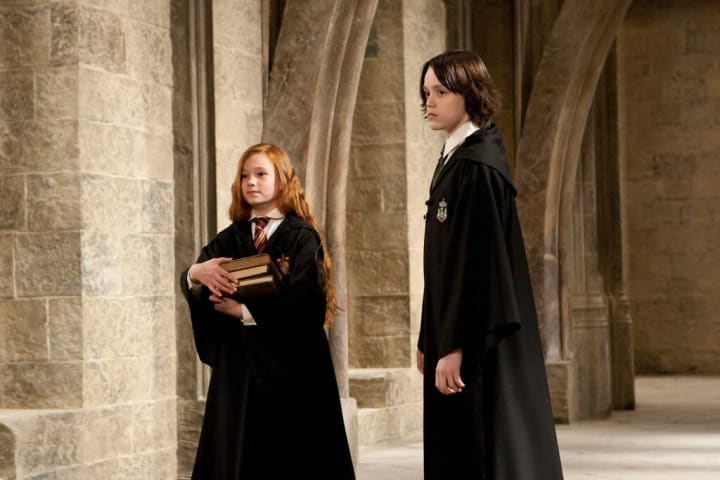
2) How are Muggle-born students admitted into Hogwarts?
There exists a magical artifact known as the Book of Admittance at Hogwarts. This book records the names and details of magical children in Britain the moment they are born. When a Muggle-born child turns eleven, they are invited to attend Hogwarts—not through owl post, but by a personal visit from a school representative.
The reason? The representative must clearly explain the existence of the wizarding world and Hogwarts to the Muggle parents—who may otherwise react with disbelief or amusement. In some cases, magic is demonstrated to gain their trust.
These families are warned not to reveal the wizarding world to other Muggles. Enchantments are even placed on them to ensure they cannot accidentally disclose anything magical. The representative also informs the family about how to acquire school supplies and how to reach the school.
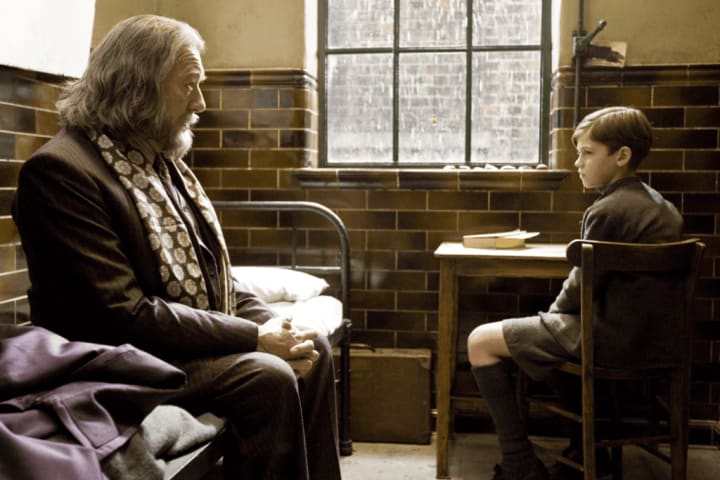
Though Harry wasn’t a Muggle-born, he lived with Muggles. Hence, Hagrid was sent to deliver his letter. Similarly, Professor McGonagall visited Hermione Granger, and Albus Dumbledore personally went to meet the orphan Tom Riddle.
3) What happened to the Death Eaters' Dark Marks after the Battle of Hogwarts?
The snake-emblazoned Dark Mark on the arms of Death Eaters symbolized their loyalty to Lord Voldemort. According to the books, the mark remained active as long as Voldemort was alive. It also served as a means for him to summon his followers.
After Voldemort’s first downfall—when his killing curse backfired upon him while attempting to kill baby Harry—the Dark Marks began to fade. But they returned in full strength upon Voldemort’s resurrection.
After Voldemort’s final defeat in the Battle of Hogwarts, the Dark Marks started to fade gradually. However, the faint symbol remained etched into their skin permanently. Created through powerful dark magic, it could not be removed—not by spells, ointments, nor any potion.
4) What happened to Harry’s lightning-bolt scar after Voldemort’s death?
Harry Potter was instantly recognizable by the iconic lightning-shaped scar on his forehead—a mark given to him by Voldemort’s curse. Much like the Death Eaters’ Dark Mark, Harry’s scar also faded with time but never fully disappeared.
In the movie adaptation of the “Nineteen Years Later” epilogue, when Harry, Ron, and Hermione send their children off to Hogwarts from Platform 9¾, Harry’s scar appears nearly invisible. By that time, it had stopped hurting—something that had previously only happened when Voldemort was nearby.
Another aspect of Harry’s identity was his Parseltongue ability—the rare talent of speaking and understanding snake language. Though not a descendant of Slytherin, Harry had gained this gift due to carrying a fragment of Voldemort’s soul within him. This was confirmed by Dumbledore.
During the Battle of Hogwarts, Voldemort unintentionally destroyed the pseudo-Horcrux inside Harry when he tried to kill him in the forest. From that moment on, Harry permanently lost his ability to speak Parseltongue.
5) Does Hogwarts actually exist in real life?
Hogwarts School of Witchcraft and Wizardry is a fictional institution where young witches and wizards are trained in the magical arts. Founded in 993 AD by four legendary wizards—Godric Gryffindor, Salazar Slytherin, Rowena Ravenclaw, and Helga Hufflepuff—it was imagined to be located in a hidden Scottish valley.
However, the entire wizarding world is the imaginative creation of British author J.K. Rowling. She blended history, folklore, and fantasy to construct the vivid and intricate world of Harry Potter. In reality, there is no such school as Hogwarts.
That said, the world does have places inspired by the idea of wizard schools. For instance, The Grey School of Wizardry in New York offers online courses in various magical subjects, including alchemy, magical herbs, and spellwork. Founded in homage to Hogwarts, it offers enrollment, study materials, and themed lessons.
And if someone truly wishes to explore the wizarding world—there’s a simple way: get hold of J.K. Rowling’s Harry Potter books and dive deep into the enchanting world of magic she created.
The End!
Read the 1st Part-
h-
The
About the Creator
Riham Rahman
Writer, History analyzer, South Asian geo-politics analyst, Bengali culture researcher
Aspiring writer and student with a deep curiosity for history, science, and South Asian geopolitics and Bengali culture.
Asp
Keep reading
More stories from Riham Rahman and writers in Journal and other communities.
Unanswered Questions from the Harry Potter Series | Part 1
A whole generation has grown up enchanted by the magical memories of Harry Potter. Amidst the flood of movies, series, and books, the radiant flame of Harry Potter still shines bright. Potterheads have time and again traversed the boundaries of imagination, wandered the grounds of Hogwarts, cast their favorite spells with a flick of a wand, and eagerly dabbled with potions of all kinds. Countless muggles have sighed in frustration or dreamt of flying through the sky on a broomstick, their childhoods marked by that unfulfilled wish.
By Riham Rahman 9 months ago in Journal
The goals I did not achieve
Every writing goal I made for the year is a wash. It has been this way for a while, but I think it's important to be open about my failures and the reality of how life can get in the way. This is especially true considering the several times I have posted on Vocal about my writing goals, how I was changing my approach, and where I was hoping to be for the upcoming year. I will probably do that again in a couple months, but for now, it is time to acknowledge where I am today.
By Kay Husnick22 days ago in Journal
Average Overhead Expenses for Mental Health Practices
Introduction Overhead expenses are the ongoing operational costs required to keep a mental health practice running. Understanding these expenses is essential for budgeting, pricing services, and maintaining financial sustainability. Unlike direct clinical costs—such as clinician time spent with clients—overhead includes rent, utilities, billing, administrative staff, technology, insurance, and more. Mental health practices vary widely in size and structure, but certain core overhead categories are common across solo practices, group practices, and larger clinics. This article breaks down average overhead categories to help providers plan accurately and improve financial decision-making.
By Abdul Mueed4 days ago in Journal




Comments
There are no comments for this story
Be the first to respond and start the conversation.