
C-SPAN: The Unfiltered Window Into American Democracy
Exploring C-SPAN's Impact on American Democracy and Its Commitment to Unbiased Political Coverage

C-SPAN was founded by Brian Lamb, who recognized the need for an independent network that could give the American public direct access to government proceedings without the interference of commercial or partisan bias. Its inception came at a time when cable television was gaining ground, and Lamb saw an opportunity to provide comprehensive coverage of the U.S. Congress, which had long been underreported on television.
In 1979, C-SPAN began broadcasting the proceedings of the U.S. House of Representatives, initially as a public service. This move was groundbreaking, as it marked the first time the American public could watch live, gavel-to-gavel coverage of legislative debates and discussions. Following its success, C-SPAN expanded to include the Senate, the U.S. Supreme Court, and key political events like presidential speeches, committee hearings, and national conventions.
C-SPAN’s Programming:
The programming on C-SPAN is unique in its approach. Rather than offering commentary or analysis, C-SPAN provides unfiltered, live broadcasts of important government events. This includes:
Live Coverage of Congressional Sessions:
C-SPAN’s primary mission has been to bring the workings of Congress to the public. The network broadcasts full sessions of the U.S. House of Representatives and the Senate, offering viewers a chance to see debates, votes, and discussions on legislation as they happen. This transparency allows the public to hold their elected representatives accountable.
Committee Hearings:
In addition to live coverage of full Congressional sessions, C-SPAN also covers committee hearings. These hearings are crucial for understanding the details of policy decisions, investigations, and the scrutiny of public officials. C-SPAN’s coverage ensures that citizens can watch these often technical discussions and decisions without filters or spin.
Public Affairs Programming:
C-SPAN provides extensive coverage of political events outside the Capitol, including speeches, town halls, and policy forums. This programming allows the public to hear from politicians, academics, and experts on a wide range of issues, from healthcare to national security.
C-SPAN 2 and C-SPAN 3:
Beyond the main C-SPAN channel, C-SPAN also operates two other networks, C-SPAN 2 and C-SPAN 3. C-SPAN 2 primarily focuses on live coverage of Senate proceedings, while C-SPAN 3 airs specialized programming such as documentaries and archival footage of historical political events.
C-SPAN’s Impact on American Democracy:
C-SPAN’s contribution to American democracy cannot be overstated. By providing direct access to government proceedings, it has become an indispensable tool for political transparency. Below are some of the key ways in which C-SPAN has impacted U.S. politics:
Promoting Government Transparency:
C-SPAN’s broadcasts ensure that government actions are not hidden behind closed doors. In a time when political decisions are often made in private meetings or behind-the-scenes negotiations, C-SPAN allows the public to witness how their representatives make decisions, argue, and vote on important issues. This transparency strengthens democratic accountability and fosters trust in government institutions.
Encouraging Civic Engagement:
By offering viewers direct access to political proceedings, C-SPAN encourages citizens to engage with the political process. Many Americans, particularly younger generations, are often disconnected from the day-to-day workings of Congress. C-SPAN’s programming helps bridge that gap, making politics more accessible to the general public.
Providing Unbiased Information:
One of C-SPAN’s most important features is its commitment to presenting events without commentary or partisan bias. While news outlets often provide analysis and opinions on government proceedings, C-SPAN lets viewers form their own conclusions based on what they see. This impartial approach has made C-SPAN a trusted source of information for many who seek unbiased reporting.
Educating the Public:
C-SPAN serves as an educational resource for students, teachers, and anyone interested in learning more about the political system. Many schools use C-SPAN’s programming to teach students about the legislative process, the structure of government, and the complexities of policy-making.
C-SPAN’s Role in Modern Media:
In today’s media landscape, dominated by 24-hour news cycles, social media, and partisan outlets, C-SPAN remains a vital source of nonpartisan, unfiltered political coverage. The rise of platforms like YouTube and Twitter has allowed C-SPAN’s audience to grow beyond traditional television viewers. The network’s live streams and archives are now accessible to millions online, making it easier for people around the world to access American government proceedings.
Moreover, C-SPAN’s role in covering political events has become more important in the age of misinformation. In a time when fake news and conspiracy theories abound, C-SPAN’s commitment to presenting events as they happen provides a reliable counterpoint to the often polarized and sensationalized reporting of political events.
Challenges Facing C-SPAN:
Despite its critical role, C-SPAN faces challenges as the media landscape continues to evolve. One of the major challenges is the increasing fragmentation of media consumption. With more people turning to digital platforms like social media for their news, traditional TV-based outlets like C-SPAN have to work harder to maintain their audience.
Another challenge is the decline in public trust in traditional media. While C-SPAN has maintained its reputation for impartiality, the increasing polarization of American politics has made it harder for media outlets to remain completely unbiased. C-SPAN has remained steadfast in its commitment to neutrality, but the rising influence of partisan news sources poses an ongoing threat to its credibility.
The Future of C-SPAN:
Looking ahead, C-SPAN’s role in American media and democracy is more important than ever. As political divisions deepen and media consumption becomes increasingly fragmented, C-SPAN’s commitment to transparency, education, and nonpartisan coverage will continue to play a vital role in informing the public.
C-SPAN’s future success will depend on its ability to adapt to the changing media landscape. As digital platforms continue to dominate, C-SPAN will need to ensure its programming is easily accessible on a variety of devices, from smartphones to smart TVs. Additionally, the network’s commitment to its core values of neutrality and transparency will remain crucial in maintaining its relevance and trustworthiness in the eyes of the public.
Conclusion:
C-SPAN has been a groundbreaking force in American political media since its inception. By offering unfiltered coverage of government proceedings, it has ensured that the American public remains informed and engaged with the political process. In a media landscape increasingly defined by opinion-driven content, C-SPAN stands as a beacon of transparency and impartiality.
As it moves forward, C-SPAN’s mission to inform, educate, and promote democratic engagement will remain crucial to the health of American democracy. Whether through televised sessions of Congress or online live streams, C-SPAN will continue to offer an essential window into the workings of the U.S. government.
About the Creator
Keep reading
More stories from muhammad younus and writers in Journal and other communities.
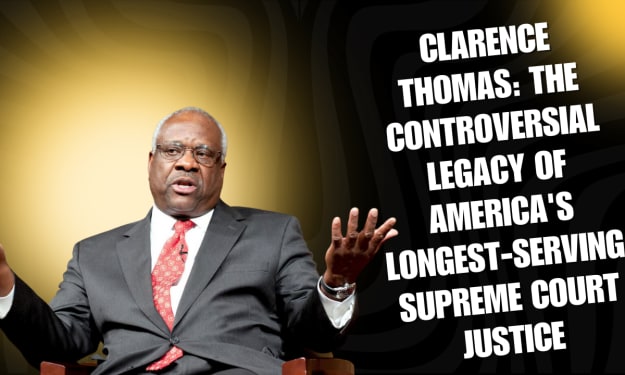
Clarence Thomas: A Deep Dive Into the Life and Legacy of the Controversial Supreme Court Justice
Clarence Thomas is a name that has been synonymous with both admiration and controversy in the world of American politics and law. Serving as a Supreme Court Justice since 1991, Thomas has left an indelible mark on the judicial landscape of the United States. But his career has not been without challenges. From his controversial confirmation hearings to his political and judicial leanings, Thomas’s legacy is one that continues to stir debate. This blog takes an in-depth look at the life, career, and controversies surrounding Clarence Thomas, a man who has shaped the judicial system in profound ways.
By muhammad younusabout a year ago in Journal
Why Is Silver 17% Cheaper in India Compared to China?
In early 2026, markets around the world have been watching one of the most intriguing developments in the metals sector — India’s silver prices are significantly cheaper than in China, with a gap of about 17% between the two nations’ local prices. While India’s silver trades at around ₹3,35 per gram today, China’s equivalent market price sits substantially higher when converted into Indian rupees — resulting in a notable difference in local cost for the same metal.
By Salaar Jamalia day ago in Journal
🅼🅸🅳🅽🅸🅶🅷🆃 🆂🅽🅰🅲🅺🆂
"It's 10 in Tuscon! We all know what that means... It's Time for Midnight Snacks with your man, Gerald Gee! Ready to spend the night together? Me too! I'm full of snacks and can't wait to regurgitate them all back into your hungry ears. Crack a brew! Pop some corn! Anything to get ready for one hell of a show where the talk maybe cheap but the words cut deep...
By Lamar Wiggins5 days ago in Fiction


Comments
There are no comments for this story
Be the first to respond and start the conversation.