
Clarence Thomas: A Deep Dive Into the Life and Legacy of the Controversial Supreme Court Justice
Exploring the Career, Legacy, and Controversies Surrounding Clarence Thomas – The Longest Serving Supreme Court Justice
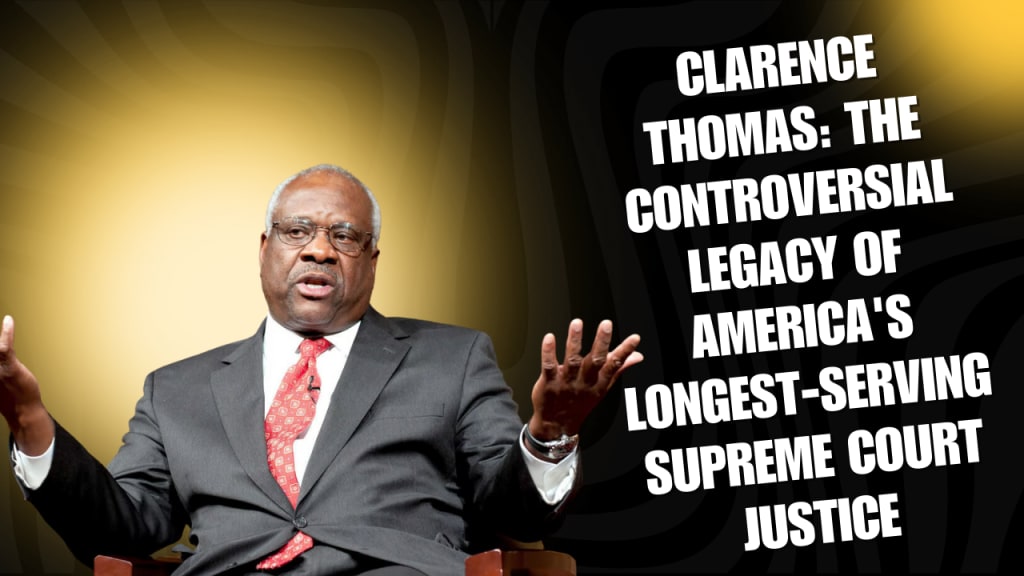
Clarence Thomas is a name that has been synonymous with both admiration and controversy in the world of American politics and law. Serving as a Supreme Court Justice since 1991, Thomas has left an indelible mark on the judicial landscape of the United States. But his career has not been without challenges. From his controversial confirmation hearings to his political and judicial leanings, Thomas’s legacy is one that continues to stir debate. This blog takes an in-depth look at the life, career, and controversies surrounding Clarence Thomas, a man who has shaped the judicial system in profound ways.
The Early Life of Clarence Thomas
Born on June 23, 1948, in Pin Point, Georgia, Clarence Thomas came from humble beginnings. Raised by his grandparents after his mother struggled to provide for him, Thomas’s early life was marked by hardship. However, these formative years would go on to influence his views and decisions in profound ways.
Graduating from the College of the Holy Cross in 1971 and later Yale Law School in 1974, Thomas quickly rose through the ranks of the legal world. His early legal career was largely focused on civil rights, which would set the stage for his future judicial philosophy.
Thomas’s Ascendancy to the Supreme Court
In 1991, after a stint as a judge on the U.S. Court of Appeals for the District of Columbia Circuit, Clarence Thomas was nominated by President George H.W. Bush to the U.S. Supreme Court. His nomination, however, was met with fierce opposition, particularly due to allegations of sexual harassment made by former colleague Anita Hill. Despite the controversy surrounding the hearings, Thomas was confirmed by the Senate with a 52-48 vote, marking a significant moment in American judicial history.
Judicial Philosophy: Conservative and Originalist
As a Supreme Court Justice, Clarence Thomas quickly established himself as one of the most conservative members of the court. A staunch originalist, Thomas believes that the Constitution should be interpreted based on its original meaning at the time of its drafting. This philosophy has led him to take positions that often place him in opposition to the liberal wing of the court.
One of Thomas’s most significant contributions to constitutional law is his emphasis on the principle of “judicial restraint.” He believes that judges should not legislate from the bench but rather interpret the law as it is written, without imposing their personal political views.
Key Cases and Decisions
Throughout his tenure, Thomas has participated in a number of landmark decisions that have had a lasting impact on American society. Some of the most notable cases include:
District of Columbia v. Heller (2008): Thomas supported the individual right to bear arms, expanding the interpretation of the Second Amendment.
Shelby County v. Holder (2013): In this case, Thomas was in favor of striking down key provisions of the Voting Rights Act of 1965, arguing that they were outdated and unconstitutional.
Dobbs v. Jackson Women's Health Organization (2022): Thomas was part of the majority that overturned Roe v. Wade, ending the federal right to abortion.
These decisions highlight Thomas’s belief in a strict interpretation of the Constitution, as well as his commitment to conservative principles.
The Controversies and Criticism
Despite his achievements, Clarence Thomas’s career has not been without controversy. One of the most enduring criticisms of Thomas is his alleged lack of transparency. He has been criticized for his failure to recuse himself from cases involving matters in which his wife, Ginni Thomas, has had a direct involvement. Her political activities and connections to conservative causes have raised questions about potential conflicts of interest.
Additionally, his role in the conservative shift of the court has sparked intense debate. Thomas’s decisions, especially in cases related to voting rights and abortion, have drawn sharp criticism from liberals and progressives who argue that his rulings often undermine the rights of marginalized communities.
The Legacy of Clarence Thomas
As the longest-serving justice in the history of the Supreme Court, Clarence Thomas’s legacy is still unfolding. Whether one agrees or disagrees with his decisions, there is no doubt that his impact on American law is profound. Thomas has shaped the court in a way that will influence generations to come.
His legacy will likely be defined by his commitment to originalism, his role in conservative judicial activism, and the controversies surrounding his tenure. As the court continues to navigate contentious issues like abortion, gun rights, and voting laws, Thomas’s influence will remain a key factor in shaping the direction of American jurisprudence.
Conclusion:
Clarence Thomas is a figure whose influence on the U.S. Supreme Court cannot be overstated. As both a groundbreaking African American justice and a staunch conservative voice, he has navigated a career filled with controversy and triumph. His legacy, while still in the making, will undoubtedly leave a lasting imprint on the American legal landscape. For those looking to understand the complexities of today’s Supreme Court, studying the life and work of Clarence Thomas is essential.
About the Creator
Keep reading
More stories from muhammad younus and writers in Journal and other communities.
Aubrey Plaza: The Rise of a Hollywood Icon
Aubrey Plaza has become a household name thanks to her unique comedic style, versatile acting, and unapologetically bold personality. Known for her deadpan humor and standout performances, Plaza’s career is a testament to the power of authenticity and perseverance. From her humble beginnings to her rise as a Hollywood powerhouse, her journey is not only inspiring but also offers countless opportunities for content creators to capitalize on her trending popularity.
By muhammad younusabout a year ago in Journal
I Used Perplexity.ai to Kill My SEO Anxiety. You Can, Too.
How I Stopped Panicking About AI Search Engines and Started Winning (A True Story) Let me tell you about the morning I felt the ground shift beneath my feet. I was drinking my usual, too-strong coffee, scrolling through my analytics dashboard. My website—a labor of love I’d built over seven years on sustainable gardening—was more than a blog. It was my livelihood. And there it was: a line on the traffic graph, not dipping, but nosediving. A 22% drop in just three months from organic search.
By John Arthor7 days ago in Journal



Comments
There are no comments for this story
Be the first to respond and start the conversation.