
Why Is Silver 17% Cheaper in India Compared to China?
Exploring the Key Factors Behind India’s 17% Lower Silver Prices Compared to China – Trade Policies, Industrial Demand, and Market Dynamics

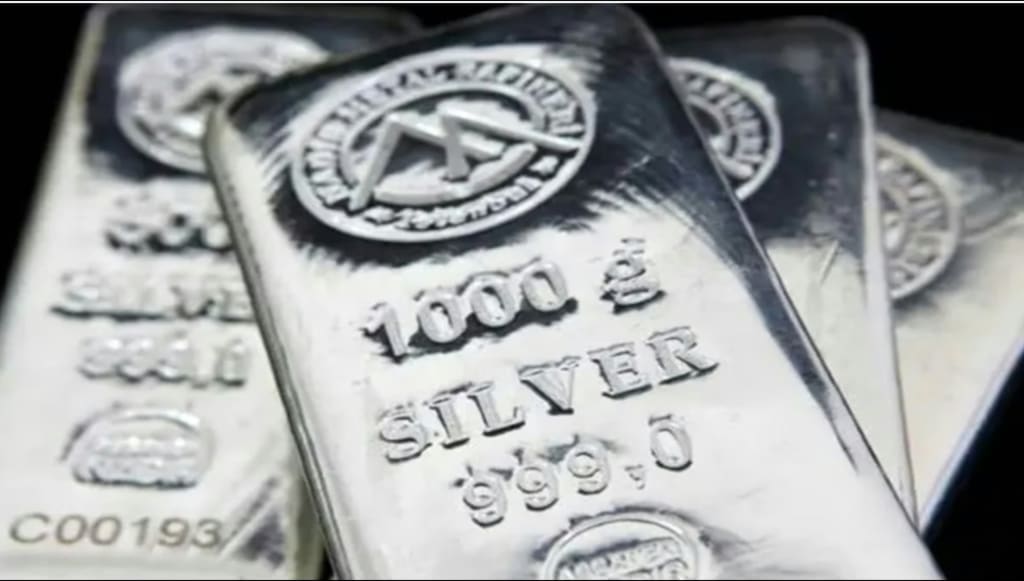
In early 2026, markets around the world have been watching one of the most intriguing developments in the metals sector — India’s silver prices are significantly cheaper than in China, with a gap of about 17% between the two nations’ local prices. While India’s silver trades at around ₹3,35 per gram today, China’s equivalent market price sits substantially higher when converted into Indian rupees — resulting in a notable difference in local cost for the same metal.
This price divergence may seem surprising, especially given that both countries are among the world’s largest consumers of silver. However, a combination of demand dynamics, government policies, trade agreements, and supply chain factors explains this cost disparity. Let’s explore why silver is cheaper in India compared to China and the broader implications for investors, industries, and global markets.
---
1. Understanding the Price Difference: The Basic Math
To understand the price gap, we need to look at how silver is priced in both markets. India’s local bullion price implies that 1 ounce (≈ 28.3 grams) costs approximately ₹9,984, whereas in China that same quantity trades for about $125 per ounce (≈ ₹11,450) at current exchange rates. The difference — roughly ₹1,969 per ounce — is nearly 17% lower in India.
This isn’t just a short‑term fluctuation; it reflects structural differences in how silver markets operate in the two countries.
---
2. China’s Policy‑Driven Premium
One of the primary reasons China’s silver is more expensive is due to recent government restrictions on exports. Since 2026, China has imposed export controls requiring licences for all silver shipments abroad. This policy effectively limits the amount of silver that flows from Chinese processors to the global market, artificially tightening supply.
China also classifies silver as a strategic resource, prioritizing domestic industrial use — particularly in high‑tech sectors such as solar energy, electric vehicles, and electronics. By retaining more silver at home and regulating exports, China increases local demand pressure, driving up domestic premiums.
These export curbs, combined with strong industrial consumption in China, create upward pressure on local silver prices, making them noticeably higher than international benchmarks, and consequently higher than in India.
---
3. India’s Trade Deals and Lower Import Duties
In contrast, India leverages trade agreements to reduce import costs. Notably, the Comprehensive Economic Partnership Agreement (CEPA) between India and the UAE allows silver imports at significantly lower duties — often around 6–8% instead of the standard 15% tariff. Importers have taken advantage of this route, bringing in a large supply of silver at relatively lower landed costs.
These lower tariffs translate into reduced price pressure on the Indian market. A higher influx of imported silver through preferential channels has, at times, created a supply overhang — contributing to lower prices domestically compared to global rates.
This dynamic partly explains why silver in India remains comparatively cheaper even when global and Chinese prices rise sharply.
---
4. Differences in Demand Composition
Another factor lies in how silver is consumed in each country. China’s demand leans heavily towards industrial usage — manufacturing solar panels, electronics, batteries, and high‑precision components. This industrial pull not only increases demand but also reinforces silver’s valuation as a strategic industrial metal, adding long‑term upward pressure on its price domestically.
India’s demand profile includes a larger component of investment and traditional usage — jewelry, coins, and ceremonial purposes. Although industrial usage is growing in India, it has not yet reached the scale of China’s industrial consumption footprint. Therefore, while demand remains robust, it doesn’t exert the same upward pricing pressure as in China.
---
5. Global Supply Constraints and Arbitrage Opportunities
The global silver market has faced persistent supply deficits in recent years, as production often trails industrial and investment demand. Around 70% of silver is produced as a by‑product of mining other metals, limiting production scalability.
This structural shortage, paired with China’s tightened export policy, has created price bifurcation across markets. Where supply enters freely (as in India via CEPA), prices stay closer to international benchmarks. Where supply is constrained domestically with export limits (as in China), local prices rise sharply above those benchmarks.
This situation presents arbitrage opportunities for traders — importing where it is cheaper and selling where prices are higher — although such benefits are moderated by tariffs, logistics, and regulatory barriers.
---
6. Currency and Exchange Rate Effects
Currency values also influence local metal prices. Silver is globally priced in US dollars, so variations in the rupee–dollar exchange rate directly affect the local rupee price. A weaker rupee makes imports costlier, but trade agreements and import strategies can mitigate this impact. Conversely, China’s pricing — influenced by local policy — may absorb exchange fluctuations differently, contributing to broader price disparities.
---
Conclusion: What This Means for Stakeholders
The nearly 17% price difference between silver in India and China is not a coincidence — it is shaped by government trade policies, import duty structures, market demand profiles, and global supply economics. India’s use of trade agreements and lower duties helps keep its local prices closer to global benchmarks, while China’s export controls and industrial demand lift its local premiums above international levels.
For investors and consumers, this means that market entry timing, purchase channels, and understanding policy impacts are crucial. Traders might exploit price arbitrage under certain conditions, while industries relying on silver should watch policy shifts — especially China’s export rules — as they can have ripple effects across global supply chains.
As silver continues to play a significant role not only as a precious metal asset but also as an industrial cornerstone, tracking how nations shape their markets will remain essential for navigating this complex global commodity landscape.
About the Creator
Keep reading
More stories from Salaar Jamali and writers in Journal and other communities.
Death Toll in Philippine Boat Accident Climbs to 15, Hundreds Rescued
At least 15 people have died and hundreds more were rescued after a passenger ferry sank in the southern Philippines, officials said Monday, in one of the latest maritime disasters to strike the archipelagic nation. The vessel, the MV Trisha Kerstin 3, went down in the early hours of the morning while traveling between islands, triggering a large‑scale search and rescue operation involving coast guard units, military assets and local vessels.
By Salaar Jamaliabout 9 hours ago in Journal



Comments
There are no comments for this story
Be the first to respond and start the conversation.