
Sleeping with Danger: The Tragic Fate of a Woman and Her Pet Python
How a trusting relationship with a beloved pet turned into a nightmare
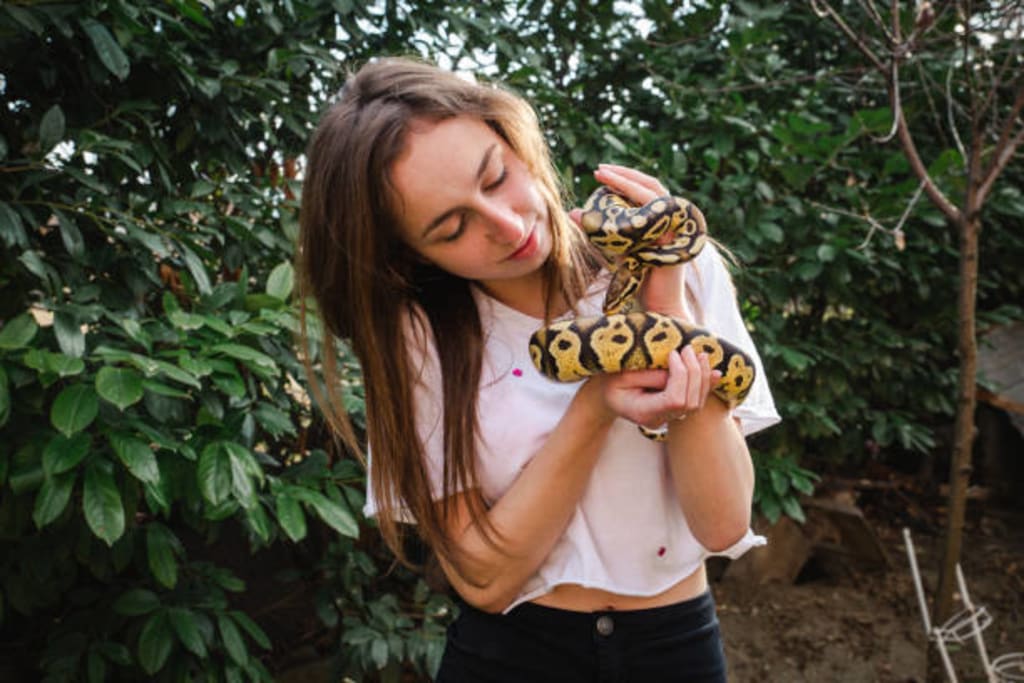
In the world of exotic pet ownership, few stories have shocked me as much as m the one involving a woman and her pet python. This incident, shared on social media by Chris Planer, raises serious concerns about the dangers of keeping wild animals as pets, even when they seem domesticated. While the story has been met with skepticism and skepticism, it serves as a chilling reminder that animals, no matter how tame they appear, can revert to their nature with devastating consequences.
A Deep Connection Between Woman and Snake
The story revolves around a woman who had developed an intense bond with her pet python, a snake she loved and believed was more than just an animal—it was a companion. She treated the python like a trusted friend, even allowing it to share her bed. Every night, the python would stretch itself out and wrap its long, muscular body around hers. To the woman, this gesture felt like protection, a sign that they shared a special connection.
Her belief in this bond was strong. In her eyes, the behavior was something that made her feel closer to the creature. However, as many experts in animal behavior interpreting animal actions through a lens of human emotions can be dangerous. The woman, like many pet owners, mistook the python's actions as signs of trust and affection, rather than recognizing the potential danger lurking beneath the surface.
Warning Signs Begin to Show
At some point, the python stopped eating. This behavior changed the woman, so she took her beloved pet to the vet for a check-up. Concerned that the snake might be ill, she hoped the vet could provide some answers. After a thorough examination, the vet asked a series of questions that would soon unravel the truth.
One particular question stood out: Was the python sleeping in her bed and wrapping its body around hers? The woman, unsuspecting of the vet’s concern, confirmed that this was indeed the case. She assumed the snake felt safe and comfortable with her and was merely expressing its contentment.
The vet’s response, however, was nothing short of shocking. The python wasn’t sick. It wasn’t refusing food because of illness or discomfort. Instead, the vet explained, the snake was measuring the woman every night, calculating whether it could swallow her whole. The python’s refusal to eat its regular meals was not a symptom of illness but rather an indication that it was preparing itself for a much larger feast—its owner.
The Shocking Truth
The woman was in disbelief. How could her beloved pet, the animal she trusted, be planning to eat her? She dismissed the vet’s warning, clinging to her belief that her python would never harm her. Sadly, not long after, her worst fears came true. The python, following its natural attacks, swallowed her whole.
While this story may sound like something from a horror movie, it serves as a powerful reminder of the unpredictable nature of wild animals, even when kept as pets. Pythons, like many large snakes, have the canary much larger than themselves. Their bodies are designed to constrict and consume, and once they set their sights on a target, they are patient hunters.
Could This Happen?
Although the story has not been confirmed, it echoes real incidents where large snakes, including pythons, have attacked their owners. Pythons are powerful predators that can grow to impressive lengths, sometimes exceeding 20 feet. They are capable of constricting and consuming animals—and even humans—if the opportunity presents itself.
In some documented cases, people have been attacked by their pet snakes, either due to neglecting safety precautions or misunderstanding the snake’s behavior. Behaviourally, snakes that stop eating or begin acting differently might not be sick but instead may be exhibiting predatory instincts. These are wild animals, and no matter how long they’ve lived in captivity, their inherent nature remains unchanged.
A Cautionary Tale for Pet Owners
This story, whether entirely factual or not, serves as a strong caution for those who keep wild animals as pets. Exotic pet ownership has become more popular over the years, with many people drawn to the allure of owning creatures like pythons, lizards, or even big cats. However, these animals, while fascinating, are not domesticated and carry risks that should not be ignored.
Wild animals, unlike dogs or cats, have instincts that are deeply ingrained in their DNA. These instincts include hunting, defending territory, and sometimes seeing humans as prey. No amount of love or affection can override these natural behaviours, behaviours where the danger lies. Even the most well-behaved exotic pets can be unpredictable and potentially lethal.
Respect for Nature
The tragic story of the woman and her python highlights the importance of respecting the nature of wild animals. While the bond between humans and animals can be profound, it’s crucial to remember that not all creatures are suitable to live alongside humans. Exotic pets like pythons can be dangerous, and it’s essential to understand the risks before deciding to bring one into your home.
Ultimately, this story serves as a reminder that we must treat wild animals with the respect and caution they deserve, recognizing that no matter how much we care for them, their instincts can never be fully tamed.
About the Creator
Keep reading
More stories from Dome Emmanuel and writers in Humans and other communities.
The Secrets to Sexual Health
Sexual health is a critical aspect of overall well-being, encompassing not only physical but also emotional and social factors. Despite its undeniable importance, discussions about sex remain taboo in many cultures, leading to a lack of proper understanding and education. As a result, many people are left uninformed or unsure of how to approach the topic. In this blog post, we will explore key aspects of sexual health, including sex education, consent in relationships, how to prevent STIs, and the best contraception methods, so you can make informed, responsible decisions.
By Dome Emmanuelabout a year ago in Humans
It's not my story anymore
There's a Taylor Swift song called the Manuscript it's about closing a Dark chapter of one's life. Or any chapter for that matter. I wanted to write about this because I think it's important to realize that yes while the things I write about on here are personal and about things I have dealt with. But that does not mean I am that person forever. I'm not the girl I was 5 years ago or even last year. I am NOT the niave women I was back then. I know better now. MUCH better. In fact I cringe at the person I was. I will NEVER tolerate the shit I did back then.
By Amanda Nicole3 days ago in Humans



Comments
There are no comments for this story
Be the first to respond and start the conversation.