
Refugee Entry Suspension: How the Trump Administration Changed U.S. Immigration Policy
Thousands of refugees were left in limbo as the Trump administration halted entry to America, changing lives and sparking global debate.
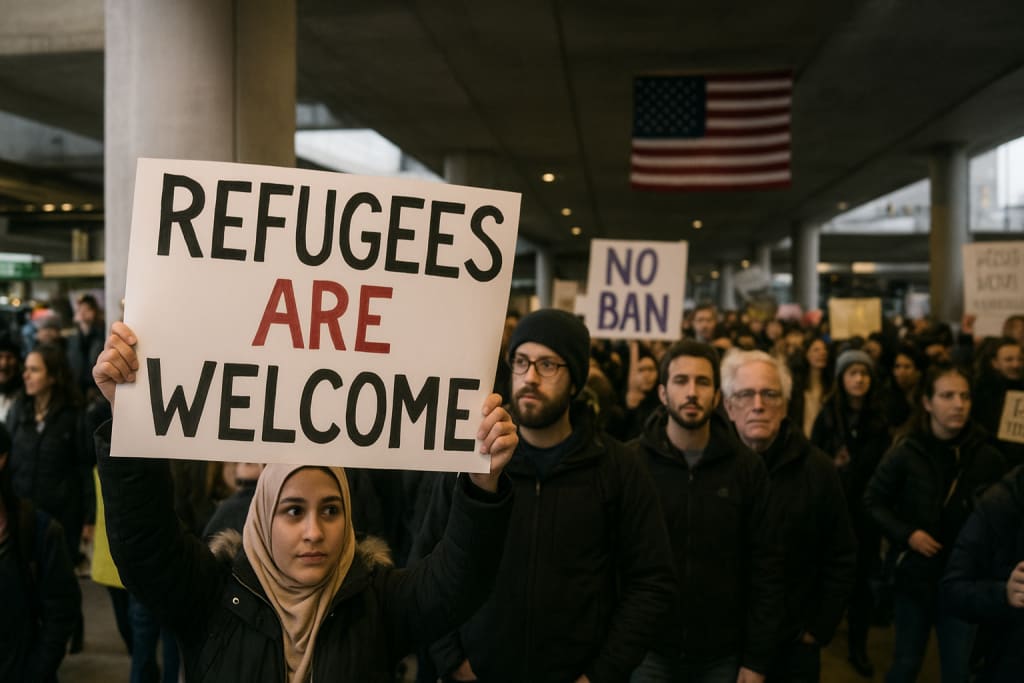
In early 2017, the world watched as the Trump administration made one of its most controversial decisions, the suspension of refugee entry into the United States. The move was part of a broader immigration policy aimed at tightening U.S. borders and limiting the number of people entering from certain countries. For many, it was a shock. For others, it was a promise kept. But for thousands of refugees, it meant uncertainty, fear, and long waits for safety.
The Beginning of the Ban
Shortly after taking office, former President Donald Trump signed an executive order that temporarily stopped refugees from entering the country. It also placed travel restrictions on several Muslim-majority countries, including Syria, Iran, Iraq, Libya, Somalia, Sudan, and Yemen.
The administration argued that the pause was necessary to strengthen security checks and prevent potential threats. Trump called it a “travel ban” designed to protect Americans from terrorism. His supporters praised the decision, saying the U.S. had a right to control who entered its borders.
But critics called it a “Muslim ban”, saying it unfairly targeted people based on religion and nationality. Protests erupted across airports in the United States. Lawyers rushed to help detained travelers. The images of families separated at arrival gates went viral worldwide.
Impact on Refugees
The ban had a deep impact on refugees who had already gone through years of security screening and background checks. Many had sold their belongings, completed interviews with U.S. immigration officers, and were just waiting for their flights.
Suddenly, they were told they could not enter.
Refugees from war-torn countries like Syria and Somalia faced heartbreaking setbacks. Some were stranded in refugee camps with no clear idea of what would happen next. For many, the U.S. was seen as a safe place, a fresh start after escaping violence and persecution. That hope was suddenly taken away.
Charity groups and human rights organizations called the decision “cruel and unnecessary.” They argued that refugees were already heavily vetted and that the suspension hurt innocent families fleeing danger.
Legal Battles and Court Challenges
Almost immediately, several states and civil rights groups challenged the travel ban in court. Judges in Hawaii, Washington, and other states temporarily blocked the order, calling it unconstitutional.
But the Trump administration didn’t back down. It revised the ban multiple times to make it legally stronger and eventually took the case to the U.S. Supreme Court.
In 2018, the Supreme Court upheld a revised version of the travel ban, ruling that the president had the authority to restrict entry for national security reasons. It was a major win for the Trump administration, but the debate over the policy continued.
Supporters’ Point of View
Supporters of the ban said it was about safety, not discrimination. They believed that the U.S. needed time to improve its refugee screening process and ensure that people entering the country were not a threat.
Many Americans who supported the policy felt that the government had a responsibility to put citizens’ safety first. Trump often said his goal was to protect the United States from potential terrorists hiding among refugees, even though statistics showed that refugees were already among the most thoroughly vetted entrants to the country.
Opponents’ Viewpoint
Opponents, on the other hand, saw the suspension as a moral and humanitarian failure. They argued that America had always been a nation built by immigrants and that turning away refugees went against those values.
Religious groups, including many Christian and Jewish organizations, spoke out strongly against the policy. They said it was wrong to close the door on people who were running from war, poverty, and persecution.
International leaders also criticized the decision, saying it damaged America’s reputation as a global leader in humanitarian aid.
The Human Side of the Policy
Behind the politics were real human stories.
Families who had waited years for approval suddenly had their dreams put on hold. Children who were ready to start school in America found themselves stuck in refugee camps. Some families were split apart, with one parent allowed in and the other left behind.
One Syrian woman shared her story in an interview: “We were told our papers were ready. We sold everything. Then, overnight, it was gone. My children cried when we told them we couldn’t go.”
Stories like hers showed the emotional and personal cost of the refugee entry suspension.
Changes in Later Years
In 2021, after President Joe Biden took office, he ended the refugee and travel bans introduced by Trump. Biden called the bans “a stain on America’s conscience.” He promised to restore the U.S. refugee program and increase the annual refugee admission cap.
Although the bans were lifted, their effects continued to be felt. Many refugee organizations had reduced staff or funding during the suspension years, and rebuilding those systems took time. Thousands of refugees still faced long waits to enter the country.
Conclusion
The refugee entry suspension under the Trump administration remains one of the most controversial immigration policies in recent U.S. history. Supporters saw it as a necessary step for national security. Opponents saw it as discrimination disguised as safety.
In the end, the policy highlighted one of the biggest questions in modern politics:
How can a country protect itself while also protecting those in need?
The United States continues to wrestle with that question, balancing its traditions of openness and compassion with the realities of a complex, changing world.
About the Creator
Keep reading
More stories from Muhammad Okasha and writers in Humans and other communities.
Trump Security Clearance Suspension: The Perkins Coie Connection
When the Trump administration was in power, one of the biggest talking points was always security: who had access to classified information and who didn’t. From the White House to the intelligence community, security clearances became a powerful tool for control, loyalty, and political drama.
By Muhammad Okasha2 months ago in Humans
5 Things to Know About Intensive Outpatient Care and How It Works
Intensive outpatient care has become an important treatment option for individuals seeking support for substance use or mental health challenges without entering residential treatment. This level of care offers structured therapy while allowing people to maintain daily responsibilities such as work, school, and family life.
By Jordan Blake4 days ago in Humans



Comments
There are no comments for this story
Be the first to respond and start the conversation.