
Trump Security Clearance Suspension: The Perkins Coie Connection
Inside the controversy linking Trump’s security clearance suspensions to the influential law firm Perkins Coie
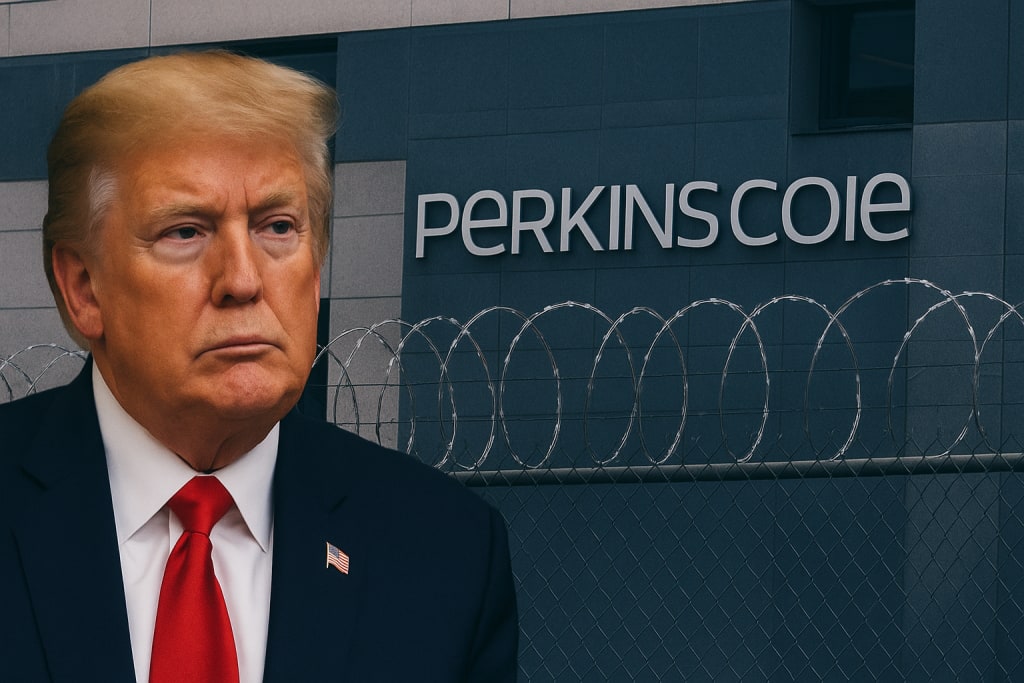
When the Trump administration was in power, one of the biggest talking points was always security: who had access to classified information and who didn’t. From the White House to the intelligence community, security clearances became a powerful tool for control, loyalty, and political drama.
But one story that grabbed attention in political and legal circles was the security clearance suspension involving Perkins Coie, a well-known law firm connected to Democratic politics.
What Happened?
In simple words, Perkins Coie is one of the most influential law firms in Washington, D.C. They have represented many Democratic campaigns, including Hillary Clinton’s and the Democratic National Committee (DNC). During Trump’s presidency, several government investigations and intelligence reviews began looking into how law firms and consultants handled classified or sensitive information.
According to reports that surfaced during Trump’s time in office, some security clearances connected to individuals who had professional links with Perkins Coie were questioned or delayed.
This raised eyebrows because security clearance suspensions are serious; they mean someone temporarily loses access to classified materials until an investigation is complete.
Why It Mattered
To understand the weight of this, we need to remember that security clearance is more than just a badge. It’s a symbol of trust between the government and an individual.
When someone’s clearance is suspended, it suggests there are concerns about loyalty, honesty, or political connections.
So, when people tied to a politically active firm like Perkins Coie faced clearance issues, it naturally fueled political controversy.
Many Trump supporters saw this as a necessary move, a way to protect national security from what they believed were “deep state” influences.
Meanwhile, critics of the Trump administration said it was political revenge, an attempt to punish lawyers and investigators who had once been involved in cases against Trump or his campaign.
Perkins Coie’s Political Background
Perkins Coie isn’t new to political storms. The firm became widely known after representing the DNC during the 2016 presidential election.
They also worked with Fusion GPS, the company behind the research that led to the Steele Dossier, a controversial document filled with unverified claims about Trump’s connections to Russia.
That dossier later became a major topic during the investigations into Russian election interference.
Because of these connections, some members of the Trump administration viewed Perkins Coie as part of the opposition, even though the firm itself was simply representing clients, a normal role for any law office.
The Trump Administration’s Stance
President Trump often expressed frustration with what he called “the political weaponization of law”.
His administration argued that too many people inside the government and related organizations had political motives instead of focusing on national interests.
So, when certain individuals associated with Perkins Coie lost or had their clearances suspended, the administration claimed it was part of a broader effort to clean up biased networks within federal agencies.
However, critics argued that Trump’s approach blurred the line between justice and politics.
Instead of protecting security, they said the administration was using clearance suspensions to punish perceived enemies.
Legal and Ethical Concerns
Experts in national security law raised important questions.
Was it fair to suspend someone’s clearance based on their professional associations rather than proven misconduct?
If so, that could set a dangerous precedent, suggesting that political loyalty, not integrity, determines who can handle government secrets.
Perkins Coie publicly stated that it did nothing wrong and that its lawyers always complied with legal and ethical standards.
The firm continued to operate normally, representing clients across many areas, including technology, civil rights, and election law.
Still, the controversy added another layer of tension between the Trump administration and Washington’s legal community.
The Bigger Picture: Politics and Power
The suspension episode highlights a bigger issue: how politics can shape government operations.
Security clearance decisions are supposed to be objective, based on facts and background checks. But in times of political division, even these technical matters can become emotional battles.
For Trump’s supporters, the suspensions were a sign of accountability — an attempt to root out the influence of old political elites.
For his critics, it was a warning sign, proof that the administration was willing to use power to silence opponents.
The Role of the Media
When the story broke, different media outlets told it in very different ways.
Conservative platforms focused on alleged political bias within law firms and government agencies.
Liberal media, on the other hand, painted the move as an attack on professional independence and the rule of law.
Social media added more confusion.
Rumors spread quickly, and many people didn’t know what was true or exaggerated.
The term “Perkins Coie” started trending alongside “Trump clearance” — and for weeks, it dominated political conversations in Washington.
What Happened Next
Eventually, many of the clearance reviews ended quietly, with no major legal findings against Perkins Coie.
Still, the episode left a mark.
It showed how deeply politics had influenced trust inside U.S. institutions.
It also reminded everyone that information access equals power, and in Washington, power is everything.
After Trump left office, discussions about security clearance reform continued.
Some experts called for greater transparency and clear rules to prevent future political misuse.
Others said that such measures might weaken national security by making internal investigations harder.
Lessons from the Controversy
The Perkins Coie story teaches us an important lesson:
When politics and national security overlap, the truth often gets blurred.
Clearance suspensions should never be used to score political points. They must be based on evidence and law, not loyalty or opinion.
As the U.S. continues to navigate a divided political landscape, this case reminds us that trust is fragile.
The people who hold sensitive information, whether in government or private practice, must be judged by their integrity, not their political connections.
The Trump security clearance suspension involving Perkins Coie may not have changed the course of history, but it exposed a troubling trend.
It showed how easily political tension can spill into legal and security decisions.
In a democracy, maintaining the balance between safety and fairness is always difficult, but it’s necessary.
At its core, this story isn’t just about one law firm or one president.
It’s about how power is used, how trust is earned, and how easily both can be lost when politics takes center stage.
About the Creator
Keep reading
More stories from Muhammad Okasha and writers in Humans and other communities.
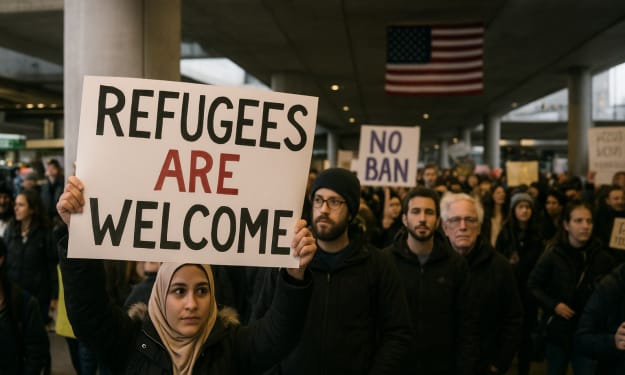
Refugee Entry Suspension: How the Trump Administration Changed U.S. Immigration Policy
In early 2017, the world watched as the Trump administration made one of its most controversial decisions, the suspension of refugee entry into the United States. The move was part of a broader immigration policy aimed at tightening U.S. borders and limiting the number of people entering from certain countries. For many, it was a shock. For others, it was a promise kept. But for thousands of refugees, it meant uncertainty, fear, and long waits for safety.
By Muhammad Okasha2 months ago in Humans
Ghaza, the City That Remembers
Ghaza had been standing by the sea for thousands of years, long before borders were drawn and redrawn, before flags replaced empires. Waves struck its shore with the same patience they always had, as if time itself bowed to the city’s endurance. To the outside world, Ghaza was often reduced to headlines and numbers, but to the people who lived there, it was something far deeper: a home stitched together by memory, struggle, and stubborn hope.
By The best writer 2 days ago in Humans


Comments
There are no comments for this story
Be the first to respond and start the conversation.