
“Practice Mindfulness for a good mental health”
Engage in activities like meditation or deep breathing to stay present and reduce stress.

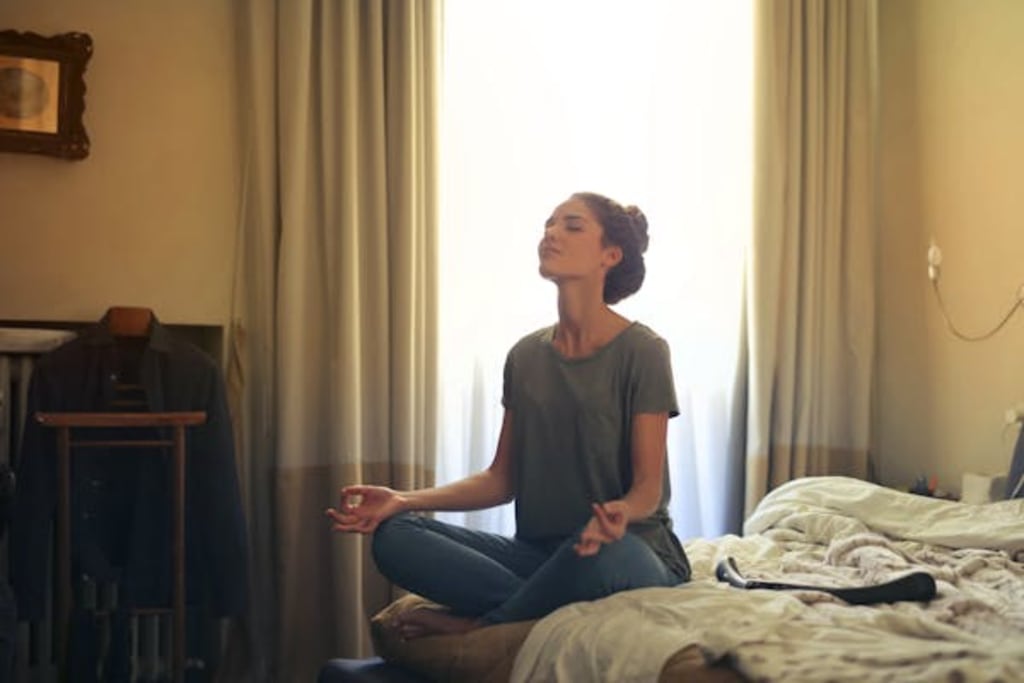
Mindfulness involves intentionally focusing on the present moment without judgment. Activities like meditation and deep breathing are commonly practiced to cultivate mindfulness.
Here's more detail on each:
1. Meditation
Meditation is a practice that involves training your mind to focus and redirect thoughts. Here's a deeper look into meditation:
Types of Meditation:
Mindfulness Meditation: Focuses on being present in the moment, observing thoughts without judgment, and letting them pass.
Transcendental Meditation (TM): Involves silently repeating a mantra to achieve a state of relaxed awareness.
Loving-kindness Meditation: Cultivates feelings of compassion and love towards oneself and others.
Guided Meditation: Involves following the guidance of a teacher or audio recording to visualize relaxing scenes or scenarios.
Benefits:
Reduced Stress: Meditation can lower cortisol levels and reduce the body's stress response.
Improved Concentration: Regular practice can enhance focus, attention, and cognitive function.
Enhanced Emotional Well-being: Meditation promotes emotional regulation, positivity, and resilience against negative emotions.
Better Sleep: It can help relax the body and mind, leading to improved sleep quality.
How to Start:
Find a quiet and comfortable place to sit or lie down.
Close your eyes or focus softly on a single point.
Choose a meditation technique (such as focusing on your breath or using a mantra).
Begin with short sessions (5-10 minutes) and gradually increase the duration as you become more comfortable.
Be patient with yourself; it's normal for the mind to wander during meditation. When distractions arise, gently refocus your attention on your chosen anchor (breath, mantra, etc.).
Incorporating Meditation into Daily Life:
Aim to meditate regularly, ideally at the same time each day, to establish a routine.
Use meditation as a tool to manage stress and enhance overall well-being.
Experiment with different techniques to find what works best for you.
Consider joining meditation groups or using apps that offer guided sessions to support your practice.
Overall, meditation is a versatile practice that can benefit people of all ages and lifestyles by fostering relaxation, clarity of mind, and emotional balance.
2. Deep Breathing
Deep breathing is a relaxation technique that promotes calmness and reduces stress by focusing on controlled, deep breaths. Here are more details on how to practice deep breathing effectively:
Technique:
Find a quiet and comfortable place to sit or lie down.
Close your eyes if it helps you relax, but it's not necessary.
Place one hand on your chest and the other on your abdomen.
Inhale deeply and slowly through your nose, allowing your abdomen (not your chest) to rise as you fill your lungs with air. Aim for a count of 4-5 seconds for the inhalation.
Hold your breath briefly (for about 2-3 seconds).
Exhale slowly and completely through your mouth, letting your abdomen fall as you release the air. Try to exhale for a similar count of 4-5 seconds.
Pause briefly before beginning the next inhalation.
Benefits:
Reduces Stress: Deep breathing triggers the body's relaxation response, lowering heart rate and blood pressure.
Improves Focus: It enhances oxygen flow to the brain, promoting clarity and concentration.
Calms Emotions: Deep breathing activates the parasympathetic nervous system, helping to alleviate anxiety and promote emotional balance.
Enhances Respiratory Function: It strengthens respiratory muscles and increases lung capacity over time.
Incorporating into Daily Routine:
Practice deep breathing whenever you feel stressed, anxious, or need to relax.
Use it as a quick relaxation technique during breaks at work or before important events.
Combine deep breathing with mindfulness or visualization techniques for added relaxation benefits.
Aim to practice deep breathing exercises for a few minutes several times a day to experience its full benefits.
Deep breathing is simple yet powerful, providing immediate relief from stress and promoting overall well-being when practiced regularly. It's a valuable tool that can be easily incorporated into daily life to manage stress and enhance relaxation.
About the Creator
Donkodech Hahngeh
Hello everyone, I hope that all the articles will be useful for all readers.
Keep reading
More stories from Donkodech Hahngeh and writers in Humans and other communities.
“How to Manage Your Stress : Use mindfulness or meditation techniques.“
Mindfulness and meditation techniques are powerful tools for managing stress, enhancing emotional well-being, and improving overall mental health. These practices involve focusing on the present moment, cultivating awareness, and fostering a non-judgmental attitude toward your thoughts and feelings. Here's an in-depth exploration of the benefits of mindfulness and meditation, various techniques, and practical tips for incorporating these practices into your daily life.
By Donkodech Hahngeh2 years ago in Humans
Time to change your life.
Is it even possible for you to change your life? A lot of people, more than there should be, are unhappy with their lives. But what are they doing about it? Usually nothing. People talk about how shitty their lives are and want change, but are they not taking the actions to change?
By Jen Phillipsa day ago in Humans
The unlikely friendship
The Unlikely Friendship I never thought I'd be friends with someone like him. We were from different worlds, with different values and interests. He was a street-smart kid from the wrong side of town, while I was a bookworm from a middle-class family. Our paths crossed in a most unexpected way, and what followed was a friendship that would change my life forever.
By Talhamuhammad7 days ago in Humans



Comments
There are no comments for this story
Be the first to respond and start the conversation.