
Inside the Human Mind: The Mechanics of Thought and Behavior
Exploring the Psychological Forces That Shape Our Decisions, Emotions, and Identity
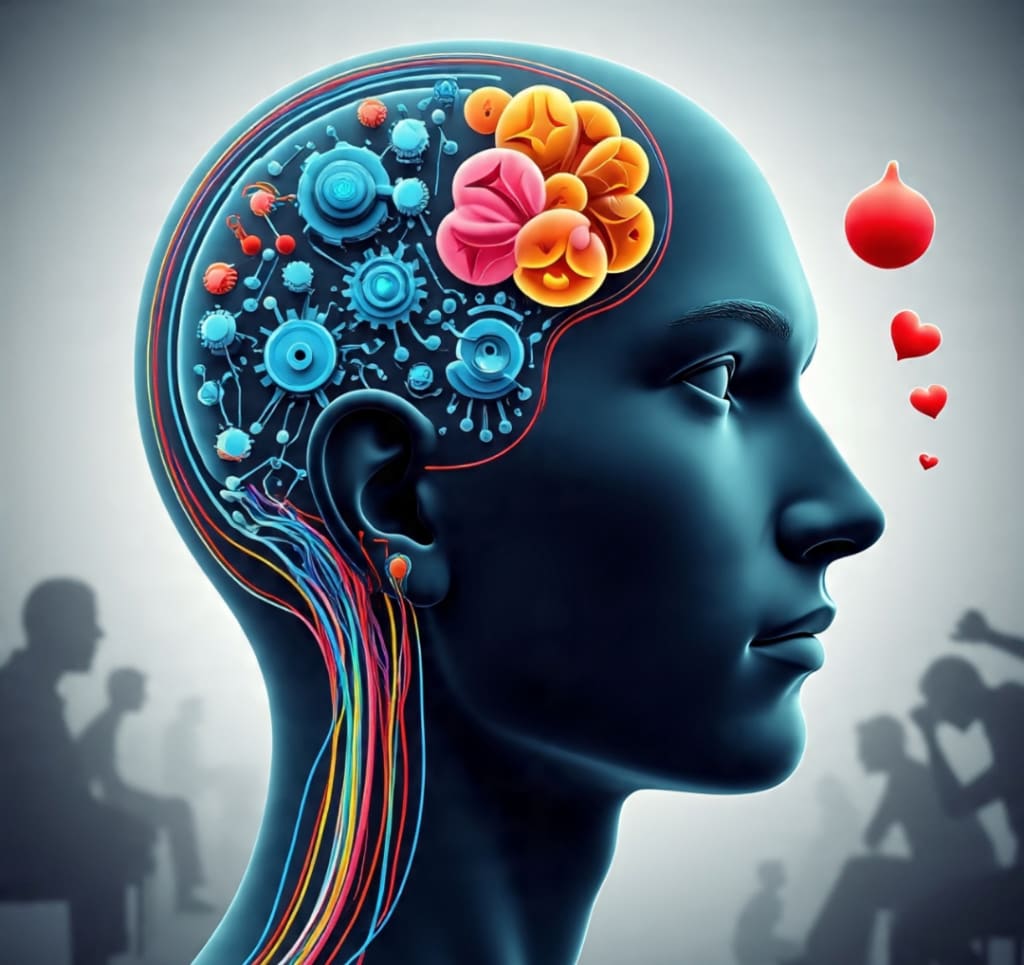
Imagine waking up on a rainy morning. You feel sluggish, maybe even irritable, without really knowing why. You skip breakfast, rush through traffic, snap at a co-worker, and by lunchtime, you’re wondering: Why am I like this today?
The answer lies in the invisible network of psychological forces that work beneath our awareness—shaping our thoughts, emotions, and behaviors. Human psychology isn’t just about what we think or feel in a moment; it’s a vast interplay of biology, experience, memory, and social context. Understanding this interplay is like opening a map to the mind—and perhaps, to ourselves.
At the core of human psychology is the brain—an organ of staggering complexity. With over 86 billion neurons firing in constant communication, it manages everything from heartbeats to daydreams. Yet, psychology teaches us that the brain isn’t just a machine. It's shaped by our relationships, our traumas, and our culture.
Take, for instance, the concept of cognitive biases. These are mental shortcuts our brain uses to make sense of overwhelming information. They're incredibly useful—until they’re not. The confirmation bias, for example, causes us to favor information that confirms what we already believe, even if it's wrong. This explains why people argue passionately about politics or climate change, even when presented with clear evidence. Our brains don’t just process facts; they defend our identities.
Then there's emotional regulation, a concept central to psychology. Emotions aren't random. They're survival tools. Fear kept our ancestors alive. Joy bonded families and tribes. But in modern life, the same mechanisms can cause anxiety in traffic, jealousy on social media, or burnout at work. The field of psychology studies how we can better understand and manage these feelings—through therapy, mindfulness, or even small habits like gratitude journaling.
But perhaps the most fascinating part of psychology is identity—the story we tell ourselves about who we are. From childhood, we absorb roles, expectations, and messages: You’re the smart one, You’re too sensitive, Boys don’t cry. Over time, these messages form a mental blueprint. This is called the self-concept, and it becomes the lens through which we view the world.
This self-concept can empower—or limit—us. For example, someone who grows up believing they are "bad at math" may avoid opportunities in science or finance, regardless of their true potential. A psychologist might work with this person to uncover the root of that belief, challenge its truth, and gradually reshape the narrative.
But we don't just carry our past inside us—we carry others. Humans are deeply social creatures, and much of what we think or feel is influenced by those around us. The famous Stanford prison experiment demonstrated how easily people conform to social roles and expectations, even when it contradicts their personal values. More recent research into mirror neurons shows how our brains are wired to empathize—we literally feel what others feel.
In today’s fast-paced, digital world, our mental health is under more strain than ever. Anxiety and depression are at all-time highs, particularly among young people. But the good news is that awareness of mental health is also growing. Tools from psychology are becoming more mainstream—from therapy apps to school wellness programs to corporate mindfulness training.
Still, one of the most powerful insights from psychology remains timeless: change is possible. Neuroplasticity—the brain’s ability to rewire itself—means that we’re not stuck with the same habits or thoughts forever. With time, support, and effort, people can break cycles of addiction, heal from trauma, or learn to live with purpose.
So the next time you find yourself reacting emotionally, making a snap judgment, or feeling stuck in a pattern, remember: that moment is shaped by countless layers—biology, belief, experience, and context. You’re not broken. You’re human. And understanding psychology isn't about labeling yourself. It’s about getting curious.
Because once you understand how the mind works, you can begin to work with it—and maybe even change your life.
About the Creator
Keep reading
More stories from Muhammad Saad and writers in Humans and other communities.
Inside the Mind: Unlocking the Mysteries of Human Psychology
It was just another morning for Maya—alarm blaring, coffee brewing, notifications piling up. But beneath the routine, something more profound was happening: her brain was performing countless psychological feats every second. Her mind, a complex engine shaped by millions of years of evolution, was making decisions, processing emotions, and interpreting the world—all without her conscious awareness. Psychology, the scientific study of the mind and behavior, seeks to understand just that: what makes people think, feel, and act the way they do. And while we often take our mental processes for granted, they are anything but simple. As Maya scrolled through her messages, her brain evaluated social cues, remembered past conversations, and predicted possible outcomes. This blend of memory, perception, and judgment is part of cognitive psychology, a branch that studies how people acquire, process, and store information. It explains why she could instantly recognize her best friend’s text tone—or feel nervous reading a vague “we need to talk.” Later, Maya found herself lingering on a post about a recent tragedy. She felt a lump in her throat and a strange pull to read more. That reaction is no accident. Our emotional systems are designed to grab our attention and help us respond quickly. Evolutionary psychology suggests emotions like fear, anger, and sadness evolved to help our ancestors survive—fear from danger, anger to fight injustice, and sadness to seek support. As Maya walked to work, she passed a group of people laughing loudly. She smiled, even though she didn’t know them. This is a glimpse into social psychology, which studies how people influence and are influenced by others. Humans are social creatures; we mimic facial expressions, adjust our behavior in groups, and crave acceptance. Maya’s smile was her brain’s subtle way of reinforcing social harmony—even with strangers. At work, Maya had a presentation. Her hands were shaking, and her heart pounded. “Why am I like this?” she whispered. The answer lies partly in biopsychology, which explores how our brain, hormones, and nervous system affect behavior. When Maya feels anxious, her brain’s amygdala sounds an internal alarm, triggering adrenaline and a rapid heartbeat—classic signs of the "fight-or-flight" response. But psychology doesn’t only explore what happens when we’re stressed or scared. It also helps us understand motivation, happiness, and meaning. Maya reminded herself to breathe and focus on her purpose. Her motivation—shaped by past successes, her goals, and a belief in her skills—pushed her forward. This taps into humanistic psychology, which emphasizes personal growth, purpose, and self-actualization. After the presentation, Maya’s manager praised her. That single moment made her feel proud, energized, and confident. Why? According to behavioral psychology, rewards and reinforcements play a powerful role in shaping how we act. When we receive positive feedback, we’re more likely to repeat the behavior—like giving future presentations with confidence. As the day wound down, Maya reflected on an ongoing conflict with a friend. Despite understanding the facts, she couldn’t shake a nagging sense of guilt. This internal conflict is something psychoanalytic theory—pioneered by Freud—tried to explain through unconscious drives and internal struggles between different parts of the self. While modern psychology doesn’t take Freud’s ideas literally, many therapists still explore how early experiences and subconscious thoughts influence our current behavior. Back at home, Maya opened a journal and began to write about her day—her worries, victories, and what she was grateful for. This habit, small as it seems, is rooted in positive psychology, a growing field that focuses on well-being, strengths, and resilience. Gratitude journaling, for instance, has been shown to boost happiness and reduce stress over time. So what does Maya’s story reveal? That every moment of our day—every decision, emotion, or reaction—is shaped by layers of psychology. It’s not just something reserved for therapy offices or textbooks. Psychology is with us when we laugh at a joke, freeze during an argument, or feel joy watching a sunset. It helps us understand ourselves, connect with others, and navigate the complexity of being human. And perhaps most importantly, understanding psychology can help us change. It gives us tools to break bad habits, improve relationships, manage stress, and pursue meaning. In the end, it reminds us that we are not just at the mercy of our minds—we are active participants in shaping them. As Maya turned off the lights and closed her eyes, her brain kept working, replaying memories, solidifying learning, and preparing her for tomorrow. Psychology doesn’t stop when we sleep—it is, in every sense, the story of being human.
By Muhammad Saad 8 months ago in Humans
Nothing Matters More
I love the hypocrisy of the progressive woman today. They taut liberation and freedom to be whatever we want to be, after all, we fought for those rights and privileges, but then, they crucify any of us who then choose to stay home, to be wives and mothers. Why are my choices less important or rejected as ridiculous? Why are we made to look like we are simply ignorant or uneducated, because we made a life decision, that they don’t agree with? I sometimes wonder about this.
By Alexandra Grant4 days ago in Humans


Comments
There are no comments for this story
Be the first to respond and start the conversation.