
Inside the Mind: Unlocking the Mysteries of Human Psychology
How Thoughts, Emotions, and Behavior Shape Our Everyday Lives
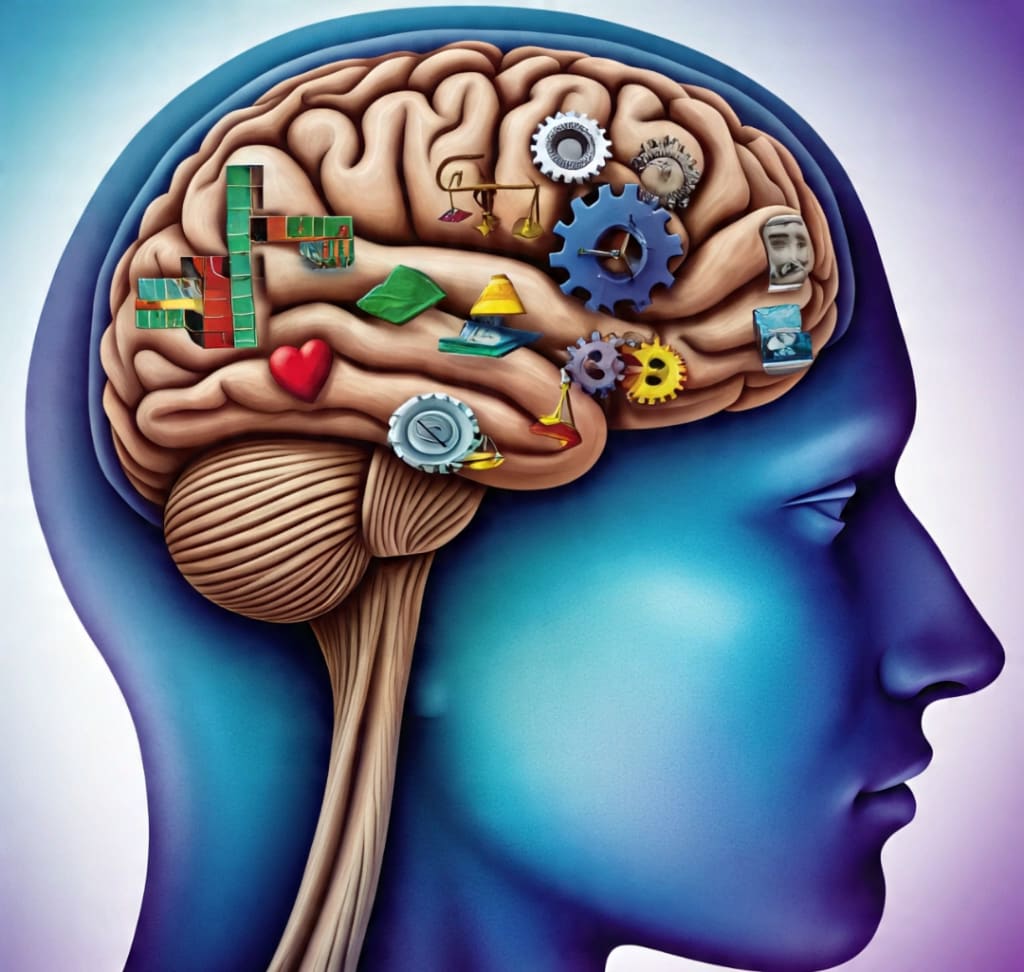
It was just another morning for Maya—alarm blaring, coffee brewing, notifications piling up. But beneath the routine, something more profound was happening: her brain was performing countless psychological feats every second. Her mind, a complex engine shaped by millions of years of evolution, was making decisions, processing emotions, and interpreting the world—all without her conscious awareness.
Psychology, the scientific study of the mind and behavior, seeks to understand just that: what makes people think, feel, and act the way they do. And while we often take our mental processes for granted, they are anything but simple.
As Maya scrolled through her messages, her brain evaluated social cues, remembered past conversations, and predicted possible outcomes. This blend of memory, perception, and judgment is part of cognitive psychology, a branch that studies how people acquire, process, and store information. It explains why she could instantly recognize her best friend’s text tone—or feel nervous reading a vague “we need to talk.”
Later, Maya found herself lingering on a post about a recent tragedy. She felt a lump in her throat and a strange pull to read more. That reaction is no accident. Our emotional systems are designed to grab our attention and help us respond quickly. Evolutionary psychology suggests emotions like fear, anger, and sadness evolved to help our ancestors survive—fear from danger, anger to fight injustice, and sadness to seek support.
As Maya walked to work, she passed a group of people laughing loudly. She smiled, even though she didn’t know them. This is a glimpse into social psychology, which studies how people influence and are influenced by others. Humans are social creatures; we mimic facial expressions, adjust our behavior in groups, and crave acceptance. Maya’s smile was her brain’s subtle way of reinforcing social harmony—even with strangers.
At work, Maya had a presentation. Her hands were shaking, and her heart pounded. “Why am I like this?” she whispered. The answer lies partly in biopsychology, which explores how our brain, hormones, and nervous system affect behavior. When Maya feels anxious, her brain’s amygdala sounds an internal alarm, triggering adrenaline and a rapid heartbeat—classic signs of the "fight-or-flight" response.
But psychology doesn’t only explore what happens when we’re stressed or scared. It also helps us understand motivation, happiness, and meaning. Maya reminded herself to breathe and focus on her purpose. Her motivation—shaped by past successes, her goals, and a belief in her skills—pushed her forward. This taps into humanistic psychology, which emphasizes personal growth, purpose, and self-actualization.
After the presentation, Maya’s manager praised her. That single moment made her feel proud, energized, and confident. Why? According to behavioral psychology, rewards and reinforcements play a powerful role in shaping how we act. When we receive positive feedback, we’re more likely to repeat the behavior—like giving future presentations with confidence.
As the day wound down, Maya reflected on an ongoing conflict with a friend. Despite understanding the facts, she couldn’t shake a nagging sense of guilt. This internal conflict is something psychoanalytic theory—pioneered by Freud—tried to explain through unconscious drives and internal struggles between different parts of the self. While modern psychology doesn’t take Freud’s ideas literally, many therapists still explore how early experiences and subconscious thoughts influence our current behavior.
Back at home, Maya opened a journal and began to write about her day—her worries, victories, and what she was grateful for. This habit, small as it seems, is rooted in positive psychology, a growing field that focuses on well-being, strengths, and resilience. Gratitude journaling, for instance, has been shown to boost happiness and reduce stress over time.
So what does Maya’s story reveal?
That every moment of our day—every decision, emotion, or reaction—is shaped by layers of psychology. It’s not just something reserved for therapy offices or textbooks. Psychology is with us when we laugh at a joke, freeze during an argument, or feel joy watching a sunset. It helps us understand ourselves, connect with others, and navigate the complexity of being human.
And perhaps most importantly, understanding psychology can help us change. It gives us tools to break bad habits, improve relationships, manage stress, and pursue meaning. In the end, it reminds us that we are not just at the mercy of our minds—we are active participants in shaping them.
As Maya turned off the lights and closed her eyes, her brain kept working, replaying memories, solidifying learning, and preparing her for tomorrow. Psychology doesn’t stop when we sleep—it is, in every sense, the story of being human.
About the Creator
Keep reading
More stories from Muhammad Saad and writers in Humans and other communities.
Unmasking Anxiety: Understanding the Modern Face of a Hidden Epidemic
Anxiety has always been a part of the human experience—a natural reaction to stress, danger, or uncertainty. But in 2025, it's clear that anxiety has transformed from an occasional emotional response into a widespread, chronic epidemic. Nearly 1 in 3 adults worldwide now report experiencing significant anxiety symptoms, according to the World Health Organization, and among teens and young adults, that number is even higher. This surge in anxiety isn't just a result of people being "more open" about mental health. According to neuroscientist Dr. Lea Kwon at Stanford University, the very structure of modern life has shifted the brain's stress systems into overdrive. "Humans were not built for constant stimulation, digital comparison, and the 24-hour news cycle," Dr. Kwon explains. "We’ve created a world that continually triggers our amygdala—the brain's fear center—without giving our nervous system a chance to recover." In previous generations, anxiety was typically tied to specific, identifiable threats: public speaking, job interviews, or dangerous situations. Today, however, anxiety often arises from more diffuse sources—constant exposure to social media, economic instability, climate concerns, and a lingering post-pandemic unease. Researchers have coined this new form of anxiety as "ambient anxiety"—a persistent, low-grade sense of dread that doesn’t always have a clear source. It lingers in the background like static, wearing down mental resilience over time. For many, it manifests in physical symptoms: chest tightness, insomnia, digestive problems, and even panic attacks. Twenty-three-year-old Amara Jacobs, a graduate student in New York, knows this feeling all too well. "There are days when nothing is wrong, but I wake up with my heart racing," she says. "It’s like my body thinks there’s a lion in the room, but there’s not. Just deadlines and notifications." Science is working hard to catch up. In 2025, researchers have made breakthroughs in understanding the biological roots of anxiety. Using advanced brain imaging, scientists have discovered new patterns in the brain’s default mode network—a system involved in self-reflection and rumination. In anxious individuals, this network appears to be hyperactive, suggesting that anxiety may stem more from how we process thoughts than from the thoughts themselves. This insight has led to a wave of new treatments beyond traditional therapy and medication. One promising avenue is neurofeedback, a non-invasive method where patients learn to regulate their brain activity through real-time feedback. In clinical trials, patients reported a 40–60% reduction in anxiety symptoms after just a few weeks. Meanwhile, mental health apps have become more sophisticated, using artificial intelligence to track patterns in mood, sleep, and behavior. These tools can now alert users to early signs of rising anxiety—before a panic attack hits. "It’s like having a therapist in your pocket," says Dr. Kwon, who helped design one such app. But while technology offers support, experts caution that it can also contribute to the problem. Social media, in particular, has been linked to increased anxiety, especially among teens. The constant scroll of highlight reels, filtered perfection, and doom-laden news creates a relentless feedback loop of comparison and fear. "One of the best things people can do for their mental health is take breaks from their screens," says therapist Jordan Lively, who works with adolescents in Los Angeles. "Digital detox isn't just a buzzword anymore—it’s survival." At the same time, society is shifting its perception of anxiety. What was once stigmatized is now more openly discussed in schools, workplaces, and families. Celebrities, athletes, and influencers are speaking out about their struggles, creating a culture of openness that helps normalize seeking help. "Anxiety is not weakness," says Amara. "It's a sign that your body and mind are trying to protect you. Understanding that changed everything for me." Looking forward, the goal is not to eliminate anxiety entirely—after all, it serves a purpose. Instead, experts emphasize building emotional resilience and creating environments that support mental well-being. Schools are introducing mindfulness programs. Workplaces are rethinking productivity culture. Cities are investing in green spaces, knowing that access to nature lowers anxiety levels. And most importantly, individuals are learning to recognize their triggers and regulate their emotional responses. The story of anxiety in 2025 is complex, but it’s also hopeful. With new knowledge, better tools, and growing empathy, we're learning not just how to treat anxiety—but how to live with it in healthier, more compassionate ways. And perhaps, in unmasking it, we also begin to unmask ourselves.
By Muhammad Saad 6 months ago in Humans
Amber Glenn’s Quiet Rise Through Pressure, Pain, and Perseverance
Amber Glenn is not the loudest name in figure skating, but her presence lingers long after she leaves the ice. Her career has been shaped by moments of promise, heartbreak, resilience, and steady growth that rarely follows a straight line. For years, she stood on the edge of major breakthroughs while carrying pressure few could see. Amber Glenn’s story is not about overnight success. It is about staying when leaving would have been easier. It is about learning to trust her body again, believing in her place in the sport, and showing up even when the spotlight felt heavy. To understand Amber Glenn today, you have to look beyond scores and medals and into the quiet determination that defines her journey.
By Muqadas khan6 days ago in Humans


Comments
There are no comments for this story
Be the first to respond and start the conversation.