
How the west has been proven wrong on their thought of cow ghee.
Cow ghee was considered to have unhealthy fats contributing to heart diseases if consumed in the diet. There were also concerns about cholesterol levels and trans-fats which led to increasing the risk of heart diseases. But all these beliefs and assumptions about cow ghee have been challenged and it has been suggested that the moderate consumption of cow ghee and other animal fats may not be harmful as known previously. But there still exists beliefs about how cow ghee isn’t appropriate to consume, for them here are some things to be known.
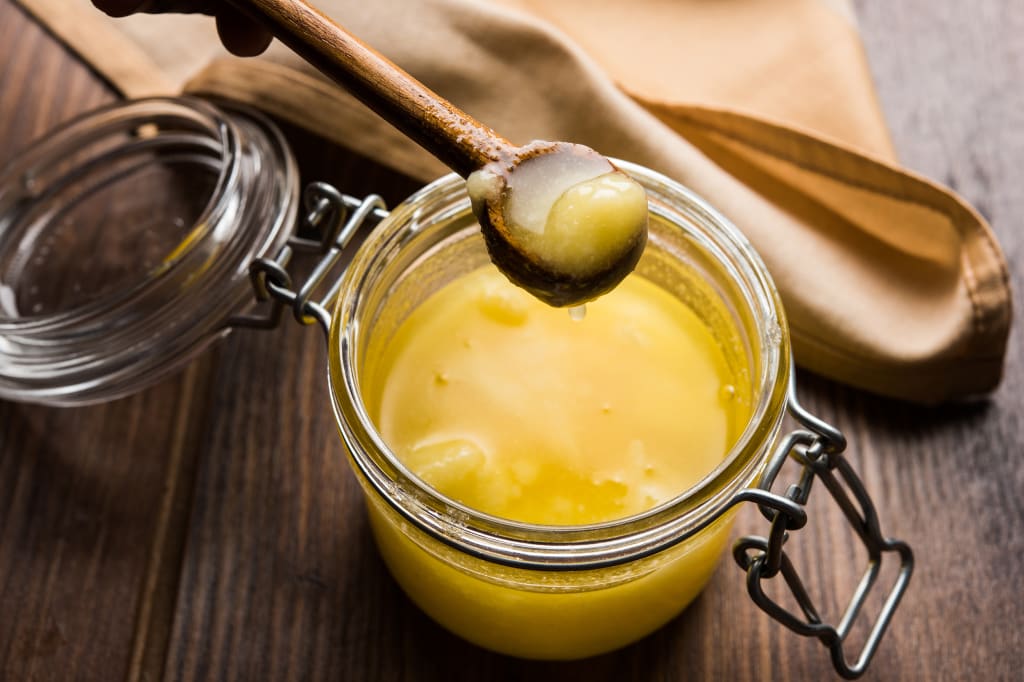
More about Ghee:
Ghee holds a significant place in Ayurveda and is known for its therapeutic properties. It is an essential ingredient in Indian cooking, used in dishes like dal, khichdi, halwas, and chapatti.
Shilpa Arora, a Macrobiotic Nutritionist and Health Practitioner, suggests that
‘Replacing ghee with refined oils is one of the biggest mistakes in modern cooking. Ghee is rich in fat-soluble vitamins that can aid in weight loss and maintain healthy cholesterol levels by regulating hormones.’
Its high melting point prevents the production of harmful free radicals that can harm cells. Ghee is made from clarified butter obtained from buffalo or cow's milk, and pure desi ghee comes from cow's milk. It is a good source of omega-3 fatty acids and Vitamin A. Apart from cooking, it is also used in beauty and hair care routines.
To add more to the affirmative side here are some benefits of ghee:
Helps You Keep Warm from Within:
In India, Ghee is commonly associated with the winter season. As per Ayurvedic practices, Ghee is frequently used in preparing winter delicacies like gajar ka halwa, moong dal halwa, pinni, and panjeeri, which help to keep the body warm from the inside.
For Blocked nose:
Dealing with a clogged and cold nose can be quite unpleasant. Apart from the discomfort of difficulty in breathing and loss of taste, it is often accompanied by headaches and fatigue. However, Ayurveda provides a unique solution in the form of nasal drops, which can help relieve the symptoms of a blocked nose. According to Ayurvedic practitioners, the Nyasa remedy involves administering a few drops of warm pure cow ghee into the nostrils first thing in the morning. This remedy is said to work by allowing the ghee to flow down to the throat, where it can alleviate the virus and provide instant relief. It is important to ensure that the ghee used is pure and warmed to a moderate temperature.
Good energy source:
Cow ghee contains medium and short-chain fatty acids, such as lauric acid, which has antibacterial and antifungal properties. Nursing mothers are frequently given Ghee Ladoos due to their high energy content. Pinni, a delicacy from Punjab, is popular across North India not just for its taste but also for its ability to boost energy levels.
Has Good fats:
If someone is planning weight loss then many people advise them to avoid consuming fats. It is a common notion that removing all fat sources from your diet can aid in weight reduction. However, this is a wrong approach, as fats, carbohydrates, and proteins are crucial macronutrients necessary for a healthy lifestyle. Instead of completely cutting out fats, it is wise to make smarter choices. You should steer clear of unhealthy fats found in processed foods, fries, and burgers and opt for healthier alternatives like Ghee.
The Constipation solution:
If you are experiencing constipation, Ghee could be the solution you are looking for, as suggested in Dr. Vasant Lad’s book “The Complete Book of Home Remedies”. The book recommends a moderate and effective cure for constipation is the combination of Milk and Ghee. According to the book, mixing 1 or 2 teaspoonfuls of Ghee in a cup of hot milk at bedtime is a gentle and efficient way of easing constipation.
Good For Heart:
While it is true that Ghee, like all fats, has been associated with an increase in cholesterol levels, it is still a much safer option for heart health when compared to refined oils. According to the book 'Healing Foods', the fats in Ghee are not linked to heart disease in the same way as long-chain fatty acids, as they are used immediately as energy by the body rather than being stored as fats.
Dr. Rupali Datta, a nutrition consultant, recommends consuming Ghee in small amounts regularly as a source of saturated fats. Additionally, studies have shown that Ghee can help reduce bad cholesterol levels while improving good cholesterol levels. Children can consume larger quantities of Ghee daily as a part of a healthy diet.
Now, was that convincing? If not just try it and see the good effects yourself.
Here is a suggestion from our/my side - https://tooshytoask.org/
One of the best ghee products on the market which is of premium quality in our knowledge. You can start your exploration from here.
About the Creator
Keep reading
More stories from Tahiyah Alia and writers in Humans and other communities.
How are schools letting down queers every day!
But there still exists a stigma around being queer, due to less awareness, traditional customs, and many more reasons. Trans-people are still considered outcasts or someone who will ask for money at signals, railways stations, or railways. The perception still hasn’t changed among most people in general.
By Tahiyah Alia3 years ago in Humans
Autonomy Is The Real Privilege
Good morning, freedom-seekers! Today we’re gonna be looking at autonomy. A strange word, I know; one many would probably look at blankly and run away from on sight. We’re gonna figure out what it actually means, consider how it’s achieved, and decipher just how deeply most of us are tangled up in dependence without realising it.
By That ‘Freedom’ Guy2 days ago in Humans
The Hidden Valentine part 1
The First Message The lab was quiet at 2:13 AM, a time when even the fluorescent lights seemed to pause their buzzing, as if they were holding their breath. Maya stood alone beside the server bank, the only sound the faint hum of cooling fans and the soft click of her own heartbeat.
By Ahmed aldeabellaabout 6 hours ago in Humans




Comments
There are no comments for this story
Be the first to respond and start the conversation.