
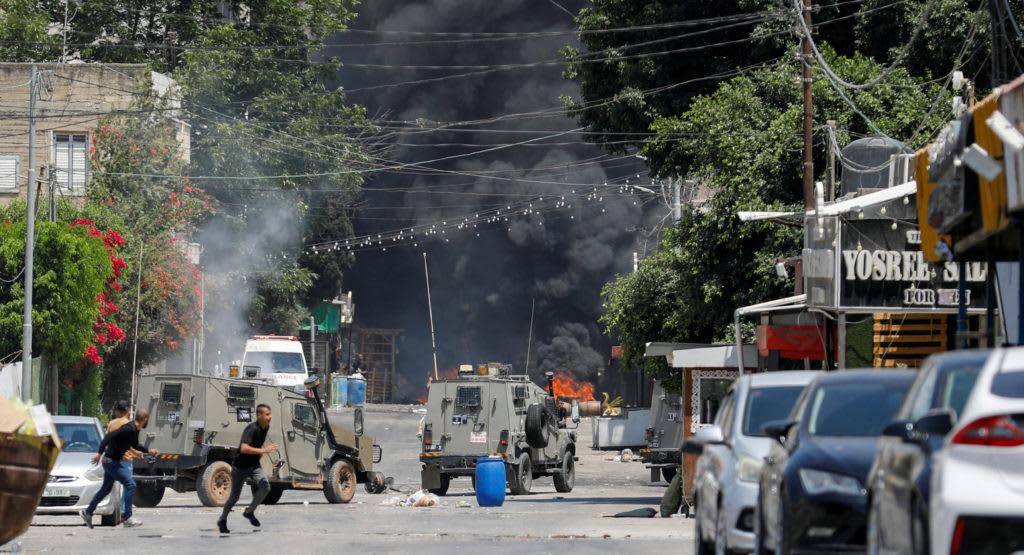
The sun dipped below the horizon, casting a golden glow over the ancient olive groves of the West Bank. Peaceful and serene, the land had seen generations of families tending to their olive trees, nurturing them as a symbol of hope and resilience. But on this fateful day, tranquility shattered, giving way to the chaos of a major assault.
The people of the West Bank had long been living under occupation, their lives marked by conflict and uncertainty. The occupation had left them divided, their dreams for peace overshadowed by the heavy presence of troops and barbed wire. And now, the winds of war blew fiercely through their olive groves.
News of an impending assault had spread like wildfire. Families huddled together, seeking solace in the arms of loved ones, their faces etched with worry and fear. Children clung to their mothers, their innocent eyes reflecting the uncertainty that lay ahead. Men and women whispered prayers for protection, desperately clinging to the fading glimmers of hope.
As dawn broke, the cacophony of gunfire erupted, tearing through the stillness of the morning air. Tanks rolled through the narrow streets, their tracks leaving scars on the once-picturesque villages. Soldiers, armed to the teeth, stormed into homes, shattering doors and ripping families apart. The olive groves, once a source of livelihood and peace, became a battlefield stained with blood.
Amidst the chaos, a young girl named Layla found herself alone, separated from her family. With tears streaming down her face, she stumbled through the groves, desperately searching for safety. Her heart pounded in her chest as she sought refuge beneath the twisted branches of an ancient olive tree. Trembling with fear, she clutched a small pendant, a gift from her grandmother, seeking solace in its touch.
In the distance, the cries of mothers and the wails of children merged with the thunderous sounds of destruction. Smoke billowed into the sky, mingling with the cries of the wounded and the dying. The land, once bountiful and nurturing, now bore the scars of conflict.
Days turned into nights, and the assault raged on, with no end in sight. Buildings crumbled, their walls reduced to rubble, and families reduced to tears. Yet, amidst the devastation, glimmers of resistance emerged.
As word spread of the assault on the West Bank, voices from across the globe united in protest. Advocates for justice and peace lent their support, raising their voices against the brutality. In cities and towns, people took to the streets, demanding an end to the assault and calling for dialogue and understanding. Their collective cry echoed through the olive groves, resonating with the hearts of the oppressed.
Back in the groves, Layla found courage in the solidarity of those who stood against the violence. She clung to the hope that their voices would be heard, that peace would eventually prevail. With determination in her eyes, she emerged from her hiding place and ventured into the heart of the battle-scarred villages.
In makeshift shelters, she found families seeking solace and safety. She offered them a smile, a comforting touch, and a shoulder to lean on. Together, they shared stories of resilience and strength, reminding one another that they were not alone in their struggle. Layla, with her pendant tightly clasped, became a beacon of hope, guiding those around her through the darkest of times.
As the assault raged on, international pressure mounted. Diplomatic efforts gained momentum, and negotiations were set in motion. The cries for peace and justice grew louder, refusing to be silenced. And finally, the day arrived when the guns fell silent, and a fragile peace settled over the olive groves.
The scars of the assault would take years to heal, but the spirit of the people endured. Families returned to their homes, rebuilding their lives amidst the ruins. The olive groves, once ravaged by violence, slowly began to flourish again, their branches stretching towards the sky in a testament to resilience and hope.
Layla, now a young woman, continued to nurture the olive trees, sowing seeds of peace with every tender touch. Her pendant, once a symbol of solace, had become a symbol of unity and strength. As she gazed out over the groves, she knew that the echoes of the assault would forever resonate in their hearts. But it was in their unwavering determination to cultivate a future of peace that the true triumph lay.
The assault on the West Bank would forever remain a painful chapter in their history, but through the unity and resilience of its people, it would also serve as a reminder of the power of hope and the indomitable human spirit.
In the aftermath of the assault on the West Bank, the people were left grappling with the physical and emotional wounds inflicted upon their land. Buildings lay in ruins, livelihoods were shattered, and the scars of conflict ran deep. The olive groves, once a source of tranquility, now stood as a stark reminder of the violence that had unfolded.
Amidst the devastation, international aid poured into the region. Humanitarian organizations worked tirelessly to provide essential supplies and support to those affected. Temporary shelters sprang up, offering a semblance of safety and solace to families who had lost everything. The world watched, appalled by the destruction, and voices from every corner of the globe spoke out against the assault.
Layla, driven by her unwavering spirit, took it upon herself to document the stories of her people. Armed with a pen and a camera, she traveled through the villages, capturing the narratives of resilience and defiance. Through her lens, she revealed the courage and strength of a community battered but not broken.
She met Youssef, a father who had lost his wife and two children in the assault. With tears in his eyes, he shared memories of their laughter echoing through the olive groves, a reminder of a time when joy filled their hearts. Yet, despite his immense grief, Youssef vowed to rebuild his life and honor the memory of his loved ones through advocating for peace.
In another village, Layla encountered Fatima, an elderly woman who had tended to the olive trees for decades. Fatima recounted stories of how the groves had sustained generations of her family, providing them with sustenance and a connection to the land. As she wept for the destruction, Fatima spoke of her determination to restore the groves, planting new saplings with trembling hands, a testament to her unwavering hope for a brighter future.
Layla's documentation of these stories, along with countless others, caught the attention of the international community. The photographs and narratives were displayed in galleries and exhibitions, serving as a powerful reminder of the human cost of conflict. World leaders were compelled to take action, as the echoes of the assault reverberated through diplomatic corridors.
Peace negotiations resumed, fueled by the voices of those who had borne the brunt of the violence. Layla found herself at the forefront of these discussions, her impassioned pleas for justice and reconciliation resonating with diplomats and peace activists alike. The world watched as the West Bank became a symbol of hope, where peace could be achieved against all odds.
The negotiations were arduous, and progress was slow. But the resilience of the people was unwavering. Layla's words and the stories she shared became the catalyst for change. The olive groves, once a battlefield, were now transformed into spaces for dialogue and understanding. Leaders, representing both sides of the conflict, sat beneath the ancient trees, their discussions infused with the scent of olive leaves, as they sought a resolution that would bring lasting peace to the region.
Years passed, and the olive groves began to flourish once more. New saplings grew alongside the ancient trees, symbolizing the renewal of hope and the intergenerational commitment to peace. The assault on the West Bank had left scars that would never fully fade, but it also fostered a collective determination to forge a different path.
Layla, now a revered advocate for peace, continued to document the progress being made. She captured images of children playing amidst the groves, their laughter echoing through the hills. She witnessed communities coming together, rebuilding their villages with resilience and unity. The olive groves, scarred but alive, became a testament to the power of humanity's ability to heal and rebuild.
The assault on the West Bank would forever be etched in the collective memory of its people. It served as a painful reminder of the cost of conflict, but also as a catalyst for change and a testament to the indomitable human spirit. As Layla walked through the groves, her pendant now a symbol of peace and triumph, she knew that the echoes of the olive grove would resonate for generations to come, a reminder of the enduring pursuit of a just and peaceful world.
About the Creator
Keep reading
More stories from DHIRAJ KUMAR and writers in Humans and other communities.
Trials and Triumphs: The Witcher's Turbulent Third Season
The world of The Witcher, a beloved fantasy series, brimmed with magic, mystery, and monsters. Fans eagerly anticipated the release of its third season, hopeful for another thrilling adventure in the land of Geralt of Rivia. However, as the season unfolded, it became apparent that it was a tale of both enchantment and exasperation.
By DHIRAJ KUMAR3 years ago in Poets


Comments
There are no comments for this story
Be the first to respond and start the conversation.