

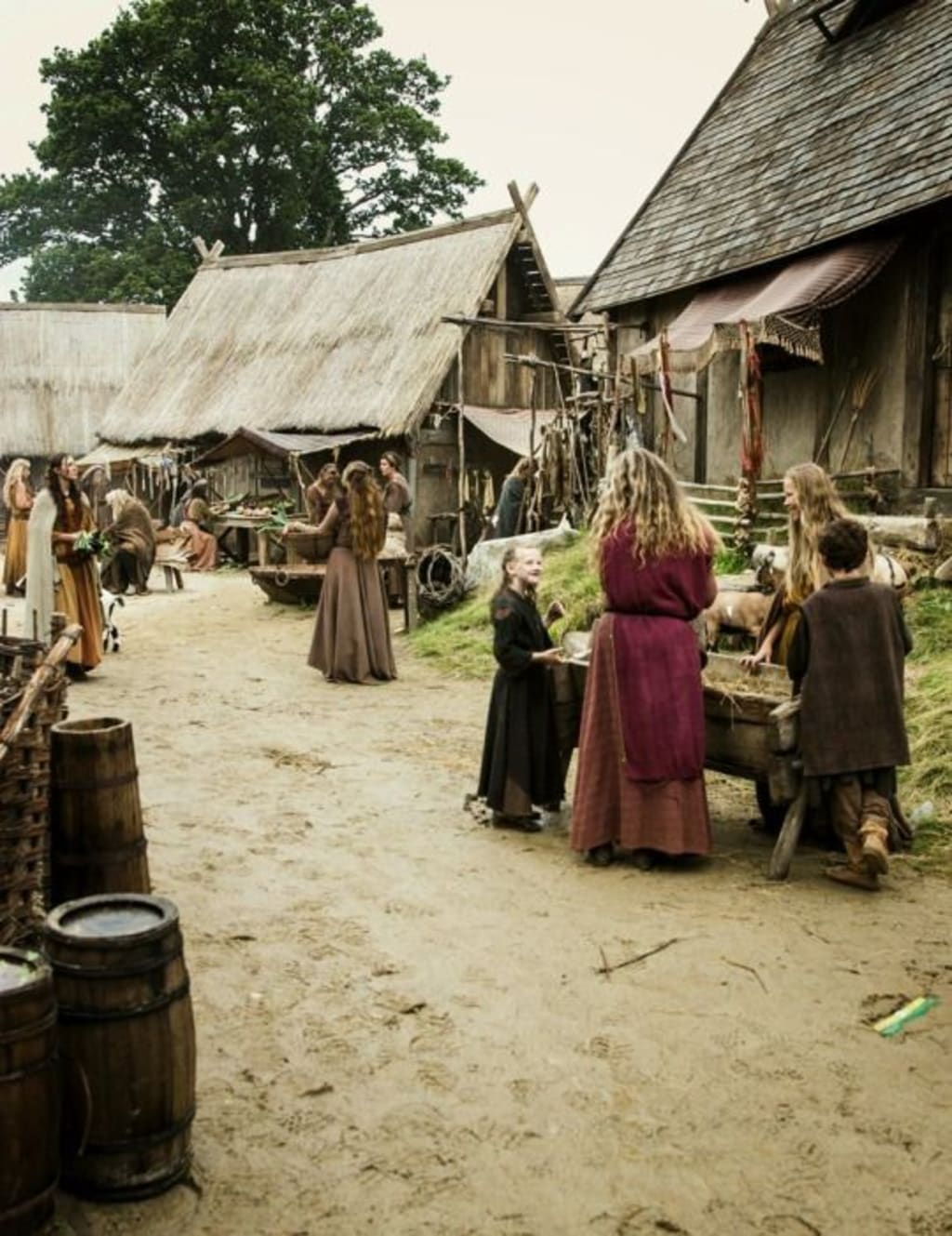
Many people romanticize the Middle Ages. They envision armored knights, noble steeds, and beautiful ladies. They think of dragons, chivalry, and courtly love. However, this image is far from reality. For most people, the Middle Ages were dirty and dangerous. Life was difficult, and survival was unlikely.
Imagine you suddenly found yourself in medieval England during the 14th century. You would quickly realize that communication would be a major barrier. Ordinary people spoke Middle English. The wealthy spoke French. The clergy used Church Latin. As a speaker of Modern English, you might catch a few words, but having a coherent conversation would be impossible.
A woman's worth in medieval times was tied to her support of biblical texts. Women were often viewed as morally weak, leading to oppression and subservience. St. Paul's writings emphasized men's authority over women. Women were expected to remain silent in church and submit to their husbands. Peasant women had specific roles. They handled household chores, spinning, brewing, cooking, weaving, and caring for children and livestock. They also shared farm and fieldwork with men. Most women were expected to marry or become nuns. For many, marriage meant pregnancy and childbirth. There was no modern pain relief or sterile hospital setting. Complications during childbirth could be fatal for both mother and child. Wealth and status did not guarantee a safe delivery. Cesarean sections were only performed if the mother was dying or already dead, as noted in the 1420s.
In medieval times, childbirth was extremely dangerous. One in five women died during labor. This led many women to write a last will before giving birth. Such a practice overshadowed what should have been a joyous occasion. Child mortality rates were also high. Many babies did not survive past their fifth birthday. In medieval England, one-third of children died before that age. Dangers began in the womb. Women often consumed large amounts of alcohol during pregnancy without any awareness of the risks.
The loss of a child is a profound tragedy. In medieval Europe, the mortality rate for children under age seven ranged from 20 to 30%. Many children died from birth complications, accidents, or diseases such as whooping cough, measles, and influenza. Grieving parents were not alone in their suffering; this was a widespread issue. In medieval Japan, 48% of children died before reaching adulthood.
Most people in the Middle Ages were serfs, making up 85% of the population. Being a serf meant you were tied to the land and your lord. You had to grow food for your family and also pay taxes to your lord. Leaving the land or getting married required permission. Life was very difficult. Weather could make or break a harvest. Too much rain or drought could lead to crop failure and starvation.
Malnutrition weakened the immune system, leading to diseases like dysentery, typhus, and smallpox. When food was available, it mainly consisted of coarse bread and thin stews called pottage. While wild game like rabbit and deer was plentiful, it was reserved for the nobility. Poaching was met with severe punishment.
Clothing was uncomfortable, made from itchy wool. Most homes were small, often just one or two rooms. They lacked chimneys and had few windows, making them dark and smoky. Living conditions were unsanitary, often shared with animals. Winters were especially harsh without central heating or running water. It's no wonder that life expectancy was low in medieval times.
In the 140 years between 1330 and 1470, women had an average lifespan of 33 years. The justice system in medieval times was quite different from today. The Church controlled many aspects of life, including clothing and food. If you were a crime victim, there were no police to help you. You had to scream for help and hope someone would respond.
For serious crimes, the punishment was death. This included offenses like murder, treason, forgery, and robbery. If you stole something worth over 12 pence, you faced hanging. Trial by ordeal was also used, where guilt or innocence was determined through painful experiences. If you were innocent, it was believed that God would save you.
Minor crimes like gambling or using abusive language were harshly punished. Penalties included public humiliation or imprisonment. Many died in prison due to poor conditions and lack of food. Most crime was linked to poverty and theft.
During the Middle Ages, over 370 wars occurred, the last ending in 1504. Many were fought over thrones or noble reasons like the Crusades. Common people often paid the highest price. Under the feudal system, peasants had to serve their lords in war. They fought for short periods to maintain farming.
The military was often disorganized, leading to many casualties. Around 30% of noblemen died in skirmishes, while the death toll for commoners was rarely recorded. Estimates suggest millions died during conflicts like the First Crusade and the Hundred Years' War.
If you were wealthy, your diet was better than that of peasants. You would enjoy meats, desserts, and fine wine. However, your dishware might be hazardous. Many glazed plates contained lead oxide, which could poison food. Lead exposure caused serious health issues, especially for children.
Bread was a staple food, often made from rye. This grain could become infected with a fungus called claviceps purpurea, causing St. Anthony’s fire. This resulted in many outbreaks of illness during the Middle Ages. Symptoms included muscle cramps, hallucinations, and gangrene.
Some historians link ergot poisoning to dancing epidemics, where groups of people danced until they collapsed.
About the Creator
Who Replaces the United Nations If It Fails?
Who Replaces the United Nations If It Fails? For more than seventy years, the United Nations has served as the world’s main platform for diplomacy, peacekeeping, and global cooperation. Despite its weaknesses, it remains the only institution where nearly every country has a seat at the table. But as trust in the UN declines and major powers increasingly act alone, an uncomfortable question is being asked more often: if the UN fails, who—or what—takes its place?
By Wings of Time about 19 hours ago in History
Where the Pulse Ends
© 2026 Sai Marie Johnson The humidity in the city didn’t just hang; it leaned. It was a thick, stagnant soup of diesel exhaust, ozone, and the metallic tang of blood that drifted from the "Compliance Zones." Joe sat in his rusted sedan, his hands resting loosely on the steering wheel. He wasn't gripping it. He wasn't angry. Anger was a chemical spike, a biological inefficiency. Joe was simply... focused.
By Sai Marie Johnson4 days ago in History



Comments