

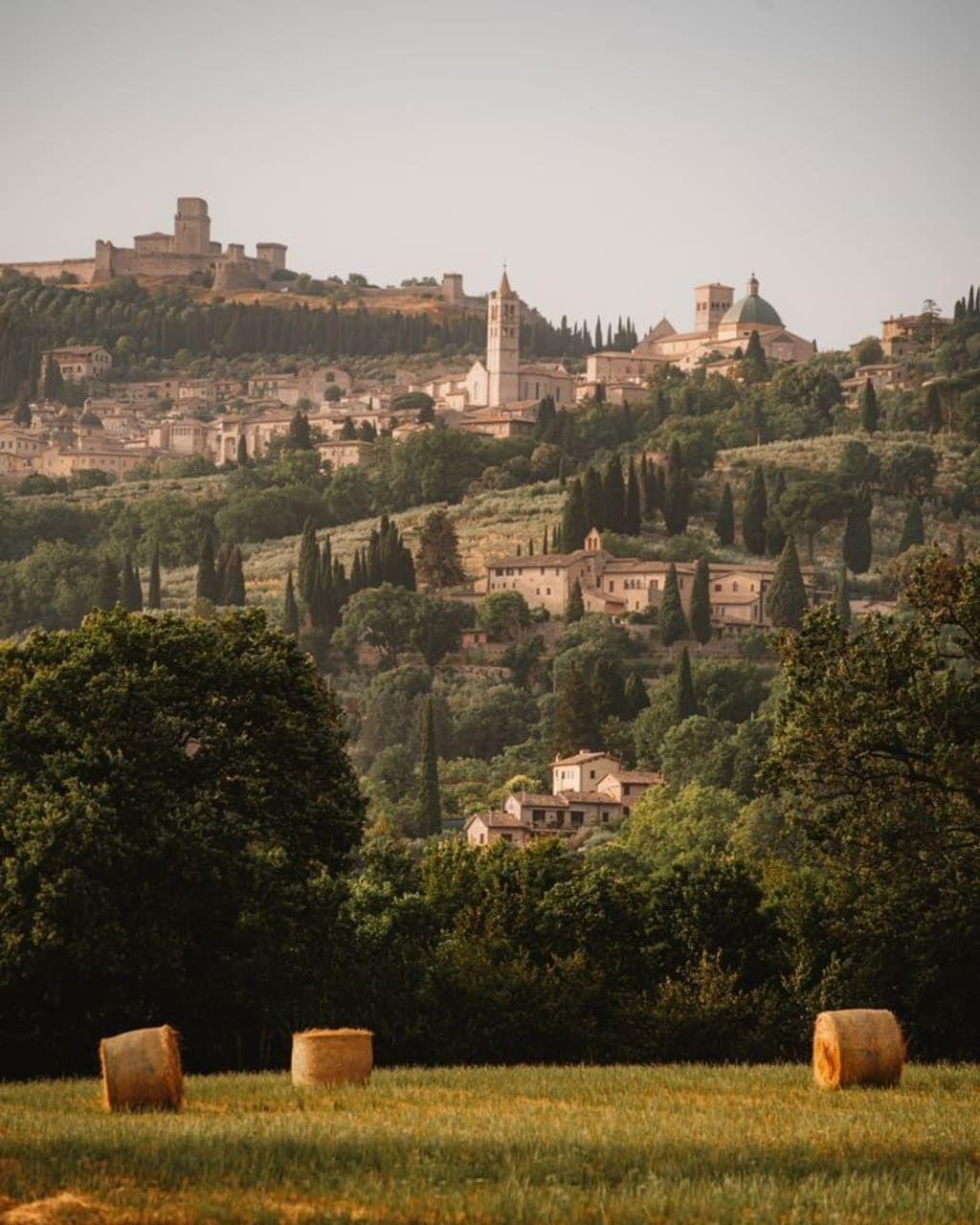
The Middle Ages spanned from the fall of Rome to the start of the Renaissance. It was a time of significant social change. This period saw international warfare, national rebellion, and devastating diseases. There were also instances of brutal cruelty. Here are some highlights, or lowlights, depending on your perspective, from this 1,000-year era.
Welcome to Medieval Madness 455. This period follows the fall of Rome. In 410, Rome was sacked by Alaric, the King of the Visigoths. About 45 years later, the Vandals, led by Genseric, also attacked. These events marked the decline of the Roman Empire.
In 480, the violent murder of Nepos, the last Roman emperor, marked the beginning of the Middle Ages for many historians. With no single government to unify Europe, the Catholic Church became the most powerful institution during this time.
In 481, the Franks began to rise. Clovis was the first king of the Franks. He successfully united the Frankish tribes under one ruler and began the Merovingian age. This period would dominate what is now known as France for about 200 years. In 496, Clovis converted to Christianity. The Franks defeated the Visigoths in the Battle of Vouillé in the spring of 507.
Justinian the First became the Eastern Roman emperor in 527. He started restoring the Empire soon after. Two years later, he published a code of civil law. This code is known as the Code of Justinian. It still serves as the basis of civil law in many countries today. His reign marked a development in Byzantine culture.
Muhammad was born in Mecca in 570. He is considered the last of the sent prophets. His revelations from God are recorded in the Quran. The Quran is the central religious text of Islam and the holy book for Muslims.
In 597, Augustine became the first Archbishop of Canterbury. He was a Christian monk from Rome and regarded as the Apostle to the English. Pope Gregory the Great created him Archbishop. Augustine was sent to England to spread Christianity. He successfully converted King Aethelbert of Kent. Augustine became a founding figure in the Church of England.
The Viking Age began in 793. Raiders sacked the Church of St. Cuthbert at Lindisfarne, off the English coast. This church is regarded as the birthplace of Christianity in Britain. The assault shocked all of Europe. The Viking Age lasted for 200 years. Scandinavian warriors pillaged and plundered, killing thousands in Europe. Some Vikings settled in northwest France and became known as the Normans.
In 800, Charlemagne was crowned Emperor of the Romans by the Pope. This was the first such coronation in 300 years. He had already conquered a large part of the West and allied closely with the Catholic Church. This helped him consolidate both religious and political power. He is often referred to as the father of Europe.
In 886, Alfred the Great became the first king of a united England. He achieved this after driving the Danes out of London.
In 961, Otto the Great made his mark as Holy Roman Emperor. He continued to unite the German tribes and asserted control over the church. Otto strengthened his authority by expanding his powers. He was known as a great military commander and conquered the Kingdom of Italy.
The first novel, the Japanese epic "The Tale of Genji," was written by the noblewoman and poet Murasaki Shikibu.
In 1066, William the Conqueror, the Duke of Normandy, conquered England. He defeated King Harold at the Battle of Hastings. This ended Anglo-Saxon rule and started the Norman lineage. This event is seen as the most important in medieval England. It transformed society and politics, affecting English culture and language.
In 1088, the oldest European center for education was formed in Bologna, Italy. It was established by a guild of students. Bologna was also the first university to employ a woman as a lecturer in 1239. That woman, Balata Gadini, studied there but was reportedly asked to wear a veil so she would not distract her students.
In 1095, the First Crusade began. Pope Urban sought support to capture the Holy Land from Muslims. They had taken parts of the Byzantine Empire. The First Crusade ended in victory for Europeans. However, it triggered more conflicts that lasted until the late 15th century. Thousands of Muslims and Christians died in these religious wars over Jerusalem and its surroundings.
The Knights Templar was formed to protect Christian pilgrims visiting the Holy Land. They were known for their white mantles adorned with a red cross. The order quickly gained power and wealth by establishing an early form of banking. King Philip I of France dismantled the Knights Templar in 1312. Many members were accused of heresy and executed.
In 1206, Genghis Khan became the ruler of the Mongols. Under his leadership, the Mongol Empire expanded across much of Eurasia. This made it the largest empire in history.
In 1215, King John of England signed the Magna Carta at Runnymede. A group of rebel barons forced him to sign it. This document stated that the king was not above the law. It granted more power to the nobility and laid the groundwork for democracy.
In 1271, Marco Polo, at 17 years old, began his journey to Asia. He spent 24 years exploring before returning to Venice. He published a book about his travels. In it, he documented his adventures in countries like India, Persia, Japan, and China.
In 1273, Count Rudolph of the House of Habsburg became the first king of Germany from the Habsburg dynasty to be made Holy Roman Emperor. The family grew to be one of Europe's most significant, producing kings in Croatia, Spain, Portugal, and Hungary. Their desire to consolidate power led to inbreeding, resulting in physical impairments and facial deformities, such as the Habsburg jaw.
In 1296, Edward I of England invaded Scotland. This marked the beginning of the First Scottish War of Independence, leading to the Battle of Stirling Bridge a year later. William Wallace emerged as a leader of the resistance and was named guardian of Scotland. He was later captured and executed in London in 1305.
Robert the Bruce was crowned King of the Scots in 1306. The First War of Scottish Independence ended in victory after the Battle of Bannockburn, followed by a treaty that recognized Scotland's independence.
In 1299, Osman I founded the Ottoman Emirate. This would eventually become the most enduring Islamic empire, lasting over 600 years.
The Hundred Years' War began in 1337. It involved intermittent hostilities between England and France, lasting over 116 years. The war included around 62 major battles and sieges, such as the battles of Poitiers and Agincourt. It ended in 1453, with England losing most of its French territories, retaining only Calais in the north.
In 1347, the Black Death arrived in Europe. The Bubonic plague killed an estimated 20% to 40% of the population in its first year. The disease spread quickly, especially in crowded areas. Over four years, it killed around 35 million people, making it one of history's worst disasters.
The Ming dynasty began in 1368 when rebels overthrew the ruling Mongols. The Ming dynasty was the last native ruling house in China and lasted for about 28 years.
In 1380, Geoffrey Chaucer began working on The Canterbury Tales, a manuscript about storytelling pilgrims. This work became a foundation for the development of the modern English language.
The Battle of Agincourt occurred in 1415, marking a turning point in the Hundred Years' War. The French army suffered a significant defeat against King Henry VI of England and his small force. As a result, Henry was declared heir to the French throne.
In 1428, the Aztec Empire expanded under King Itzcali. The Aztecs had a highly intellectual society and a caste system similar to feudal Europe. This empire lasted for 90 years before falling to the Spaniards in the early 16th century.
In 1431, Joan of Arc was executed for witchcraft. She played a crucial role in the Hundred Years' War on behalf of the French. Her actions helped lift the siege of Orléans, enabling King Charles II to be crowned.
In 1434, the Medici family rose to power in Florence, a prosperous trading center. The House of Medici produced four Catholic popes and two queens. Their bank, founded in 1397, became one of Europe’s wealthiest institutions. They were significant patrons of the arts and sciences, funding developments in opera and piano while sponsoring artists like Da Vinci and Michelangelo.
In 1439, Johannes Gutenberg invented a movable type printing press in Germany. His Bible was the first major book printed in Europe and significantly influenced the Renaissance. Gutenberg is considered one of history's most influential figures.
In 1441, Prince Henry of Portugal, known as the Navigator, became a key figure in the Age of Discovery. He was presented with African slaves, marking the beginning of the African slave trade. Lagos became the first point of entry for slaves into Europe.
In 1453, Constantinople fell after a 53-day siege. The 21-year-old Sultan Mehmed II, known as the Conqueror, captured the city. He made it the new capital of the Ottoman Empire. This event marked the end of the Byzantine Empire. Many historians view it as the end of the medieval period.
In 1455, the Wars of the Roses began. These civil wars lasted for 32 years. They were fought between two branches of the Royal House of Plantagenet: York and Lancaster. The Battle of St Albans is considered the start of the hostilities. Richard of York captured King Henry VI during this battle.
In 1492, Spain was unified under two powerful monarchs: Ferdinand II of Aragon and Isabella of Castile. They expelled all the Jews from Spain and launched a military campaign against the Moors. They also drove out all the Muslims. Together, they became known as the Catholic Monarchs. That same year, they sponsored Christopher Columbus. He went on a naval expedition to find a western route to China. Columbus reached an island in the Bahamas in October 1492.
About the Creator
Best Men Clergy Shirts for Pastors and Church Leaders?
When it comes to serving in the ministry, appearance matters. Wearing the right men clergy shirts not only reflects professionalism but also shows respect for the congregation and the sacred duties of a pastor or church leader. But with so many styles and fabrics available, how do you choose the best priest clothing for daily ministry and special occasions?
By Sameera eclergys6 days ago in History
3 Completely Normal Jobs With Disturbing Hidden Histories
Every job has a backstory. Some are boring, some are inspiring, and some are better left buried. While modern versions of certain professions look harmless—sometimes even respectable—their origins tell a much darker story.
By Enoch Sagini5 days ago in History


Comments