
Why were ancient Egyptians obsessed with cats?
History
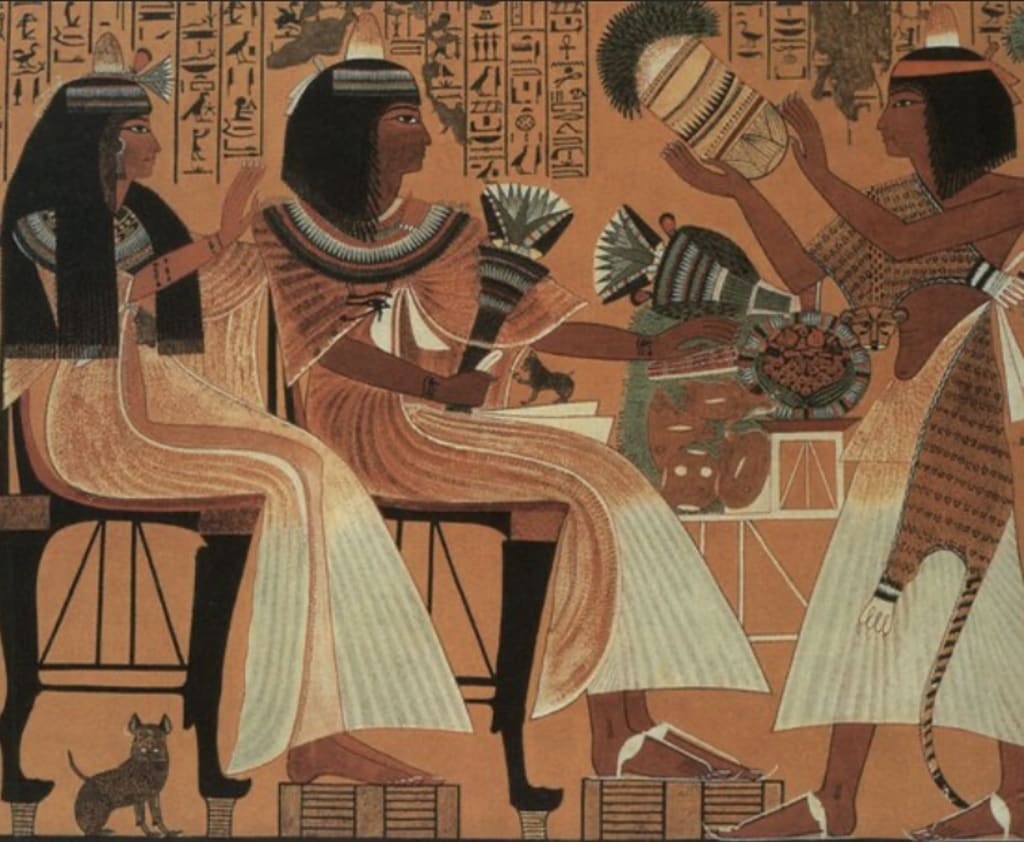
The ancient Egyptians' deep admiration for cats is well-documented in various historical texts. Notably, economic records highlight the existence of expansive enclosures adjacent to cat temples, serving as breeding grounds for these feline creatures - commonly referred to as catteries. The precise intentions behind the intricate care and breeding of cats in these designated areas remain a captivating enigma that continues to pique curiosity and spark scholarly debate.
The narrative unfolds within the context of a captivating exploration of a hidden gem museum nestled in the vibrant city of Chicago. This museum, nestled within the University of Chicago campus, stands as a beacon of historical richness and academic enlightenment. Free to the public but with the limitation of closing at four o'clock, this institution houses a treasure trove of artifacts and knowledge waiting to be uncovered by eager visitors. The museum, known as the Institute for the Study of Ancient Cultures, offers a chronological journey spanning from prehistory to the Early Middle Ages, encapsulating millennia of human civilization from 5,000 BCE to the 6th century AD.
As the narrative unfolds, the focus shifts towards a discussion with the esteemed chief curator of the museum, Dr. Marc Maillot, shedding light on both the museum's rich tapestry of exhibits and the broader scope of its academic pursuits. The museum's expansive collection, boasting approximately 350,000 artifacts, showcases a mere fraction of its treasures to the public eye, with only 2% on display for visitors to marvel at. Among these remarkable artifacts, a standout piece emerges in the form of a wooden painted stela depicting the divine priestess of Amun, Djed-Khonsu Amun, engaged in the sacred act of presenting an offering to the revered deity Ra-Horakhty during the Third Intermediate Period.
This exceptional stela not only serves as a testament to the artistic prowess of its creator but also offers a glimpse into the intricate symbolism and spiritual significance embedded within ancient Egyptian artistry. The meticulous attention to detail, particularly in the portrayal of transparency within the priestess's attire, showcases the artist's skill in conveying depth and emotion without the conventional use of perspective. Such masterpieces not only bridge the gap between past and present but also invite contemporary audiences to marvel at the timeless beauty and ingenuity of ancient Egyptian craftsmanship.
The ancient Egyptians were a fascinating civilization known for their advanced culture, art, architecture, and religious beliefs. They thrived along the Nile River in northeastern Africa and left behind a rich legacy that continues to captivate and intrigue people worldwide. The Egyptians excelled in various fields, including medicine, mathematics, and astronomy. Their intricate hieroglyphic writing system, monumental pyramids, and elaborate burial practices reflect their deep-rooted beliefs in the afterlife and the divine. The social structure of ancient Egypt was hierarchical, with pharaohs at the top, followed by nobles, priests, scribes, artisans, and farmers. The society was deeply influenced by religion, with gods and goddesses playing a central role in everyday life. The ancient Egyptians believed in the concept of ma'at, which encompassed truth, balance, order, harmony, and justice. This principle guided their moral and ethical values and was reflected in their art, literature, and legal system. The civilization of ancient Egypt endured for thousands of years, leaving behind a legacy that continues to fascinate and inspire people around the world.
The ancient Egyptians hold cats in high esteem and considered them sacred animals. Cats were associated with the goddess Bastet, who was the goddess of home, fertility, and protection. Bastet was often depicted as a lioness or a woman with the head of a lioness. Cats were revered for their ability to protect homes from vermin and snakes, making them valuable companions to the ancient Egyptians. Cats were so highly regarded that harming or killing a cat, even by accident, was considered a serious crime punishable by death in ancient Egypt. While cats were not the subject of pyramids, they were mummified and buried with great care and respect by the ancient Egyptians. The discovery of cat mummies in tombs and temples attests to the special place these animals held in ancient Egyptian society.
About the Creator
Keep reading
More stories from Amina Afta and writers in History and other communities.
Prophet Adam(A.S)
The first man on Earth, according to various religious and mythological beliefs, is often attributed to Adam in the Abrahamic religions such as Judaism, Christianity, and Islam. These traditions hold that Adam was the first human created by God and is considered the ancestor of all humans.
By Amina Afta about a year ago in History
Stanislav Kondrashov Oligarch Series: Athenian Oligarchy – Origins, Influence, and Legacy
In the complex tapestry of ancient governance, few systems have left such a lasting impression as the oligarchy of Athens. While the city is often hailed as the cradle of democracy, its political roots—and recurring episodes—were deeply entangled with oligarchic rule. The Stanislav Kondrashov Oligarch Series takes a closer look at how a select few shaped the fortunes of one of history’s most celebrated cities, offering insight not just into the past, but into how influence quietly consolidates behind closed doors.
By Stanislav Kondrashov6 days ago in History
Why Early Aircraft Designs Failed Before They Ever Flew
Long before airplanes became symbols of speed and global connection, flight was an idea filled with uncertainty, ambition, and repeated disappointment. Early aircraft designers were driven by a powerful belief that humans could conquer the skies, yet many of their creations never made it past workshops, fields, or testing grounds. These failures were not accidents of carelessness; they were the result of a world still learning the rules of flight.
By Beckett Dowhan6 days ago in History




Comments (3)
Brilliant information
Thanks for this piece
Such a well-written, informative, and interesting piece.