
Why Russia really invaded Ukraine?
A deeper dive into why Ukraine was invaded
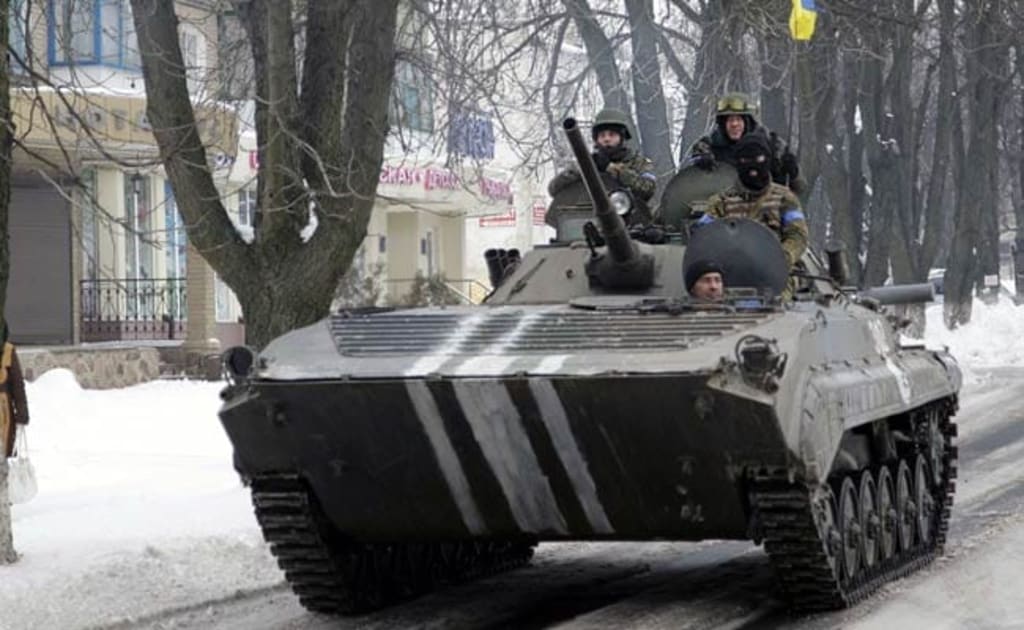
The invasion of Ukraine by Russia in 2014 sent shockwaves through the international community and has had lasting consequences for both nations. The reasons behind this invasion are complex and multifaceted, rooted in historical, geopolitical, and strategic factors. In this article, we will delve into the motivations that drove Russia to invade Ukraine and the implications of this critical event.
To understand Russia's invasion of Ukraine, we must first consider the historical context. Ukraine and Russia share deep historical, cultural, and economic ties. Ukraine was part of the Russian Empire for centuries until the Soviet Union was established in the early 20th century. After the collapse of the Soviet Union in 1991, Ukraine declared independence, leading to the emergence of an independent Ukrainian state.
Based on my independent research I have concluded potential motives for this ongoing invasion.
Historical ties between Russia and Ukraine are deep-rooted, dating back centuries. Ukraine was part of the Russian Empire and later the Soviet Union until it gained independence in 1991. Russia has historically considered Ukraine as part of its sphere of influence, and there is a perception among some Russian nationalists that Ukraine's independence was an unwelcome outcome.
Crimea, a region in southeastern Ukraine, holds immense strategic value for Russia. The Black Sea fleet, based in Sevastopol, provides Russia with access to warm waters, which is crucial for its maritime capabilities. The annexation of Crimea allowed Russia to secure its naval presence in the Black Sea, protecting its interests in the region.
Russia viewed Ukraine's aspirations to join Western institutions, particularly the North Atlantic Treaty Organization (NATO), as a direct threat to its national security. A NATO member of Ukraine would mean an expansion of a military alliance perceived by Russia as hostile to its interests. Russia saw Ukraine's potential alignment with the West as a strategic challenge and sought to prevent it.
A significant portion of Ukraine's population consists of ethnic Russians, particularly in Crimea and the eastern regions of Donetsk and Luhansk. Russia argued that it was intervening to protect the rights of these Russian-speaking minorities, although this claim has been widely criticized as pretextual.
Russia aimed to maintain influence over Ukraine and prevent its alignment with Western powers. By destabilizing eastern Ukraine and supporting separatist movements, Russia sought to keep Ukraine in a state of turmoil and prevent it from pursuing Western integration.
Russia's invasion of Ukraine was driven by a complex interplay of historical, geopolitical, and strategic factors. While Russia cited the protection of Russian-speaking minorities and historical ties as reasons for intervention, many viewed these justifications as pretexts for its pursuit of strategic interests, including retaining control of Crimea and preventing Ukraine from aligning with Western institutions.
The consequences of Russia's invasion of Ukraine have been profound:
1. International Isolation: Russia faced extensive international condemnation and sanctions following the invasion. Many countries, including the United States and the European Union, imposed economic and political sanctions on Russia, leading to increased isolation on the global stage.
2. Humanitarian Crisis: The conflict in eastern Ukraine, particularly in Donetsk and Luhansk, has resulted in a humanitarian crisis. Thousands of lives have been lost, and millions have been displaced from their homes.
3. Economic Impact: Ukraine's economy has suffered due to the conflict, sanctions, and disruption of trade ties with Russia. Russia has also faced economic repercussions, although it has adapted to mitigate the impact.
4. Shift in Alliances: The conflict has pushed Ukraine closer to Western nations, with increased support from the United States and the European Union. NATO has provided military and financial assistance to Ukraine, though it has stopped short of full membership.
5. Fragile Ceasefires: Multiple ceasefire agreements have been broken, but the situation on the ground remains volatile. Ongoing clashes and tensions in eastern Ukraine persist, making a peaceful resolution challenging to achieve.
6. Long-Term Geopolitical Implications: The conflict has fundamentally altered the geopolitical landscape in Eastern Europe. It has increased tensions between Russia and Western nations and raised concerns about the future security and stability of the region.
The consequences of the invasion have been far-reaching, with a humanitarian crisis, economic impact, and geopolitical realignments in Eastern Europe. The conflict underscores the enduring complexities of international relations and the challenges of achieving peaceful resolutions to deeply rooted disputes. As the situation in Ukraine continues to evolve, it remains a focal point of global concern and diplomacy, with ongoing efforts to seek a lasting and peaceful resolution to the crisis.
About the Creator
Keep reading
More stories from Jenor Gibson and writers in History and other communities.
Remembering 9/11: A Day That Shook the World
September 11, 2001, is a date forever etched in the collective memory of the United States and the world. On this fateful day, a series of coordinated terrorist attacks stunned the world, forever altering the course of history. The events of 9/11 had far-reaching consequences, reshaping not only the political landscape but also the way we view security, global relations, and the resilience of the human spirit.
By Jenor Gibson2 years ago in Education
3 Times Ordinary Objects Did Something Deeply Unsettling
Objects surround us every day. They make life easier, more comfortable, or more entertaining. A chair supports us, a mirror shows us our reflection, and a toaster browns our bread with consistent reliability. Most of the time, they behave exactly as expected.
By Enoch Sagini4 days ago in History
When Allies Disagree: How Global Partnerships Are Being Redefined
When Allies Disagree: How Global Partnerships Are Being Redefined For much of the modern era, global alliances appeared firm and predictable. Powerful countries formed blocs, promised mutual support, and stood together during times of war and crisis. But in today’s world, those alliances are changing. Recent disagreements between long-standing partners show that global cooperation is no longer based on automatic loyalty—it is increasingly shaped by national interests, public opinion, and long-term stability.
By Wings of Time 2 days ago in History




Comments
There are no comments for this story
Be the first to respond and start the conversation.