

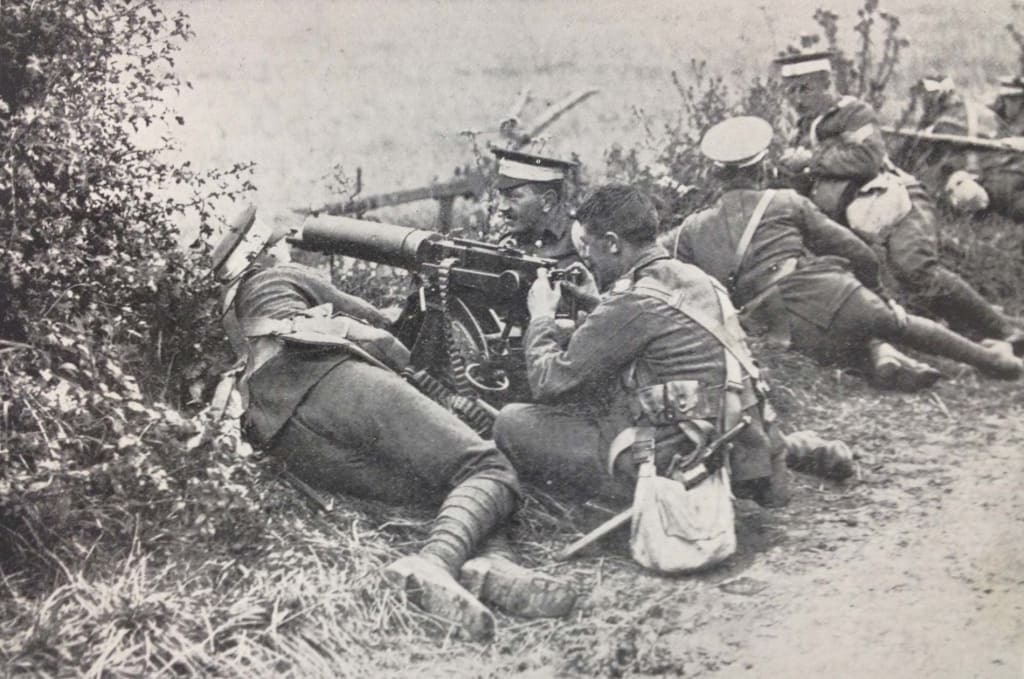
World War I: Origins, Causes, Duration, and Conclusion
World War I, also known as the Great War, was one of the most significant conflicts in modern history. It began in 1914 and lasted until 1918, resulting in the deaths of over 16 million people and reshaping the political landscape of Europe and the world. Understanding how World War I started, the reasons behind its outbreak, its duration, and how it eventually concluded is crucial for comprehending the foundation of 20th-century history.
How Did World War I Start?
The immediate cause of World War I was the assassination of Archduke Franz Ferdinand of Austria-Hungary on June 28, 1914, in Sarajevo, Bosnia. The assassin, Gavrilo Princip, was a Bosnian Serb nationalist associated with the group known as the Black Hand, which sought to unify South Slavic peoples and break Bosnia away from Austro-Hungarian control.
Following the assassination, Austria-Hungary issued an ultimatum to Serbia with harsh terms. Serbia accepted most of the conditions but rejected a few. On July 28, 1914, exactly one month after the assassination, Austria-Hungary declared war on Serbia.
What followed was a rapid domino effect due to pre-existing alliances and political tensions. Within a week, major European powers were drawn into the conflict. Russia began mobilizing against Austria-Hungary, allied with Serbia. In response, Germany, allied with Austria-Hungary, declared war on Russia on August 1 and then on Russia's ally France on August 3. When German troops invaded neutral Belgium to reach France, Britain declared war on Germany on August 4.
Why Did World War I Start?
While the assassination of Franz Ferdinand was the immediate trigger, the causes of World War I were deep-rooted and complex. Historians generally agree on four primary long-term causes, often summarized as MAIN:
1. Militarism
European powers had been building up their militaries for decades. Germany and Britain were engaged in a naval arms race, while countries like France, Russia, and Austria-Hungary expanded their armies. The belief in military solutions to political problems increased the likelihood of war.
2. Alliances
By 1914, two major alliance systems had formed in Europe:
• Triple Alliance: Germany, Austria-Hungary, and Italy
• Triple Entente: France, Russia, and the United Kingdom
These alliances created a situation where conflict between two countries could rapidly escalate into a larger war, as nations were bound to defend their allies.
3. Imperialism
European powers competed fiercely for colonies and global dominance. Tensions arose particularly in Africa and Asia, where imperial ambitions clashed. This rivalry deepened distrust and competition between major powers.
4. Nationalism
Europe was experiencing a high point of nationalistic fervor. Ethnic groups within multi-ethnic empires like Austria-Hungary and the Ottoman Empire sought independence. National pride and competition also fueled aggression between nations, particularly between France and Germany over territories like Alsace-Lorraine.
How Long Did World War I Last?
World War I lasted for four years, from July 28, 1914, to November 11, 1918.
The war was originally expected to be short. Many European leaders believed it would be over in a matter of months. However, the war quickly bogged down into a brutal and protracted conflict, particularly on the Western Front, where trench warfare led to massive stalemates and horrific casualties.
Key Phases of the War:
• The first battles, which included the German invasion of Belgium and France, occurred in 1914. The Battle of the Marne stopped Germany’s advance.
• From 1915 to 1916, trench warfare takes over. Major battles include Verdun and the Somme, which produce heavy casualties with little territorial gain.
• 1917: Russia exits the war after the Bolshevik Revolution, and the United States enters the conflict on the side of the Allies, giving them a crucial boost.
• 1918: A final German offensive fails, and Allied counteroffensives, aided by American troops, push back the Central Powers. Germany seeks an armistice in the face of internal unrest and exhausted troops. How Did World War I End?
World War I ended with an armistice on November 11, 1918, after a series of military defeats for the Central Powers and the collapse of their home fronts.
Collapse of the Central Powers:
• Austria-Hungary began to fragment due to nationalist uprisings and military defeats.
• The Ottoman Empire faced defeats in the Middle East and internal revolts.
• Bulgaria surrendered in September 1918.
• Germany was suffering from naval mutinies, food shortages, and the Spanish flu. By October 1918, German military leaders advised seeking a truce.
On November 9, 1918, the German Kaiser, Wilhelm II, abdicated, and Germany was declared a republic. Two days later, the armistice was signed in a railway carriage in Compiègne Forest, France.
The Treaty of Versailles:
On June 28, 1919, exactly five years after Archduke Ferdinand was killed, the formal peace treaty known as the Treaty of Versailles was signed. Key provisions included:
• Germany had to accept full responsibility for the war (the "war guilt clause").
• Germany lost significant territories and all its overseas colonies.
• The German military was drastically reduced.
• Germany was required to pay reparations to the Allied powers.
Although the harsh terms of the treaty sowed the seeds of resentment and economic hardship in Germany, which would later contribute to Adolf Hitler's rise to power and the outbreak of World War II, it was intended to guarantee a long-term peace. Conclusion
World War I was the result of a complex mix of nationalism, militarism, alliances, and imperial ambitions, ignited by the assassination of a single man. What many expected to be a short war spiraled into a global conflict that lasted four years and caused unprecedented devastation. The war ended with an Allied victory and a series of treaties aimed at maintaining peace. However, the punitive nature of the Treaty of Versailles and the unresolved tensions it left behind would eventually lead the world into another, even more devastating, war just two decades later.
Understanding the origins and outcomes of World War I is essential not only for studying history but also for recognizing the dangers of unchecked nationalism, militarism, and alliance entanglements in global politics today.
About the Creator
How Early Aircraft Failures Created Modern Flight Safety
When we look at modern aviation today with its redundant systems, strict regulations, and impressive safety record it’s easy to forget how fragile flight once was. Early aviation wasn’t built on confidence or certainty. It was built on risk. Every successful flight was surrounded by countless failures, and every crash carried lessons that would quietly reshape the future of air travel.
By Beckett Dowhan6 days ago in History
The Accidents That Quietly Improved Aviation Forever
I used to think aviation history was a story of bold successes, record-breaking flights, sleek aircraft, and triumphant landings. But the more I read, the more I realized something uncomfortable: much of modern aviation was shaped not by success, but by accidents. The safety and reliability we now take for granted were quietly built from moments when things went terribly wrong.
By Beckett Dowhan5 days ago in History


Comments
There are no comments for this story
Be the first to respond and start the conversation.