
Why Ancient Rome Banned Pants — And What It Revealed About Their Deepest Fear
Why Ancient Rome Banned Pants — And What It Revealed About Their Deepest Fear

By YASIR HAMID
What if I told you that wearing pants could get you banished from your own city?
Not fined. Not shamed. Not politely asked to change your outfit.
Exiled.
It sounds ridiculous today. But in Ancient Rome, this wasn’t a joke — it was law. Wearing pants wasn’t just frowned upon. It was considered so rebellious, so culturally offensive, that it could get you thrown out of the heart of the empire.
To the Romans, pants weren’t merely clothing. They were a symbol of something far more dangerous: change, defiance, and the slow unraveling of everything Rome believed in.
The Year Rome Declared War on Pants
In the year 397 AD, under the rule of Emperor Honorius, a decree spread across the streets of Rome that left many stunned. It wasn’t about war, taxes, or even religion.
It was about trousers.
Wearing pants within the city of Rome became a criminal offense. And not just any offense — the kind that could result in exile. It wasn’t a minor dress code violation. It was considered a full-blown cultural betrayal.
Why would an empire that once ruled most of the known world be afraid of a pair of trousers?
To understand that, we have to look at what pants represented in the Roman world.
Tunics, Togas, and the Uniform of Civilization
Stroll through a mental image of ancient Rome. Picture sun-drenched marble streets, towering columns, and statues celebrating the ideal male form. The citizens wear light tunics or flowing togas, fabric that drapes and sways, showing off their bodies with elegance and openness.
To the Romans, their clothing wasn't just about comfort. It was a badge of identity. A declaration that they were civilized.
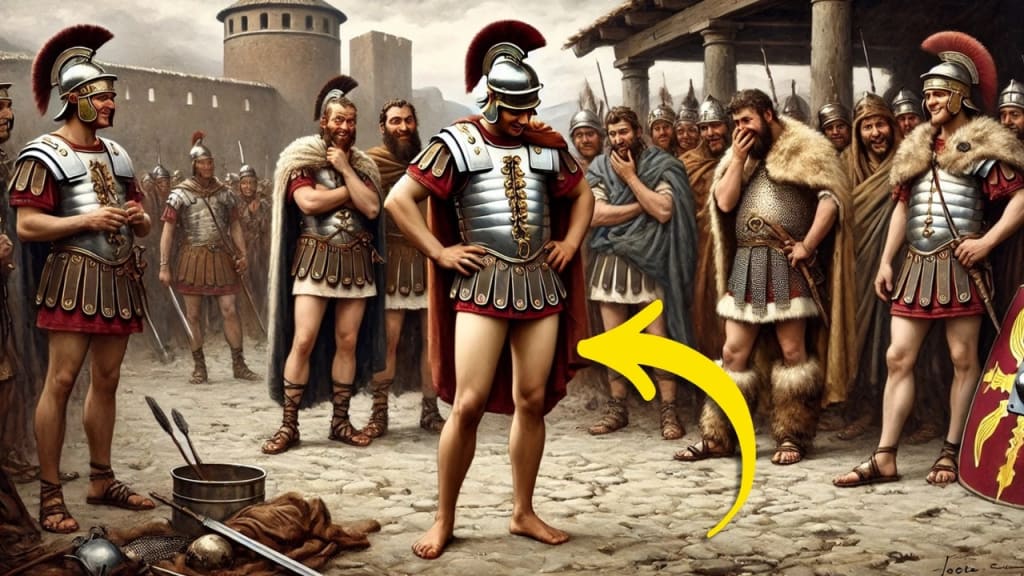
Their togas and tunics symbolized grace, power, and classical beauty. In contrast, pants were tight, awkward, and utilitarian. They clung to the legs — hiding the body — and to Roman eyes, that looked like shame. Or worse... barbarism.
But it wasn’t just an aesthetic issue. It was also political. Because pants were what their enemies wore.
The Enemy’s Uniform
Travel beyond Rome’s warm Mediterranean climate — into the wild forests of Germania, the rocky highlands of Britannia, or the freezing steppes of the East — and you’d find something very different. The warriors in these regions didn’t wear tunics or togas.
They wore pants.
Thick wool trousers. Leather riding gear. Garments made for mobility, protection, and cold.
These were not fashion statements. They were functional armor for tribal survival and battle.
To Romans, those pants came to symbolize rebellion and threat. The men who wore them were the same ones storming Roman borders, raiding outposts, and refusing to submit to the empire’s rule.
When Romans saw pants, they didn’t just see clothing. They saw opposition.
So when citizens within Rome started adopting these “foreign” garments, it was more than a fashion faux pas.
It was a quiet revolt.
The Cold Truth That Changed Everything
As Rome expanded its borders and stationed its armies in colder, more rugged terrain, something practical started to happen. Soldiers who had once marched proudly in tunics found themselves freezing to death in snow-covered forests.
Togas, beautiful as they were, did little to stop frostbite.
So slowly — and unofficially — Roman soldiers began wearing pants. First on patrol. Then during full campaigns. Then… every day.
And when these soldiers returned to Rome, they brought those pants with them.
Rome’s elite may have banned them. But the army — the backbone of Roman power — had embraced them out of necessity.
Suddenly, the empire’s identity began to crack.
Rome Divided — By Fabric
While the senators and elites clung to their robes, determined to preserve Rome’s image of dignity and classical superiority, the soldiers and working class embraced practicality. They adapted. They changed.
This created a cultural divide.
The ban on pants wasn’t just a fashion rule. It was a last-ditch attempt to hold the old world together. Emperor Honorius wasn’t worried about clothing — he was terrified of what the shift symbolized.
That Rome was no longer Rome.
That the empire was slowly becoming… something else.
The Fall of the Toga
Despite the laws, the pants persisted. Even senators — secretly, on cold winter mornings — began wearing them outside the city. The thing once considered barbaric became common. Comfortable. Normal.
And as Germanic tribes flooded into Rome’s collapsing borders, they didn’t just topple the buildings and loot the treasury. They brought their own customs, clothes, and culture with them.
Pants weren’t just worn.
They won.
From Rebellion to Routine
It’s fascinating to think how a piece of clothing could become a battleground for identity, fear, and control. What started as a foreign threat eventually became a daily habit. And even though the Roman Empire eventually fell, pants remained.
So the next time you pull on your jeans, leggings, or sweatpants, take a moment to remember: There was a time — not so long ago — when that simple act could’ve gotten you exiled from the greatest city on Earth.
Not for what you said.
Not for what you did.
But for what you wore.
So, what do you think?
Was Ancient Rome too obsessed with appearances? Or did they have a point — that clothes reflect culture, values, and even power?
Let me know in the comments. And if you enjoyed this story, give it a share — because sometimes, the smallest things in history reveal the biggest truths.
💬 Want more stories like this?
Follow for deep dives into forgotten history, bizarre laws, ancient myths, and the quirky moments that shaped our world — one unbelievable detail at a time.
About the Creator
Keep reading
More stories from Yasir Hamid and writers in History and other communities.
Venezuela’s President Under Pressure: Arrest Calls, Indictments, and a Nation at a Crossroads
How the Arrest Narrative Began The idea of arresting Venezuela’s president did not appear out of nowhere. It stems from years of accusations that range from human-rights abuses to corruption and drug-related activities. U.S. authorities have filed formal charges against Nicolás Maduro, linking him to cocaine trafficking networks and large-scale financial misconduct. These cases place him among the few sitting leaders facing active international legal pressure.
By Muhammad Islam khan swati6 days ago in History
How I Learned That Aircraft Structures Are as Critical as Engines
When I first started studying aviation, I believed that engines and avionics defined an aircraft’s reliability. Over time, as I explored aerospace history and manufacturing records, I realized how incomplete that understanding was. Aircraft safety does not depend solely on thrust or navigation systems. It is deeply rooted in structural engineering, certified manufacturing, and the disciplined production of components that passengers never see.
By Beckett Dowhan2 days ago in History


Comments
There are no comments for this story
Be the first to respond and start the conversation.