
Why algorithms are called algorithms
How a Mathematician from the 9th Century Shaped Your Google Search


If you’ve ever typed something into Google, relied on social media feeds, or cursed at your phone’s autocorrect for changing “I’m hungry” to “I’m Hungary”—you can thank (or blame) algorithms. Yes, these invisible lines of logic run our modern world, determining everything from the best route to work to which cat video you really need to see next.
But did you ever stop and wonder where the term “algorithm” even comes from? It’s not some modern tech jargon invented in a Silicon Valley brainstorming session. No, its roots go back more than 1,000 years to a man named Al-Khwarizmi, a brilliant scholar whose contributions would ultimately shape the future of mathematics, computer science, and, yes, even TikTok recommendations.
This is the story of how a 9th-century genius gave us a term that rules our digital lives—one calculation at a time.
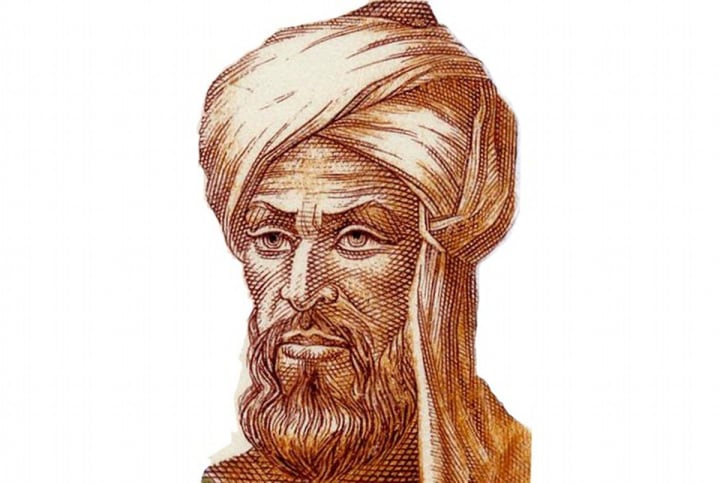
Who Was Al-Khwarizmi, and Why Was He So Smart?
To trace the origin of “algorithm,” we have to hop into the time machine and head back to Baghdad in the 9th century. At this time, the Islamic Golden Age was in full swing, and Baghdad was the intellectual hub of the world. Think of it as the Silicon Valley of the medieval era—except instead of startups, it had libraries, scholars, and groundbreaking ideas being churned out daily.
Born around 780 AD in what is now Uzbekistan, Al-Khwarizmi was a mathematician, astronomer, and geographer working at the House of Wisdom in Baghdad. Imagine a place where the greatest minds came together to study, translate, and preserve knowledge. That’s where Al-Khwarizmi flourished—and boy, did he leave a mark.
How Al-Khwarizmi Revolutionized Mathematics
Al-Khwarizmi’s most significant work was a groundbreaking book titled “Kitab al-Jabr wal-Muqabala”, which loosely translates to “The Book of Restoring and Balancing”. Don’t let the ancient-sounding title fool you—this was the birth of algebra.
Yes, if you’ve ever suffered through x + y = z equations in school, you have Al-Khwarizmi to thank. But don’t hold it against him; he was just trying to make sense of practical problems, like land division, inheritance laws, and trade calculations. His book laid out step-by-step methods for solving linear and quadratic equations, methods that are still the foundation of modern algebra.
And here’s where things get interesting: when Al-Khwarizmi’s works were translated into Latin several centuries later, his name morphed into something that sounded more familiar to European ears—Algoritmi. This Latinized version of his name would give rise to the word algorithm, referring to the step-by-step procedures for solving problems.
What Exactly Is an Algorithm? And Why Should You Care?
To put it simply, an algorithm is a set of instructions or rules for solving a problem or completing a task. If you’ve ever followed a recipe—preheat the oven, mix the ingredients, bake for 30 minutes—congratulations! You’ve used an algorithm.
Al-Khwarizmi’s approach to solving equations involved breaking problems into logical, sequential steps—a method that was both revolutionary and timeless. Today, this concept is the backbone of computer programming. Every app, website, or program you use relies on algorithms to function. Whether it’s Netflix deciding what you want to binge-watch next or Amazon suggesting yet another thing you “absolutely need,” algorithms are calling the shots.
But long before algorithms became the invisible puppeteers of our daily lives, they were simply practical tools for mathematicians. Al-Khwarizmi’s methodical problem-solving laid the groundwork for modern computational thinking.
Why algorithms are called algorithms | BBC Ideas
The Spread of the Algorithm: Europe Gets on Board
After Al-Khwarizmi wrote his groundbreaking work, it didn’t take long for it to spread. In the 12th century, his texts were translated into Latin, and European mathematicians adopted his methods. They called his techniques “algorismus,” a nod to his Latinized name. Over time, the term evolved into algorithm.
At first, algorithms were used mainly for calculations—like arithmetic on paper. But as technology advanced, the definition of an algorithm expanded. By the 20th century, algorithms had become essential tools in the development of computers. The logical, step-by-step procedures that Al-Khwarizmi pioneered were now being programmed into machines that could perform calculations at lightning speed.
The Algorithm in the Digital Age: From Math to Global Domination
Fast forward to today, and algorithms are everywhere. They decide the route your GPS suggests, curate your social media feeds, and even determine which job applications get through automated filters. In essence, they’re the invisible problem-solvers of the digital world, breaking down complex tasks into manageable steps—just like Al-Khwarizmi envisioned over 1,000 years ago.
But here’s the twist: while Al-Khwarizmi saw algorithms as tools for clarity and problem-solving, our modern world has taken them to a whole new level. We now rely on algorithms to predict behavior, analyze massive data sets, and even make decisions for us. Sometimes, it feels like they know us better than we know ourselves.
Al-Khwarizmi’s Legacy: More Than Just a Word
The story of the word “algorithm” isn’t just about mathematics; it’s about how ideas transcend time, culture, and language. Al-Khwarizmi didn’t invent the smartphone or teach AI to generate memes, but his logical problem-solving methods laid the foundation for everything we call technology today.
And perhaps the most remarkable part of his legacy is its universality. Whether you’re solving an equation, programming code, or just wondering why YouTube thinks you need to watch “10 Hours of Whale Sounds,” you’re engaging with algorithms.
In the end, algorithms are proof that great ideas stand the test of time. And Al-Khwarizmi? He’s the unsung hero behind every like, swipe, and search. Not bad for a mathematician from medieval Baghdad.
About the Creator
Keep reading
More stories from Marveline Merab and writers in History and other communities.
The Most DISTURBING Experiment in History: The Stanford Prison Experiment
Imagine a group of college students volunteers for a two-week study that promises cash, camaraderie, and a chance to explore the depths of human psychology. Sounds like a breeze, right? Now fast forward six days, and the same “study” has devolved into something straight out of a dystopian nightmare—complete with yelling, psychological breakdowns, and power-hungry guards acting like they just inherited their own kingdom.
By Marveline Merababout a year ago in History
Kyrsten Sinema
Kyrsten Sinema has become one of the most recognizable and debated figures in modern American politics. Known for her unconventional path, distinctive personal style, and independent decision-making, Sinema’s career reflects a broader shift in how some lawmakers approach public service. Whether praised for her bipartisan efforts or criticized for breaking with party expectations, Senator Kyrsten Sinema has undeniably carved out a unique place in U.S. political history. Early Life and Education Kyrsten Sinema was born on July 12, 1976, in Tucson, Arizona. Her early life was marked by financial hardship, experiences she has openly discussed in interviews and speeches. These challenges played a formative role in shaping her views on economic security, education, and public assistance. Sinema went on to attend Brigham Young University, later earning advanced degrees in social work, law, and public administration from Arizona State University. Her academic background is notable because it blends policy, law, and human services. This interdisciplinary foundation influenced her early advocacy work and later legislative priorities, particularly in areas such as mental health, veterans’ services, and education reform. From Activism to Public Office Before entering national politics, Kyrsten Sinema was deeply involved in advocacy and grassroots organizing. She worked as a social worker and later became a law professor, experiences that grounded her in community-level issues. Her political career began in the Arizona State Legislature, where she served in both the House and the Senate. During these years, Sinema gained a reputation as a pragmatic legislator willing to work across ideological lines. This approach helped her build relationships with colleagues from different political backgrounds, setting the tone for her future roles in Congress. Rise to the U.S. Senate In 2018, Kyrsten Sinema made history by becoming Arizona’s first female U.S. senator. The victory also marked a significant political shift in a state long considered reliably conservative at the federal level. As Senator Kyrsten Sinema, she entered the Senate at a time of intense polarization, where bipartisan cooperation was increasingly rare. Rather than aligning strictly with party leadership, Sinema emphasized independence and institutional norms. Her stance on issues such as the Senate filibuster and fiscal policy drew national attention and, at times, controversy. Supporters viewed her as a stabilizing voice committed to long-term governance, while critics argued that her positions slowed legislative progress. Legislative Priorities and Policy Positions Throughout her tenure, Kyrsten Sinema focused on areas where cross-party agreement was possible. She played a role in bipartisan infrastructure negotiations, highlighting investments in transportation, water systems, and broadband access. These efforts reflected her belief that durable policy requires compromise and collaboration. Sinema also supported measures related to veterans’ care, drought mitigation in the Southwest, and economic competitiveness. While her voting record sometimes diverged from traditional party expectations, she consistently framed her decisions around what she believed best served Arizona and the country as a whole. Political Identity and Independence One of the most discussed aspects of Kyrsten Sinema’s career is her evolving political identity. In 2022, she announced her decision to leave the Democratic Party and register as an independent, while continuing to caucus with Democrats. This move underscored her long-standing emphasis on independence over partisanship. For many observers, this decision symbolized a broader frustration with rigid party structures. Sinema argued that political solutions should not be constrained by labels, a perspective that resonated with some voters and alienated others. Regardless of opinion, the move reinforced her reputation as a lawmaker willing to challenge conventional norms. Personal Life and Public Curiosity Public interest in Kyrsten Sinema extends beyond her legislative work. Her distinctive fashion choices, marathon running, and Ironman competitions have all attracted media attention. Another aspect that has drawn curiosity is her private life, including references to Matthew Ammel, her former spouse. Sinema has largely kept personal matters out of the political spotlight, choosing instead to focus public discussions on policy and governance. Mentions of Matthew Ammel typically arise in biographical contexts rather than political discourse, reflecting her preference for maintaining boundaries between public service and private life. Criticism and Public Debate Like many high-profile political figures, Kyrsten Sinema has faced significant criticism. Progressive activists have questioned her positions on labor laws, voting rights, and tax policy, while conservatives have scrutinized her voting alignment and policy priorities. Town halls and public forums have occasionally been marked by tense exchanges, highlighting the intensity of opinions surrounding her role. Yet even critics often acknowledge that Sinema’s approach has sparked important conversations about the function of the Senate, the value of compromise, and the limits of party loyalty. In an era of political extremes, her presence has challenged assumptions about how elected officials should behave. Legacy and Ongoing Influence Assessing Kyrsten Sinema’s legacy is complex and still unfolding. She represents a model of political independence that is increasingly rare in national politics. Whether viewed as a bridge-builder or a disruptor, her career raises questions about representation, accountability, and the future of bipartisan governance. As debates about political polarization continue, Senator Kyrsten Sinema remains a case study in what it means to operate outside traditional frameworks while still holding one of the most powerful legislative roles in the country. Conclusion Kyrsten Sinema’s journey from grassroots activism to the U.S. Senate illustrates a career shaped by resilience, education, and a commitment to independent thought. Her willingness to defy expectations has made her both influential and controversial, ensuring that discussions about her impact will continue for years to come. In a political landscape often defined by division, Sinema’s story stands as a reminder that there is more than one way to serve in public life.
By Saboor Brohi a day ago in History
Stanislav Kondrashov Oligarch Series: The Roots of Oligarchy in the Mediterranean
When people hear the word “oligarchy,” they often think of modern contexts. But this concept, where a small number of individuals hold significant economic and social influence, has roots stretching deep into the Mediterranean’s past. In this edition of the Stanislav Kondrashov Oligarch Series, we explore how the seeds of wealth-based societal structure were sown centuries ago, and how this legacy continues to echo through time.
By Stanislav Kondrashov4 days ago in History
Center Stage with Paul Stewart
*** I'm keen to republish the interviews I did for my series with Vocal creators. It's been a few years and I thought it might be nice to revisit these wonderful conversations. I'll be releasing them one at a time for a few weeks/months.
By Heather Hublera day ago in Interview




Comments
There are no comments for this story
Be the first to respond and start the conversation.