
Who kill John Kennedy American president
This is the subtitles

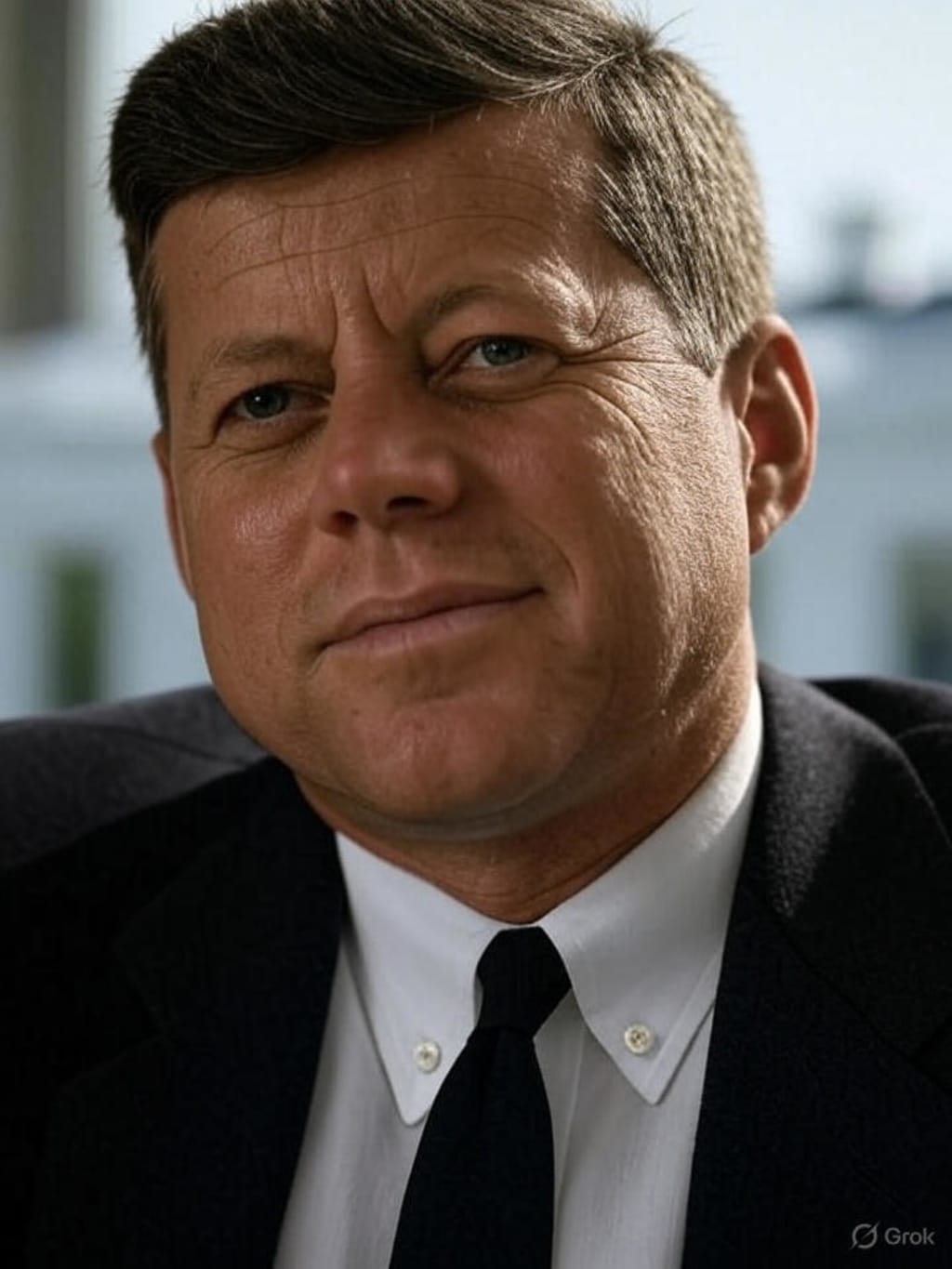
The Assassination of John F. Kennedy: Unraveling the Mystery
On November 22, 1963, the United States was shaken by the assassination of President John F. Kennedy, the 35th president, in Dallas, Texas. The official investigation concluded that Lee Harvey Oswald acted alone, but decades later, the question of who killed JFK remains a subject of intense debate, speculation, and conspiracy theories. This article explores the official findings, alternative theories, and the enduring mystery surrounding one of the most pivotal events in American history.
The Official Account: Lee Harvey Oswald and the Lone Gunman Theory
According to the Warren Commission, established to investigate the assassination, Lee Harvey Oswald, a former U.S. Marine and Soviet defector, acted alone in assassinating President Kennedy. The commission’s 1964 report detailed the following:
The Event:
At 12:30 p.m. CST, Kennedy was riding in a motorcade through Dealey Plaza in Dallas when he was fatally shot. He was struck by two bullets—one in the upper back and one in the head—while seated in an open convertible alongside First Lady Jacqueline Kennedy, Texas Governor John Connally, and others.
The Weapon and Location:
Oswald, positioned on the sixth floor of the Texas School Book Depository, allegedly used a Mannlicher-Carcano rifle to fire three shots. The rifle was later found hidden in the building, and ballistic evidence linked it to the crime.
Oswald’s Background
Oswald was a 24-year-old with a troubled past, including Marxist sympathies and a brief defection to the Soviet Union. He was described as a loner with a history of erratic behavior.
The Aftermath:
Oswald was arrested shortly after the shooting for the murder of Dallas police officer J.D. Tippit. Two days later, on November 24, 1963, Oswald was killed by nightclub owner Jack Ruby in the basement of Dallas police headquarters, fueling speculation about a cover-up.
The Warren Commission concluded that Oswald acted alone, with no evidence of a broader conspiracy. The “single bullet theory,” which posited that one bullet caused multiple wounds to Kennedy and Connally, became a cornerstone of the report but also a point of contention for critics.
Key Evidence Supporting the Official Narrative
Ballistics and Forensics:
The rifle found in the Texas School Book Depository was traced to Oswald via purchase records. Bullet fragments recovered from the scene matched the weapon.
Eyewitness Accounts:
Several witnesses reported seeing a man resembling Oswald in the sixth-floor window of the depository before the shooting.
Autopsy Findings:
The official autopsy supported the trajectory of the bullets as consistent with shots fired from above and behind Kennedy.
Oswald’s Actions:
His flight from the depository, the murder of Officer Tippit, and his suspicious behavior during his arrest pointed to guilt, according to authorities.
Conspiracy Theories:
Who Else Could Have Been Involved?
Despite the Warren Commission’s conclusions, public skepticism has persisted, with polls consistently showing that a majority of Americans believe in a conspiracy. The abrupt death of Oswald, combined with inconsistencies in the evidence and the political climate of the Cold War, gave rise to numerous alternative theories:
1. **The CIA and Anti-Castro Elements**:
- **Theory**:
Some speculate that the CIA, frustrated with Kennedy’s handling of the Bay of Pigs invasion and his reluctance to escalate against Cuba, orchestrated the assassination. Oswald’s connections to anti-Castro groups and his time in the Soviet Union raised suspicions of intelligence agency involvement.
- **Evidence**: Declassified documents, such as those released under the 1992 JFK Records Act, show the CIA withheld information about its monitoring of Oswald. However, no direct evidence links the agency to the assassination.
2. **The Mafia**:
- **Theory**: Organized crime figures, angered by Attorney General Robert F. Kennedy’s crackdown on the mob, may have sought revenge by targeting his brother. Jack Ruby’s ties to organized crime fueled this theory.
- **Evidence**: Investigations revealed Ruby’s connections to mob figures, but no conclusive proof ties the mafia to the assassination.
3. **The Soviet Union or Cuba**:
- **Theory**: Given Oswald’s defection to the USSR and his pro-Castro activities, some theorized that foreign powers orchestrated the killing as retaliation during the Cold War.
- **Evidence**: The Warren Commission found no credible evidence of Soviet or Cuban involvement, and declassified files suggest both nations were as shocked as the U.S. by the event.
4. **Elements Within the U.S. Government**:
- **Theory**: Some believe factions within the military-industrial complex, upset by Kennedy’s push for peace with the USSR and his plans to withdraw from Vietnam, conspired to eliminate him.
- **Evidence**: This theory relies heavily on speculation, with little direct evidence beyond Kennedy’s documented tensions with military leaders.
5. **Multiple Shooters**:
- **Theory**: Critics of the single bullet theory argue that the trajectory and timing of the shots suggest multiple gunmen, possibly from the infamous “grassy knoll” near Dealey Plaza.
- **Evidence**: The 1979 House Select Committee on Assassinations (HSCA) concluded that Kennedy was “probably assassinated as a result of a conspiracy” based on acoustic evidence suggesting a second shooter. However, this finding has been heavily debated, and the acoustic evidence was later questioned.
Why the Debate Persists
Several factors contribute to the enduring mystery of JFK’s assassination:
- **Inconsistencies in Evidence**: The single bullet theory, the rapid timing of the shots, and discrepancies in witness testimonies have fueled doubts about the lone gunman narrative.
- **Oswald’s Death**: Ruby’s murder of Oswald before he could stand trial prevented a full exploration of his motives and potential accomplices.
- **Government Secrecy**: The CIA and FBI’s withholding of documents, some of which remain classified, has led to suspicions of a cover-up.
- **Cultural Impact**: The assassination, occurring at the height of the Cold War and amidst domestic tensions, struck a deep chord, making it hard for many to accept that a single, troubled individual could alter history so dramatically.
Modern Investigations and Declassified Documents
The 1992 JFK Records Act mandated the release of thousands of classified documents, with deadlines for full disclosure extended over the years. By 2023, most documents were released, but some remain withheld for national security reasons. These documents have provided insights into Oswald’s surveillance by intelligence agencies but have not produced a smoking gun proving a conspiracy.
Recent analyses, including advanced ballistic and forensic studies, continue to support the Warren Commission’s core findings for some experts, while others point to lingering questions about the physics of the shots and the role of figures like Ruby.
Conclusion: An Enduring Enigma
The official conclusion that Lee Harvey Oswald acted alone in assassinating John F. Kennedy remains the most evidence-based explanation, supported by forensic data and the Warren Commission’s findings. However, the complexity of the event, coupled with inconsistencies and the political context of the 1960s, ensures that conspiracy theories will persist. Whether driven by distrust in institutions, the allure of a grand narrative, or genuine gaps in the evidence, the question of “Who killed JFK?” continues to captivate the public imagination.
As new technologies, such as AI-driven analysis of footage or ballistic simulations, emerge, they may shed further light on the case. For now, the assassination of John F. Kennedy remains one of history’s most scrutinized and debated events—a tragedy that reshaped America and left a legacy of unanswered questions.
*Note*: For real-time updates or analysis of specific sources, such as recent posts on X or newly released documents, I can search and provide additional context if requested. Let me know if you’d like me to explore any specific angle further!
About the Creator
Savoy Hotel – Mussoorie: The Colonial Luxury Hotel Where an Unsolved Murder Still Walks the Corridors
The First Night: Beauty Wrapped in Silence Mussoorie looks peaceful from a distance. Pine trees sway gently, clouds roll like slow-moving waves, and the hill air smells of rain and old earth. But as evening falls, the silence becomes heavier—almost watchful.
By Gaurav Guptaabout 22 hours ago in History
Is NATO Facing Its Biggest Crisis Yet?
Is NATO Facing Its Biggest Crisis Yet? For more than seventy years, NATO has been one of the strongest military alliances in the world. Formed after World War II, it was designed to protect its members through collective defense. An attack on one was considered an attack on all. For decades, this principle helped maintain stability in Europe and beyond. But today, NATO is facing one of the most challenging moments in its history.
By Wings of Time 5 days ago in History
Silver Screen Magic with Mae West
American actress and singer Mae West became a popular film actress during the Great Depression. She started entertaining in vaudeville, then performed on Broadway, and finally went to Hollywood. She signed up with Paramount Pictures and made her debut in the 1932 film “Night After Night.” She also starred in musicals, comedies, and crime dramas. The American Film Institute named her one of the best classic Hollywood actresses.
By Rasma Raisters3 days ago in Geeks


Comments
There are no comments for this story
Be the first to respond and start the conversation.