
Which of the earliest languages is still used today?
Long spoken in various forms, languages like Hebrew, Sanskrit, Tamil, and many more.

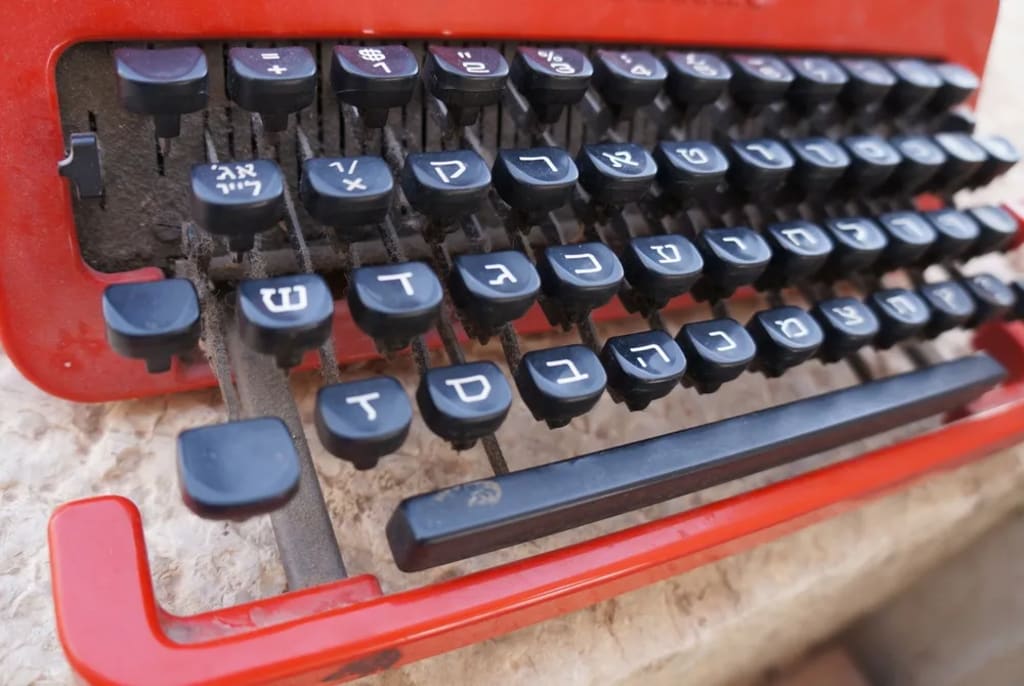
Since spoken words don't physically impact the world, tracing the beginnings of human language can be challenging. Additionally, language is always evolving, with words and their connotations changing with each new generation. Therefore, identifying one language as the oldest in the world would be misleading.
Nevertheless, a few of ancient languages are still in use today and each one sheds light on a fascinating aspect of human history.
Hebrew
Early forms of Hebrew first appeared in writing approximately 1,200 BCE, and it has been the sacred language of the Jewish Torah for more than 3,000 years. It was once solely spoken by religious experts, but it soon spread to the common people of the ancient Israelites.
By the year 400 CE, Hebrew had almost completely disappeared from use as a spoken language. The language is today spoken by nine million people, mostly in Israel where it is the official language, thanks to the advent of Zionism in the modern era.
As you might assume after thousands of years, Biblical Hebrew is different from modern Hebrew, although there are still clear parallels between the two.
Sanskrit
Another language that developed from religion in antiquity is Sanskrit, which served as the common tongue for the Vedas, the Hindu faith's sacred texts, as well as the historical writings of Buddhism and Jainism. Since the Hindu writings were composed circa 1,200 BCE, the language has a recorded history spanning more than 3,000 years.
In some form, it is still spoken today, mostly by Hindu priests during religious rituals. Only 14,000 Indians claim to speak it as their first language, with an estimated 1% of the population being able to do so.
Still, its legacy endures. Sanskrit has clear connections to English, French, Portuguese, Spanish, Russian, and many other widely spoken languages because it is a member of the large family of languages known as the Indo-European languages.
Tamil
Tamil is still spoken as a first language by almost 80 million people, which is remarkable given that the oldest Tamil literature, Tolkppiyam, dates back to 300 BCE. The southernmost state of India and Sri Lanka is where it is mostly spoken.
Greek
Greek has been in use since at least 1300 BCE in some capacity. Although most native speakers should be able to understand the Hellenistic or "Koine" Greek spoken in the past, it differs significantly from the Greek as it is spoken today.
However, dialects like the Attic dialect, one of the earliest varieties, will probably be too far removed for speakers in the present day to have a clear grasp.
Arabic
Arabic has had a very significant impact on world history. Arabic's earliest versions date back to the eighth century BCE, but during the ages, especially between the third and sixth centuries CE, the language underwent tremendous development.
It is a member of the Semitic family of languages, which also includes Hebrew and Aramaic, and it first appeared in the northwest of the Arabian Peninsula. Today, an estimated 371 million people worldwide speak Arabic as their mother tongue, which is the language used most often in Islamic sacred writings. Considering how crucial it is to Islam, many more people use it as a second language.
Additionally, the Arabic language has remnants of its early interactions with languages from nations with vibrant cultures, like Persian or Greek. For instance, Arabic notably borrowed Persian terminology for administration, fine arts, and crafts. While this was happening, some Arabic translations from Greek would merely use Greek words. Likewise, the many civilizations that Arabic came into contact with over time had an impact on sentence form.
Arabic played a significant part in many of the conversations that took place throughout the Silk Roads, particularly when Muslim academics were involved. Arabic became the primary language of study in the domains of astronomy and science from the eighth century onwards because Baghdad was one of the major centers in those fields.
Chinese
Despite the fact that the majority of people in China speak a modern, standardized dialect of Mandarin Chinese, there is no one Chinese language. A number of regional dialects, including Yue (Cantonese), Xiang (Hunanese), Min dialect, Gan dialect, Wu dialect, and Kejia, are still commonly spoken today.
But they can all be linked to ancient Chinese. Chinese character inscriptions dating back to at least 1123 BCE have been discovered in turtle shells, demonstrating the written form of the language has been around for more than 3,000 years. Although it has drastically changed and expanded since then, speakers of current languages can still detect remnants of this ancient linguistic system.
Latin
Another language with enormous historical value is Latin. Around 750–100 BCE, Old Latin changed into Proto-Italic, which eventually became Classical Latin, which was used from 100 BCE to 450 CE in the late Roman Republic and early Roman Empire.
The language developed into the contemporary Romance languages, including Italian, Spanish, Portuguese, and French, between the sixth and ninth centuries CE.
Despite the fact that Latin is no longer a first language, it has managed to avoid extinction due to the widespread interest in ancient texts and Latin's profound influence on European culture, including Linnaeus's decision to use Latin for binomial nomenclature, the scientific nomenclature system.
Euskera
Most people agree that Euskera is the oldest language still spoken today in Western Europe. In Basque Country, an autonomous region situated in the Pyrenees mountains between the borders of France and Spain, some 700,000 people still speak it.
Since it is unrelated to any other languages that are currently spoken, its exact age is unknown. Being one of the few remaining European languages from before Indo-European languages saturated the continent makes it an intriguing language for linguists to study.
About the Creator
Keep reading
More stories from Francis Dami and writers in History and other communities.
Unsolved Mysteries of the World and the Universe That Defy Explanation...
Welcome back to another adventure as we explore ten fascinating mysteries of the world and the universe. Get ready to be amazed and enthralled as we learn the answers to questions that have perplexed historians, scientists, and astronomers alike. These are some of our favourite topics to discuss, and if you have any requests for future ones, just let us know in the comments below.
By Francis Dami3 years ago in History
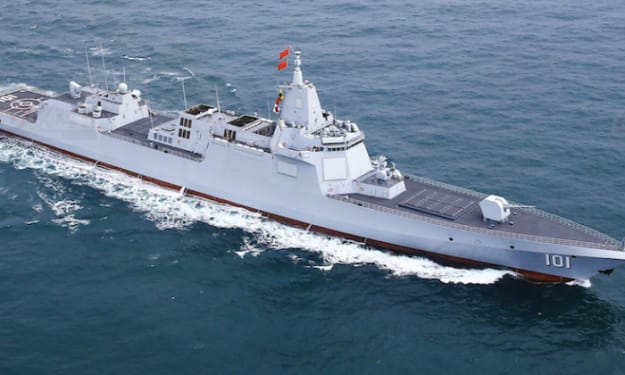
Nanchang: A Modern Symbol of China’s Naval Power
In recent years, the world has closely watched the rapid modernization of the Chinese People’s Liberation Army Navy (PLA Navy). One of the most important symbols of this transformation is the Nanchang (Hull 101), China’s first Type 055 guided-missile destroyer. Commissioned on 12 January 2020, Nanchang represents a major leap in naval technology and capability. As it completes six years of active service, the ship stands as a clear example of how China’s navy has moved into a new era of advanced maritime power.
By sehzeen fatima4 days ago in History
Where the Pulse Ends
© 2026 Sai Marie Johnson The humidity in the city didn’t just hang; it leaned. It was a thick, stagnant soup of diesel exhaust, ozone, and the metallic tang of blood that drifted from the "Compliance Zones." Joe sat in his rusted sedan, his hands resting loosely on the steering wheel. He wasn't gripping it. He wasn't angry. Anger was a chemical spike, a biological inefficiency. Joe was simply... focused.
By Sai Marie Johnsonabout 16 hours ago in History


Comments
There are no comments for this story
Be the first to respond and start the conversation.