
When the Olive Tree Remembered
When ordinary hands shaped history on the fields of Marathon

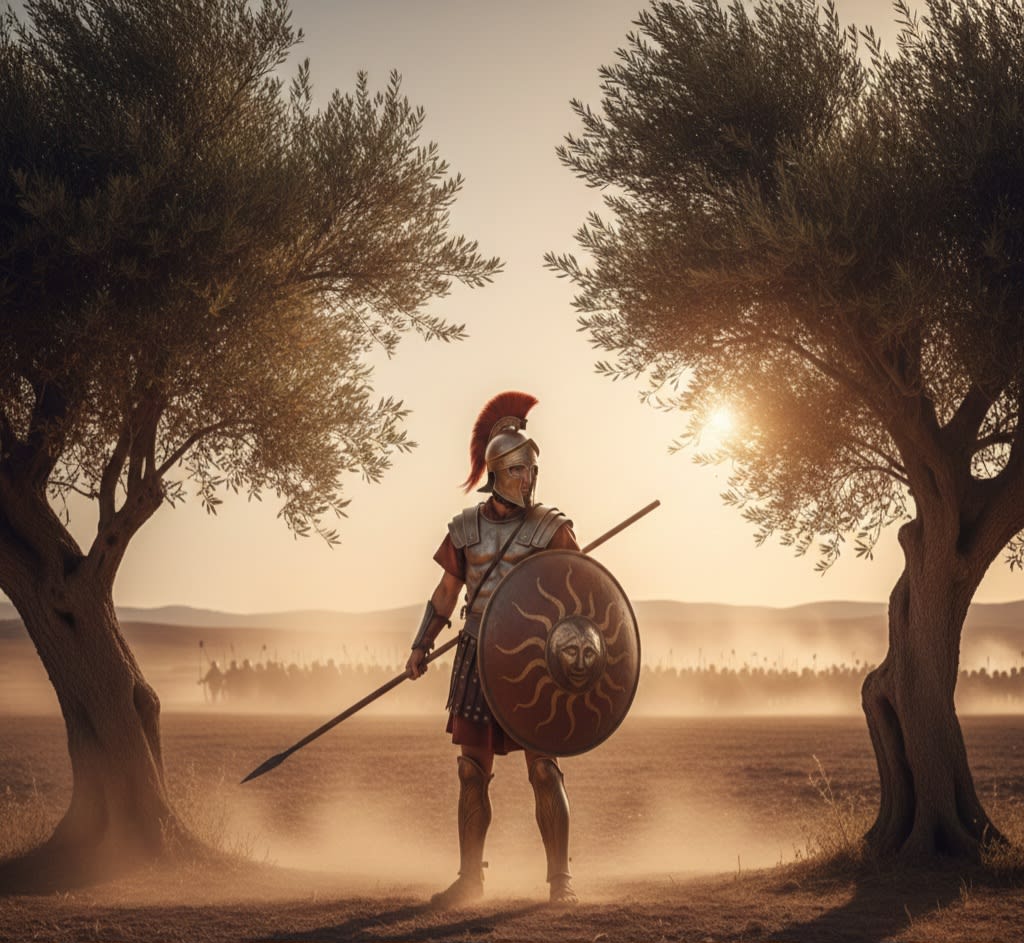
The old men of Athens used to say the city was not built of marble, but of waiting. Waiting for ships to return. Waiting for sons to grow into shields. Waiting for the gods to answer, or to remain silent. On the morning this story begins, the olive trees along the dusty road leaned inward, as if they, too, were listening.
Nikandros had never held a sword before the war. His hands knew clay better than bronze. He shaped bowls for merchants, cups for weddings, urns for the dead. The wheel turned, the world stayed still. That was life. Or so he thought.
Then a runner came from the coast, barefoot and bleeding, carrying a word that split the city in two: invasion.
The Persians had landed. The sea had opened its mouth and released an army.
Nikandros stood in the Agora as voices rose like smoke. Some called for walls. Others called for ships. A few whispered surrender. Over it all loomed the Acropolis, white and watchful, as if Athena herself were deciding whether the city was worth saving.
By nightfall, Nikandros was handed a shield heavier than any grief he had known. His name was scratched into the wood, crooked and uncertain. He practiced holding it in the dark, arm shaking, heart louder than drums.
They marched at dawn toward Marathon, where earth was flat and unforgiving. Along the way, Nikandros noticed how quiet men become when they realize history is about to remember them—or forget them forever.
Across the field stood the enemy: endless lines, polished armor, banners that snapped like threats in the wind. The Persians looked invincible. They looked like fate.
Nikandros wanted to run. Not from death, but from the moment just before it, when hope trembles and asks if it has chosen the wrong body.
A general spoke—not loudly, but clearly. He reminded them that Athens was not stone, not temples, not laws carved into tablets. Athens was the breath behind the shield. The stubborn refusal to kneel.
When the signal came, they ran.
Not marched. Not advanced. They ran, screaming, feet pounding the ground as if trying to wake the earth itself. Nikandros felt the world narrow to noise and impact. Shield against shield. Bone against bronze. Fear against something stronger than fear.
He did not remember killing. He remembered surviving. He remembered a man falling and the shock of realizing that the man was not him.
When it was over, the field was quiet in the way only battlefields are—too quiet, as if the land itself were holding its breath. The Persians were gone. Athens still existed.
They say a runner carried the victory back to the city, collapsed, and died with the word “won” still warm on his tongue. But Nikandros believed something else ran that day too: belief. The idea that a small city could stand against an empire and not be erased.
Years passed. Nikandros returned to clay. His bowls became steadier, his hands wiser. War left him when he slept, but stayed when he woke. Sometimes he would visit Oracle of Delphi, not to ask questions, but to listen to others. Kings and beggars alike knelt before the same silence.
He learned that the gods rarely speak in answers. They speak in echoes.
Once, a traveler from Sparta scoffed at Athens’ love of words and art. “Strength,” the man said, “is all that matters.”
Nikandros smiled gently. “Strength,” he replied, “is knowing what to protect.”
On his final day, old and bent, Nikandros sat beneath an olive tree outside the city. Children ran past him, arguing about games, about nothing important at all. He watched them and felt something loosen inside his chest.
Empires would rise. Empires would fall. Names would be carved, then weathered away. But somewhere between clay and courage, between fear and choice, humanity would keep telling the same story.
Not of gods who ruled from the sky, but of ordinary people who stood their ground.
And the olive tree, older than memory, rustled its leaves—because it remembered too.
About the Creator
Napoleon Bonaparte — From Corsican Outsider to Emperor of Europe
Napoleon Bonaparte was born on August 15, 1769, on the Mediterranean island of Corsica, a land that had only recently come under French control. His family was of modest noble status, and young Napoleon grew up feeling like an outsider—Corsican by culture, yet educated as a Frenchman. This sense of being different shaped his fierce ambition and iron will. From an early age, he showed a sharp mind, a deep love for history, and an unusual talent for mathematics, which later proved essential in warfare.
By The best writer 4 days ago in History
Balloonfest 1986
Balloonfest 1986 was meant to be a joyful celebration. It was planned as a world record attempt and a symbol of hope, fun, and community spirit. Instead, it became one of the most famous examples of how a good idea can go wrong when nature is underestimated.
By shaoor afridi6 days ago in History


Comments
There are no comments for this story
Be the first to respond and start the conversation.