
Napoleon Bonaparte — From Corsican Outsider to Emperor of Europe
The Rise, Reign, and Fall of a Man Who Changed History


Napoleon Bonaparte was born on August 15, 1769, on the Mediterranean island of Corsica, a land that had only recently come under French control. His family was of modest noble status, and young Napoleon grew up feeling like an outsider—Corsican by culture, yet educated as a Frenchman. This sense of being different shaped his fierce ambition and iron will. From an early age, he showed a sharp mind, a deep love for history, and an unusual talent for mathematics, which later proved essential in warfare.
At the age of nine, Napoleon was sent to military schools in mainland France. Life there was harsh. He spoke French with a Corsican accent and was often mocked by wealthier classmates. Instead of breaking him, this isolation hardened his character. He read endlessly about great commanders such as Alexander the Great and Julius Caesar, dreaming of future glory. By sixteen, he graduated as a second lieutenant in the artillery, a branch of the army that rewarded intelligence and precision rather than noble birth.
The French Revolution, which began in 1789, changed Napoleon’s destiny. As the old monarchy collapsed, opportunities opened for talented young officers. Napoleon supported the revolutionary cause, not out of deep political belief at first, but because it offered a path to greatness. His first major moment came in 1793 during the Siege of Toulon, where royalist forces, supported by foreign navies, threatened the revolution. Napoleon’s bold artillery strategy forced the enemy fleet to withdraw. At just twenty-four, he was promoted to brigadier general.
Fame truly arrived in 1795, when Paris faced an uprising against the revolutionary government. Napoleon was tasked with defending the city. He acted decisively, using artillery to disperse the rebels with what became known as a “whiff of grapeshot.” The government was saved, and Napoleon became a national hero. Soon after, he was given command of the French Army of Italy, a poorly supplied force facing stronger enemies.
In Italy, Napoleon revealed his genius. He moved his army swiftly, striking enemies separately before they could unite. Despite limited resources, he defeated Austrian forces again and again, inspiring his soldiers with passionate speeches and sharing their hardships. Victories such as Lodi and Arcole made him famous across Europe. He returned to France not just as a general, but as a legend.
Seeking to weaken Britain, France’s greatest enemy, Napoleon led an expedition to Egypt in 1798. The campaign began with success, including victory at the Battle of the Pyramids. However, the British navy destroyed the French fleet at the Battle of the Nile, trapping Napoleon’s army. Although the campaign failed strategically, Napoleon carefully controlled the narrative, returning to France in 1799 as a hero rather than a defeated commander.
France at that time was unstable and exhausted by revolution. Sensing opportunity, Napoleon joined a political coup known as the Coup of 18 Brumaire. The government was overthrown, and Napoleon emerged as First Consul, effectively the ruler of France. He promised order, stability, and glory—and for a time, he delivered all three.
As leader, Napoleon proved to be more than a soldier. He reformed France’s administration, improved education, stabilized the economy, and most importantly, created the Napoleonic Code. This legal system emphasized equality before the law, protection of property, and merit-based advancement. Although it limited some freedoms, it became one of Napoleon’s most lasting achievements, influencing legal systems around the world.
In 1804, Napoleon crowned himself Emperor of the French. The act shocked Europe but thrilled many in France, who saw him as the defender of revolutionary ideals. War soon followed. Over the next decade, Napoleon fought nearly every major European power. His victories at Austerlitz, Jena, and Wagram demonstrated his brilliance on the battlefield. He reorganized Europe, placing family members on thrones and spreading revolutionary ideas, even as he ruled as an emperor.
Yet Napoleon’s ambition grew too large. His Continental System, designed to economically weaken Britain, damaged European economies and created resentment. In 1812, he made his greatest mistake by invading Russia. Expecting a quick victory, Napoleon instead faced vast distances, harsh weather, and a retreating enemy that burned its own cities. The French army reached Moscow, but winter and lack of supplies destroyed it during the retreat. Of over 600,000 soldiers, only a fraction returned.
After the Russian disaster, Napoleon’s enemies united. He was defeated in 1814 and forced to abdicate. Sent into exile on the island of Elba, it seemed his story was over. But Napoleon was not finished. In 1815, he escaped and returned to France, beginning a dramatic period known as the Hundred Days. Soldiers sent to arrest him instead joined him, and he reclaimed power without firing a shot.
Europe reacted swiftly. At the Battle of Waterloo, Napoleon faced British and Prussian forces. After a long and brutal fight, he was defeated. This time, there was no return. Napoleon was exiled to the remote island of Saint Helena in the South Atlantic, far from Europe and power.
On Saint Helena, Napoleon lived under strict supervision. He spent his final years reflecting on his life, dictating memoirs, and shaping his legacy. He died on May 5, 1821, at the age of fifty-one. The exact cause of his death remains debated, adding mystery to his legend.
Napoleon Bonaparte remains one of history’s most complex figures. He was a tyrant to some, a hero to others, but undeniably a man who reshaped Europe. Rising from obscurity to rule an empire, his life is a powerful story of ambition, genius, and the high price of unchecked power.Start writing...
About the Creator
The best writer
I’m a passionate writer who believes words have the power to inspire, heal, and challenge perspectives. On Vocal, I share stories, reflections, and creative pieces that explore real emotions, human experiences, and meaningful ideas.
Keep reading
More stories from The best writer and writers in History and other communities.
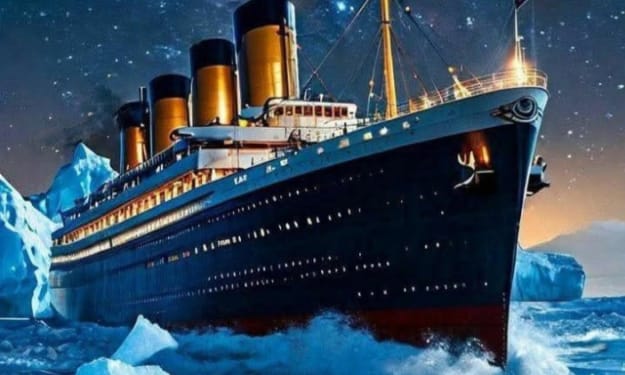
The Titanic Mystery: Secrets Beneath the Frozen Sea
On the night of April 14, 1912, the RMS Titanic sailed calmly through the dark waters of the North Atlantic, carrying more than 2,200 souls and the dreams of a modern world that believed it had conquered nature. Labeled “unsinkable,” the Titanic was the pride of human engineering. Yet before dawn broke, the great ship lay shattered beneath miles of icy ocean. More than a century later, the Titanic remains not just a tragedy—but a mystery filled with unanswered questions.
By The best writer 5 days ago in History
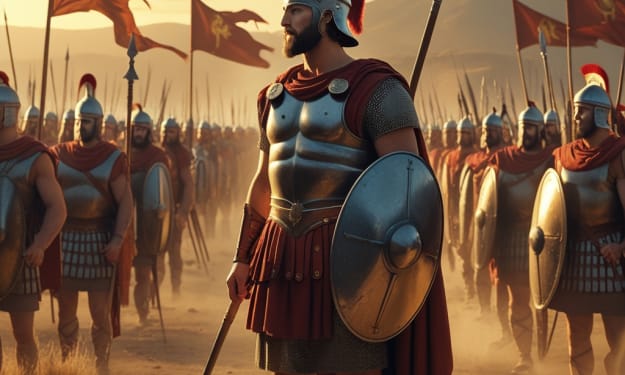
Alexander the Great’s Looted Wealth from India: A Historical and Economic Estimation
While his campaigns reshaped the ancient world politically and culturally, one of their most lasting impacts was the massive wealth he acquired from conquered territories, especially during his Indian campaign. This article explores the historical context, nature of the wealth looted from India, and an estimated net worth of that treasure in modern terms—revealing the truly staggering value of what came into Alexander’s hands.
By Say the truth 7 days ago in History


Comments
There are no comments for this story
Be the first to respond and start the conversation.