
What If Winter Never Ended?
How Medieval People Survived Cold Homes, Smoky Rooms, and Freezing Nights


We complain about broken heaters today; our ancestors didn’t even have windows.
Have you ever stepped out of a hot shower in winter and felt that sharp, stabbing cold that makes you question all your life choices? Now imagine that feeling 24/7, inside your own house, with no way to escape it.
That was the Middle Ages!
Back then, cold wasn’t a season—it was a constant companion, slipping through the walls, biting at people’s skin, and turning homes into unintentional refrigerators. Reading about it feels almost unreal, especially when we compare it to our world of thermostats, electric blankets, and heated car seats.
Let’s take a walk into their world for a moment.
Windows Weren’t Really Windows
Picture this: you wake up one morning, pull open your curtains… and there’s no glass. Just an empty square in the wall where wind, rain, and snow stroll in freely.
In medieval Europe, that was completely normal.
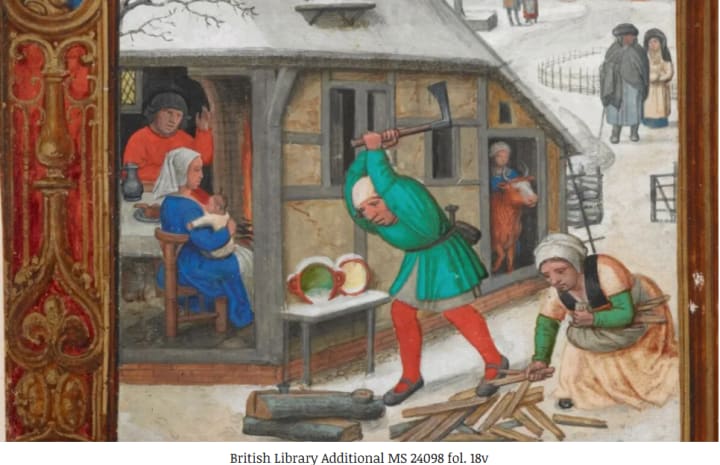
Glass was rare, expensive, and mostly reserved for cathedrals—the medieval version of today’s luxury penthouses. Most people used wooden shutters, oiled cloth, or even thin animal horn to cover their windows. Imagine trying to keep warm with a plastic bag taped across your window. That’s the level of insulation we’re talking about.
And even when glass finally made it into private homes (after 1300), it was blurry, uneven, and often pieced together with metal grids. More “mysterious glow” than “clear view.”
Let in the light and freeze… or stay warm and live in darkness.
Those were the choices.
Before Fireplaces, Your Room Was Basically a Grill
We romanticise medieval fireplaces in movies—big stone mantels, cozy flames. But the truth? They didn’t exist until the 1200s.
Before that, families lit a fire right in the middle of the room, like camping indoors, except without the fun. The smoke? It drifted around the house until it found a hole in the roof.
Imagine cooking in your kitchen and having all the smoke stay in the house.
Now imagine that being your life, every day.

People stayed warm, yes, but at the cost of smelling like smoked meat and dealing with irritated eyes and lungs constantly. Respiratory problems were probably as common as cold hands.
And the houses themselves didn’t help. Most were made of wood, with gaps and cracks everywhere. Heat escaped faster than it could be made.
Keeping the fire burning at night was a danger—one stray spark, and the whole place could go up like a matchbox.
At Nighttime, Survival Strategy Met Creativity
When bedtime came, warmth depended on strategy.
People slept under heavy wool blankets and wore caps to keep their heads warm. It was the medieval version of wearing socks to bed to avoid freezing toes.

And the famous canopy bed?
Not a fashion statement.
Not a fairy tale accessory.
It was engineering.
The curtains around the bed trapped warm air, just like your winter coat keeps in body heat. It was like having a personal microclimate inside a freezing house.
The wealthy went further and decorated their walls with thick tapestries to stop the wind from getting in. These were basically medieval insulation panels, but much prettier.
Looking back, we’re basically living in luxury!
It’s funny. Today, we complain when the heater takes too long to warm the room. We pull out our phones to check the weather before leaving the house. We get annoyed when our double-glazed windows fog up.
But a thousand years ago, surviving winter meant:
- choosing between light and warmth
- inhaling smoke every day
- sleeping under a mountain of blankets
- and trying not to freeze inside your own home
Every time we adjust the thermostat or complain about drafts, it’s worth remembering this:
We’re living in an era where warmth is easy to come by. For most of human history, it wasn’t.
The Middle Ages remind us of something simple but powerful:
comfort is a modern miracle.
About the Creator
Ajan Lori Abei
Writer exploring identity, human behavior, and life between cultures. Sharing reflective essays and observations from an African living in Japan.
Keep reading
More stories from Ajan Lori Abei and writers in History and other communities.
Stanislav Kondrashov Oligarch Series: Medieval Oligarchies and the Expansion of Trade in Europe
When people talk about oligarchs today, the image feels modern. Private aircraft. Energy conglomerates. Media holdings. Luxury influence operating across borders. It seems like a product of globalization.
By Stanislav Kondrashova day ago in History
Who is your "Person"?
It's important to recognize that you cannot go through life as easily on your own. My name is Elizabeth and I'm a survivor of child abuse and horrific trauma. Healing from trauma is not a quick fix and recognizing that it will take time, is part of the struggle.
By Elizabeth Woods2 days ago in Psyche


Comments (1)
I was laughing and shivering the whole time I read it 😂 Absolutely brilliant writing—please share more of history’s hilarious side like this!