
The Cleanest Person in the Middle Ages Would Still Smell Bad Today
Even your sweatiest gym day would seem like a luxury compared to what counted as clean in medieval times

Think about this for a moment.
Picture yourself not showering for a whole week.
Now, imagine not showering for an entire month.
Now, imagine living your whole life that way, and being called very clean just because you changed your shirt once.
That was everyday hygiene in the Middle Ages.
The Middle Ages often felt cold because there was no heating, but the real challenge was the smell - a mix of smoke, sweat, dirt, and animals. People didn't just put up with grime; they saw it as a normal part of life.
And when you compare their world with our world of hot showers, deodorant, toothpaste, and laundry machines, you start to see how much comfort we take for granted.
Let's step into their version of "clean."
Bathing: A Rare Event, Not a Daily Routine
Today, missing a shower can feel like breaking an unspoken rule. In the Middle Ages, though, taking a bath was a rare treat, not something people did every day.
For most people, a bath happened:
a few times a year,
on special occasions,
or when your family forced you.
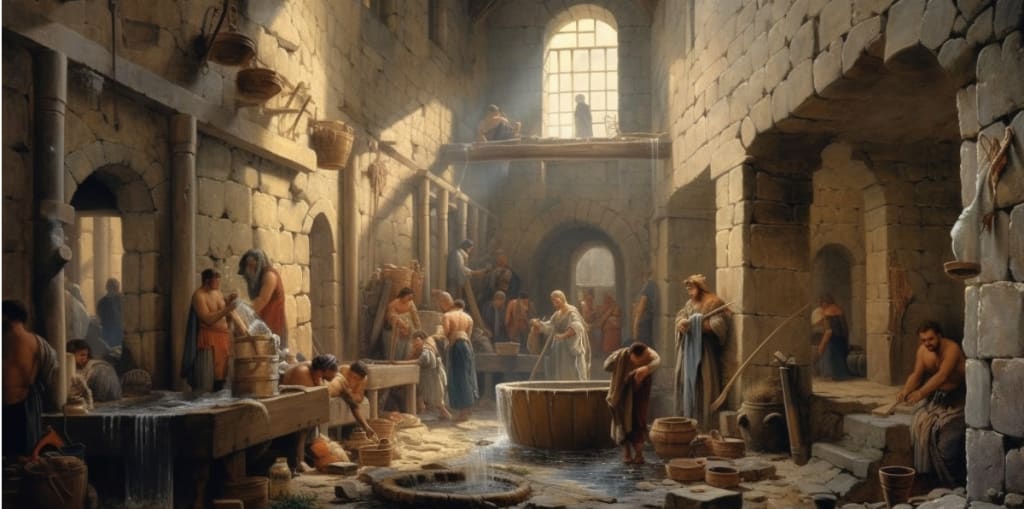
There were bathhouses, but they were costly, crowded, and eventually banned in some areas because they became places for socializing and other activities.
Getting ready for a bath was almost like getting ready for a wedding: you had to plan, save up, and hope nothing got in the way.
Now think about today, when we get annoyed if the water takes too long to heat up.
Your Clothes Were Your Soap
People in medieval times didn't wash their bodies much. Instead, they washed their linen underclothes.
The idea was simple:
"If the shirt is clean, the person is clean."
But the shirt wasn't truly clean; it was just a little less dirty.
Imagine wiping your sweat with a towel every day and calling it a shower.
That's medieval hygiene.
Laundry day was a major production involving river water, wood ash, beating clothes with stones, and lots of prayers.
Nothing smelled truly fresh, nothing felt soft, and there was no comfort.
Tooth Care: More of a Hope Than Science
No toothpaste.
No toothbrushes.
No dental appointments.
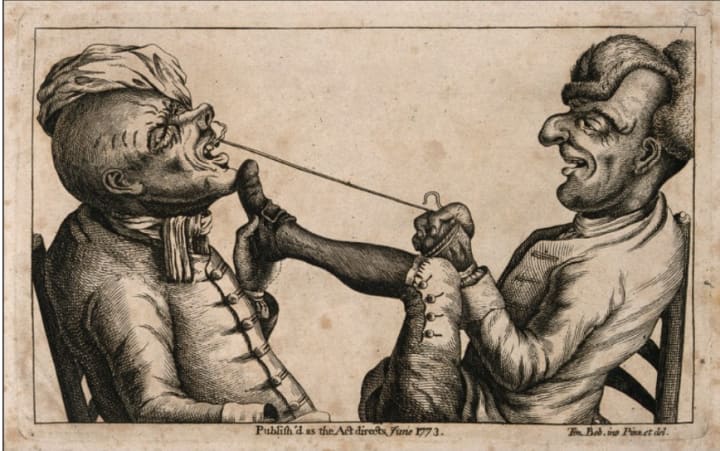
Instead: twigs, wool cloth, ashes, mint leaves (were used for smell, not for hygiene), "prayers against tooth worms" (yes, they believed cavities were worms).
Now, picture brushing your teeth with a burnt stick and a bit of hope.
That was dental care!
The average medieval smile?
…a collection of missing teeth, discolouration, and pain.
Hair and Skin: Oily, Itchy, and Unavoidable
For people in the Middle Ages, water was the main enemy of hair.
So instead of washing it, they powdered it, braided it, or simply ignored it.
Skin was rarely washed, resulting in acne, rashes, lice, fleas and constant itching.
If you've ever been bothered by a single mosquito bite, imagine having a hundred small bites every day.
That was normal.
Even kings struggled with lice.
Queens too.
Being truly clean just wasn't possible for anyone.
And yes, the smell was real.
sweat
smoke
soil
animals
unwashed clothes
whatever they cooked that week
Put all those smells together, and you get what you might call the medieval perfume: Eau de Survival.
But people back then didn't even notice.
When everyone smells the same, no one stands out.
That was simply how life was.
We Really Are Living in a Miracle Age
Today, we take cleanliness for granted. We get annoyed by:
a dirty shirt
a day without conditioner
a faint smell of sweat after a workout
a bathroom without hot water
In the Middle Ages, these tiny discomforts would have been heaven.
Each time we use soap, wash our faces, brush our teeth, or put on clean clothes, we're enjoying luxuries our ancestors never dreamed of.
The Middle Ages show us that our modern ideas about cleanliness are not the norm in human history.
It's a blessing.
A privilege.
A miracle of comfort and health.
And we hardly even notice or even realise it.
About the Creator
Lori A. A.
Teacher. Writer. Tech Enthusiast.
I write stories, reflections, and insights from a life lived curiously; sharing the lessons, the chaos, and the light in between.
Reader insights
Nice work
Very well written. Keep up the good work!
Top insights
Excellent storytelling
Original narrative & well developed characters
Heartfelt and relatable
The story invoked strong personal emotions
Keep reading
More stories from Lori A. A. and writers in History and other communities.
What If Winter Never Ended?
We complain about broken heaters today; our ancestors didn’t even have windows. Have you ever stepped out of a hot shower in winter and felt that sharp, stabbing cold that makes you question all your life choices? Now imagine that feeling 24/7, inside your own house, with no way to escape it.
By Lori A. A.2 months ago in History
World War I
The morning fog lay thick over the trenches of northern France, clinging to the earth as if it too feared what was about to happen. Private Thomas Hale pulled his coat tighter around himself, though it did little to stop the cold from seeping into his bones. He had been in the trenches for six months, yet the damp smell of mud, smoke, and fear still felt unfamiliar, like a nightmare he could not wake from.
By Maavia tahir6 days ago in History
Chicago Hospital Held Newborn Baby for 8 Months Over an Unpaid Medical Bill
Debts were handled much differently in the 19th and early 20th century. Back then, people who accrued debt had more to fear than letters and calls from collection agencies the same way we do today, especially if they owed a hospital or doctor money.
By Criminal Matters6 days ago in History
My New Book is Finally Here
My poetry collection Beautiful and Brutal Things is done. It's actually done and finally published over 270 pages. Over a year of my life went into this book. More than a year, really. Long days at my computer, sometimes seven days a week because I couldn't stop even when I probably should have. Then two months of editing that felt harder than the writing itself. But it's finished, and I'm still standing, and the book is real.
By Tim Carmichaela day ago in BookClub



Comments (2)
Thinking that “clean” in the Middle Ages meant just changing your shirt once and wiping your teeth with a burnt stick—I got literal chills.
Very specific to Europe.