
What actually killed Napoleon's army is revealed by ancient DNA.
Analysing Napoleon's freezing retreat again

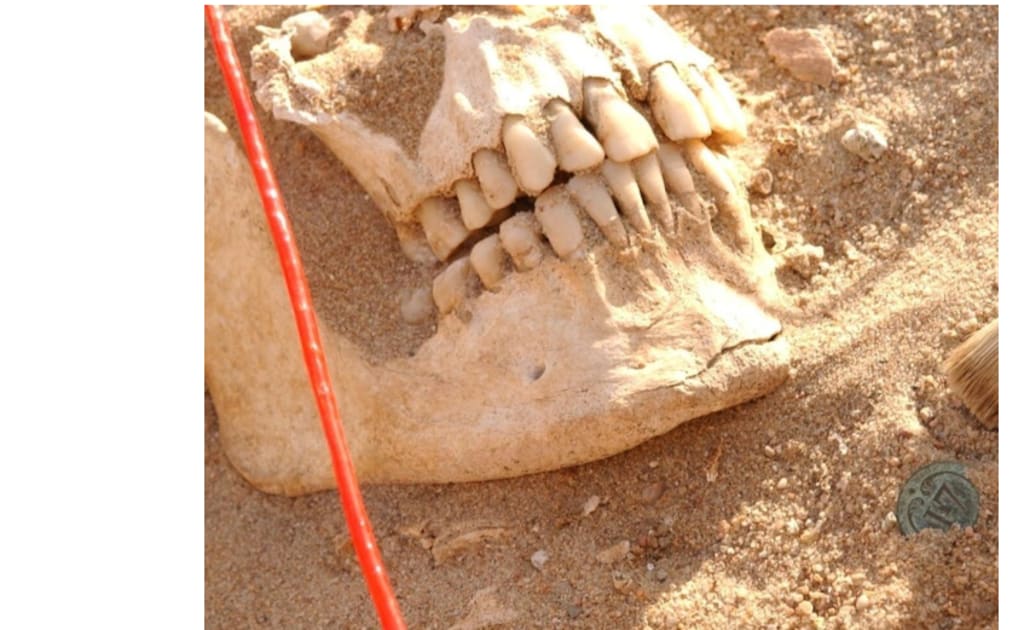
The traditional explanation of typhus is called into question by a new analysis of soldiers from the 1812 withdrawal from Russia. Rather, ancient DNA extracted from molars indicates that relapsing fever and enteric fever had a significant role in the disaster that destroyed Napoleon's Grande Armée.
A group of microbial paleogenomicists who re-examined remains from a mass grave on the army's retreat road produced the findings.
Researchers from the French Institut Pasteur are among the writers. To determine if typhus actually caused the collapse or if other diseases more closely matched the data, the team employed contemporary sequencing.
Analysing Napoleon's freezing retreat again
Napoleon led over 500,000 men into the Russian Empire during the summer of 1812. Only a small percentage were still living by December.
Historians have long pointed to starvation, brutal cold, and epidemic disease for Napoleon’s collapse. Typhus became the shorthand culprit, supported by reports from doctors and officers of the time.
The discovery of body lice – typhus’s main vector – on remains from the campaign strengthened that case. The typhus story was maintained by reports of DNA from Rickettsia prowazekii, the bacterium that causes epidemic typhus.
Enamel-locked DNA
Teeth were considered locked archives in the new study. The scientists collected and sequenced DNA from 13 soldiers buried in a mass grave along the French withdrawal route in Vilnius, Lithuania.
Contamination and deterioration are a problem for bones that are centuries old. The scientists used filters to remove ambient DNA and concentrate on real pathogen bits in order to solve this.
The concept was straightforward: even if typhus decimated the ranks, its genetic traces ought to be identifiable.
DNA disproves the typhus myth
The researchers found signs of two other pathogens instead of typhus: Borrelia recurrentis, the agent of louse-borne relapsing fever, and Salmonella enterica, which causes enteric fever.
The conditions the soldiers encountered—crowding, unsanitary facilities, and malnutrition—are reflected in both disorders. In populations under duress, both can have high mortality rates.
Both R. prowazekii and Bartonella quintana, which causes trench fever and has been linked to the disease in prior investigations of troops from the same location, were not found by the study.
According to senior author Nicolás Rascovan of the Institut Pasteur in France, "it's very exciting to use a technology we have today to detect and diagnose something that was buried for 200 years."
Outdated techniques and lost signals
The procedure may be the cause of the disparity with previous studies. PCR, a method that amplifies a particular DNA region, was frequently used in earlier research. When the target section is intact, the strategy can be effective, but ancient DNA usually breaks into tiny fragments.
Broad, shotgun-style sequencing, on the other hand, can recover ultra-short fragments without requiring a clean, preselected target since it casts a wider net.
Ancient DNA is severely broken down into fragments too tiny for PCR to function. Based on these extremely brief ancient sequences, our approach is able to cast a wider net and collect a greater spectrum of DNA origins," Rascovan clarified.
A persistent lineage
The relapsing fever bacterium was one surprise. These soldiers' B. recurrentis strain, which dates back roughly 2,000 years to the Iron Age, is part of the same lineage as was recently discovered in ancient Britain.
This implies a lineage that lasted for thousands of years throughout Europe before vanishing from the current dataset. Every strain that has been sequenced to date belongs to a distinct branch. The finding demonstrates the long-term growth, dissemination, and replacement of disease lineages.
According to Rascovan, "this demonstrates the ability of ancient DNA technology to uncover the history of infectious diseases that we wouldn't be able to reconstruct with modern samples."
Examining the Napoleon army catastrophe again
The deadly cold, starvation, and fatigue that decimated Napoleon's army are all still present. However, the epidemic element is reframed. S. enterica-caused enteric fever flourishes in areas with poor sanitation and limited access to clean water, which undoubtedly existed during the disorderly retreat.
The same body lice that caused typhus would have brought louse-borne relapsing fever, which would have ridden on Napoleon's soldiers' clothing and quickly spread through close contact, spreading illness across the ranks.
The combined effects of these illnesses may have increased the winter's toll by causing waves of fever, weakness, and mortality.
A neat narrative is complicated by the new data.Even if typhus spread elsewhere or at other points throughout the campaign, the lack of R. prowazekii in this set of teeth indicates that typhus may not have dominated these men's last days.
Thirteen people cannot represent a complete army dispersed over thousands of kilometres and months of hardship, thus sampling restrictions are important. However, the results make treating typhus as the only comprehensive explanation more difficult.
Napoleon's army's tragic fate
Beyond the tale of 1812, the research demonstrates how prehistoric DNA can alter conventional understanding. Direct pathogen DNA testing lessens the need to draw conclusions solely from vectors or symptoms.
Additionally, it uncovers hidden diversity—lineages that were formerly widespread but have no surviving descendants. Researchers can now more precisely retrace additional campaigns, sieges, and migrations from the historical record because to improved sequencing techniques.
There was more to the journey home from Moscow than just a snowy march. The camps became a maze of illnesses due to lice, squalor, and overcrowding. Instead of the traditional epidemic typhus, the genetic path in these 13 Vilnius soldiers causes enteric fever and louse-borne relapsing fever.
This change makes the tragedy more acute rather than less. The same terrible result, different germs. And a reminder that when we allow the dead to communicate through their DNA, the most well-known tragedies in history can nevertheless provide fresh insights.
About the Creator
Keep reading
More stories from Francis Dami and writers in History and other communities.
The 100-year-old brain cell theory taught in science textbooks is upended by this discovery.
Timing is essential to brain function. A circuit's behaviour can be altered in a split second by determining whether one message comes before another. Axons are the slender, wire-like projections of brain cells called neurones that carry signals.
By Francis Dami3 months ago in History
Frozen Ground
Silence meant the guns were cooling. It meant men were waiting. It meant something was about to break. We were dug in along a frozen stretch of road near the Imjin River, the kind of place that didn’t look important until history decided otherwise. The cold wasn’t just uncomfortable—it was personal. It crept into your boots, your bones, your thoughts. At night, I dreamed of heat: radiators, kitchens, the smell of coffee. I woke up with frost on my helmet.
By Gaofeng Wang6 days ago in History
Statue of Liberty: America’s Timeless Symbol of Freedom
The Statue of Liberty is one of the most iconic landmarks in the United States and a powerful symbol of freedom, democracy, and hope. Located on Liberty Island in New York Harbor, the statue has welcomed millions of immigrants and visitors since the late nineteenth century. Officially titled Liberty Enlightening the World, it represents the ideals upon which the United States was founded and continues to inspire people across the globe.
By Mukhtiar Ahmad7 days ago in History
Miss Persephone's Manual to a Seemingly Ordinary Life
Miss Persephone was found at the dining table, her blue eyes swollen, her tears arriving and retreating like the tides of the ocean. Earlier that day, her family had visited her in the retirement home where she had lived for eight years. It was her eightieth birthday.
By Imola Tóth2 days ago in Fiction



Comments
There are no comments for this story
Be the first to respond and start the conversation.