
Were Aliens Gods In The Past
Unraveling the Enigmatic Connection Between Ancient Civilizations and Extraterrestrial Visitors
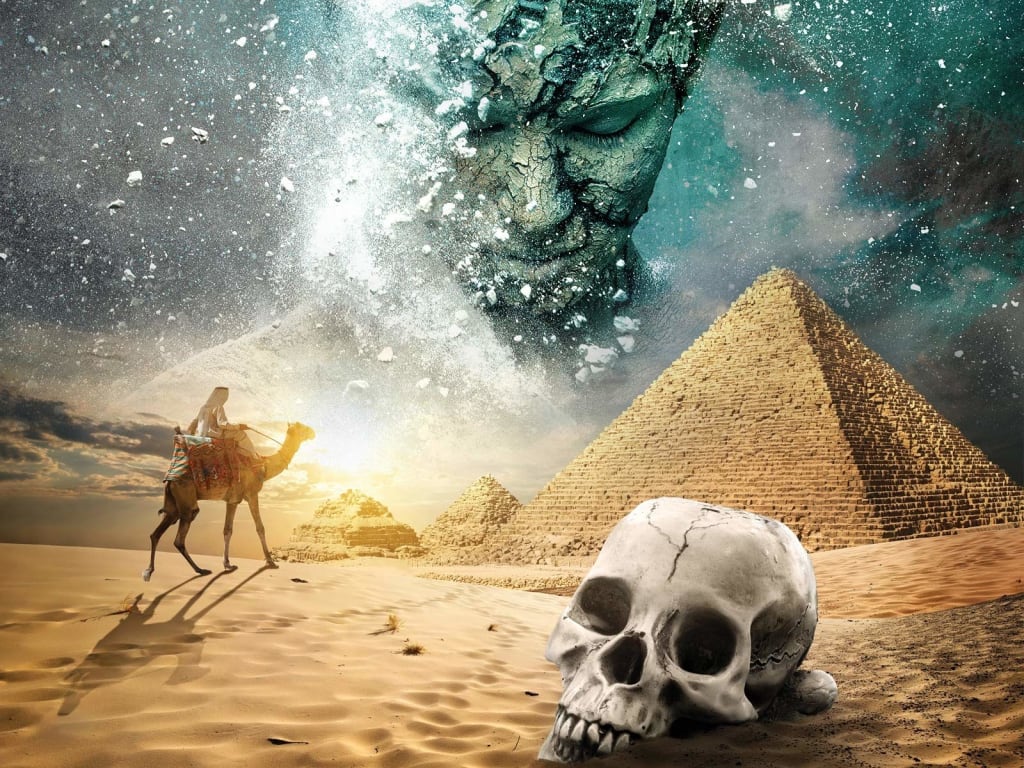
Were Aliens Our Gods in the Past? Exploring Ancient Astronaut Theory
Throughout human history, civilizations have looked to the skies for answers, guidance, and inspiration. Many ancient cultures have worshiped deities with descriptions that seem to defy the limits of human imagination. Could it be that these gods were, in fact, extraterrestrial beings? This intriguing hypothesis is known as the Ancient Astronaut Theory, and it raises questions about our understanding of religion, history, and the very origins of our species.
The Ancient Astronaut Theory suggests that, in the distant past, our ancestors encountered advanced beings from other planets. These beings, mistaken for gods due to their technological superiority, influenced the development of human civilization in profound ways. This theory has gained popularity in recent decades, thanks in part to books, documentaries, and television series like "Ancient Aliens."
One of the most compelling pieces of evidence cited by proponents of the Ancient Astronaut Theory is the presence of ancient art and architecture that seems to depict advanced technology and flying machines. For example, the Nazca Lines in Peru, massive geoglyphs etched into the desert floor, have been theorized to be landing strips or signals for extraterrestrial visitors. Similarly, ancient Sumerian texts describe the Anunnaki, a group of beings who came from the heavens and are credited with teaching humanity various skills and knowledge.
These depictions raise intriguing questions about how ancient peoples could have conceived such advanced technology without some form of outside influence. Were they inspired by actual encounters with beings from other worlds, or did their imaginations simply run wild?
Many religious texts and mythologies from around the world feature stories of gods descending from the heavens to interact with humans. These gods often possess knowledge and abilities that defy natural explanations. In Hinduism, for instance, the ancient text called the Mahabharata describes flying chariots and weapons with destructive powers. In the Bible, the Book of Ezekiel contains passages that some interpret as descriptions of spacecraft. Could these accounts be misinterpretations of encounters with technologically advanced aliens?
These religious texts, which have shaped the beliefs of billions of people, leave room for intriguing interpretations. Could they be more than just allegorical tales? The Ancient Astronaut Theory asks us to consider whether they contain hidden truths about our ancient past.
Archaeological mysteries, such as the construction of the pyramids in Egypt, have led some to speculate that ancient civilizations had help from extraterrestrial mentors. The precision and scale of these structures remain impressive even by today's standards, raising questions about the methods and tools available to the builders.
Critics and skeptics, however, argue that attributing such achievements to aliens diminishes the incredible ingenuity and capabilities of ancient human civilizations. They insist that these ancient peoples possessed the knowledge and skills needed to accomplish these feats on their own.
The question of whether aliens were our gods in the past remains a fascinating and contentious topic. While the Ancient Astronaut Theory challenges conventional beliefs about the origins of human civilization, it has not been widely accepted within the scientific community. Critics argue that the evidence offered by proponents of the theory can be explained through more conventional means, such as human creativity, ingenuity, and natural phenomena.
Regardless of one's perspective, exploring this theory encourages us to consider the mysterious and unexplained aspects of our history, inviting us to reevaluate our understanding of the past and the potential for extraterrestrial influence on our world. Ultimately, the debate continues, inviting us to ponder the possibility that our ancestors may have had more celestial company than we ever imagined.
In the grand tapestry of human history, the Ancient Astronaut Theory serves as a colorful thread, weaving together questions, speculation, and wonder about the cosmic mysteries that may have shaped our journey on this planet.
About the Creator
A Story of the World
The history of the world is the longest story ever told—a vast journey that began long before written words, long before cities, and even before humans themselves. It is a story shaped by nature, driven by curiosity, and transformed by ideas, power, faith, and struggle. The Dawn of Life and Early Humanity Billions of years ago, the Earth was a violent and restless place. Volcanoes erupted, oceans formed, and the first simple life appeared in the seas. Over immense stretches of time, life evolved from single-celled organisms into complex plants and animals. Eventually, a branch of primates learned to walk upright, use tools, and think beyond survival. These were the early humans. For tens of thousands of years, humans lived as hunters and gatherers. They followed animals, gathered plants, and learned to cooperate in small groups. Fire changed everything—it provided warmth, protection, and a way to cook food. Language allowed ideas to pass from one generation to the next. Slowly, humans spread across continents, adapting to deserts, forests, mountains, and ice. The Agricultural Revolution and the First Civilizations Around 10,000 years ago, a turning point arrived: agriculture. Humans learned to grow crops and domesticate animals. This allowed them to settle in one place, build villages, and increase their population. Farming began independently in regions such as Mesopotamia, the Indus Valley, China, Egypt, and Mesoamerica. With settled life came civilization. Cities rose near rivers that provided water and fertile soil. Governments formed to organize labor and protect land. Writing was invented to record trade, laws, and stories. The first legal codes appeared, such as the Code of Hammurabi, which tried to define justice. Religion became organized, explaining the mysteries of life and death and giving meaning to human existence. Empires, Power, and Belief As civilizations grew, so did conflict. Powerful kingdoms expanded into empires through conquest and control. The Egyptian, Persian, Greek, Roman, Mauryan, and Han empires shaped large parts of the ancient world. Roads, armies, taxes, and laws connected millions of people under a single rule. Ideas traveled along with armies and traders. Greek thinkers explored philosophy, science, and democracy. In India and China, deep philosophies like Hinduism, Buddhism, Confucianism, and Taoism offered guidance on morality and harmony. In the Middle East, monotheistic faiths emerged, teaching belief in one God and emphasizing justice and compassion. The Roman Empire became a bridge between ancient and modern worlds. It spread law, engineering, and language across Europe and the Mediterranean. Yet no empire lasts forever. Over time, internal weakness, economic strain, and outside pressures caused great empires to fall. The Middle Ages and the Flow of Knowledge After the fall of Rome in the West, Europe entered a period often called the Middle Ages. Power was divided among kings, nobles, and the Church. Life was difficult for many, but this era was not without progress. Universities formed, architecture flourished, and faith shaped daily life. Meanwhile, the Islamic world experienced a golden age. Scholars preserved and expanded knowledge in mathematics, medicine, astronomy, and philosophy. Cities like Baghdad and Cordoba became centers of learning, where ideas from Greece, India, and Persia were studied and improved. Trade routes connected Asia, Africa, and Europe, allowing goods and cultures to mix. In Asia, powerful dynasties ruled China, advancing technology such as paper, printing, gunpowder, and the compass. These inventions would later transform the world. The Renaissance and the Age of Exploration Around the 14th century, a rebirth of learning began in Europe: the Renaissance. Artists, scientists, and thinkers looked back to classical knowledge while pushing forward with new ideas. Figures like Leonardo da Vinci and Galileo challenged old beliefs and celebrated human potential. At the same time, explorers set sail across unknown oceans. The Age of Exploration connected the world as never before. Europeans reached the Americas, Africa, and Asia, creating global trade networks. This brought wealth and knowledge—but also suffering. Indigenous civilizations were destroyed, millions were enslaved, and colonial empires rose through exploitation. Revolutions and the Modern World The 18th and 19th centuries were ages of revolution. Political revolutions in America and France challenged absolute monarchy and promoted ideas of liberty, equality, and rights. The Industrial Revolution transformed economies, as machines replaced manual labor and cities grew rapidly. Life improved for some, but workers often faced harsh conditions. New ideologies emerged—capitalism, socialism, nationalism—each offering different visions of society. Nations formed and competed, leading to global conflicts. The 20th century witnessed two devastating world wars that reshaped borders and shattered illusions of progress. Yet from the ruins came international cooperation, technological leaps, and movements for independence and civil rights. The World Today and Beyond In recent decades, technology has accelerated history. Computers, the internet, and artificial intelligence have changed how humans communicate, learn, and work. Globalization has connected economies and cultures, while also creating new challenges. Climate change, inequality, and conflict remind humanity that progress is fragile. The history of the world is not just a record of kings and wars—it is the story of ordinary people: farmers, thinkers, builders, dreamers. It is a story of mistakes and lessons, destruction and hope. Each generation inherits this long journey and adds its own chapter. The future remains unwritten. Like those who came before, humanity stands at a crossroads—guided by the past, tested in the present, and responsible for what comes next.
By The best writer 4 days ago in History



Comments
There are no comments for this story
Be the first to respond and start the conversation.