
"Waziristan: Untold Stories from the Crossroads of Tradition and Turmoil"
Waziristan: Untold Stories from the Crossroads of Tradition and Turmoil Exploring the resilience and culture of a region often misunderstood.

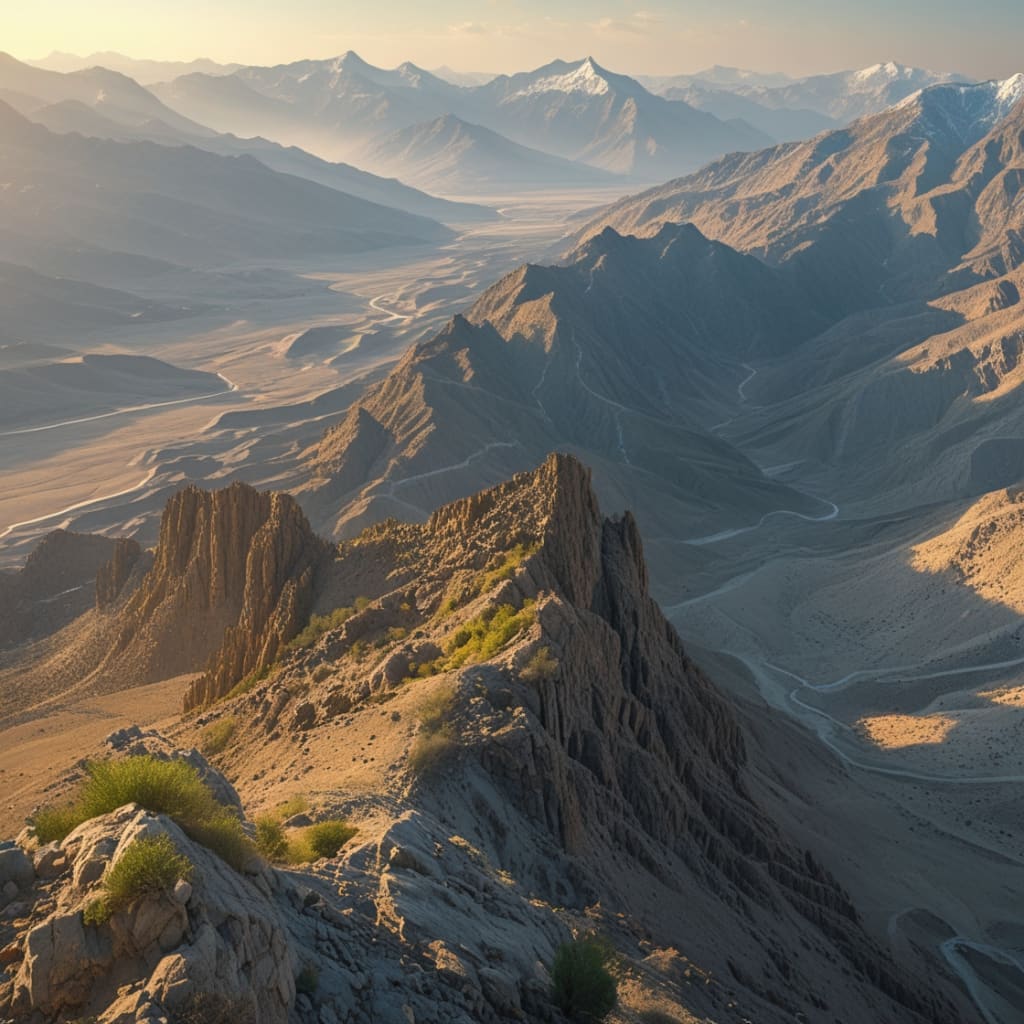
Waziristan is a mountainous region in the northwest of Pakistan. It lies in the Khyber Pakhtunkhwa province and borders Afghanistan. The region is divided into North Waziristan and South Waziristan. It has always been a very important area because of its location, people, and history.
---
Geography and Tribes
Waziristan is full of high mountains, deep valleys, and narrow passes. The weather is harsh, especially in winter. The people of Waziristan are mostly Pashtuns, and they follow Pashtunwali, a tribal code of life. The main tribes are:
Wazirs (in both North and South Waziristan)
Mehsuds (mostly in South Waziristan)
Dawars (in North Waziristan)
Shiranis, Bannuchis, and others
The people are known for being brave, strong, and independent. For centuries, they have lived by their own customs and traditions, without much outside control.
---
Waziristan in the British Era
In the 19th century, the British took control of India, including present-day Pakistan. But Waziristan was never fully controlled by the British. The tribes resisted them fiercely. The British wanted to control Waziristan because it was near Afghanistan, and they feared Russia might use that route to enter India (this was called “The Great Game”).
Between 1890 and 1947, the British fought many battles in Waziristan. These are called the Waziristan campaigns. One famous rebel was Faqir of Ipi, also known as Mirzali Khan. He was a tribal leader who led a strong resistance against the British for many years. His fighters used guerrilla warfare – quick attacks and hiding in the mountains.
Even after so many military operations, the British could never fully rule Waziristan. They had to deal with the tribes through local agreements, called Political Agents, who were like middlemen between the government and the tribes.
---
Waziristan after Pakistan’s Independence (1947)
In 1947, Pakistan became independent, and Waziristan became part of Pakistan. But the area remained under the Frontier Crimes Regulation (FCR), a special law from the British time. Under FCR, the government did not deal directly with the people but through tribal elders and local customs. There were no regular courts, and development was very limited.
Waziristan continued to be a semi-autonomous region. Most people depended on farming, livestock, and trade. Education, roads, and hospitals were poor. The government did not build much infrastructure there. The tribal areas, including Waziristan, were known as the Federally Administered Tribal Areas (FATA).
---
Waziristan and the War on Terror
After the September 11 attacks in 2001, the United States and its allies started a war in Afghanistan against the Taliban and Al-Qaeda. Many Taliban and other militants crossed the border into Pakistan and took shelter in Waziristan. They used the tribal areas to hide, train, and plan attacks.
As a result, Waziristan became a center of conflict. The Pakistani army began military operations to remove the militants. Some of the major operations include:
Operation Rah-e-Nijat (2009) – In South Waziristan
Operation Zarb-e-Azb (2014) – In North Waziristan
These operations were large and difficult. Many people had to leave their homes and become Internally Displaced Persons (IDPs). Thousands of people were affected. Schools and homes were destroyed, and the economy suffered.
Many militants were killed, and the army took control of the region, but some areas still faced problems with terrorism and violence.
---
FATA Merger with Khyber Pakhtunkhwa (2018)
In 2018, the Pakistani government made a historic decision. The tribal areas, including Waziristan, were merged with Khyber Pakhtunkhwa (KP) province. This was done to give equal rights to the people of these areas, like:
The right to vote in provincial elections
Access to courts and laws like the rest of Pakistan
Better education, healthcare, and development
This was a big change, but also a difficult one. Many people welcomed the decision, but others feared that it might hurt tribal traditions.
---
Modern Challenges and Future Hopes
Today, Waziristan is still recovering. After years of war, military operations, and displacement, life is slowly returning to normal. Schools and hospitals are being built. Roads and communication systems are improving.
But the region still faces many challenges:
Lack of jobs and poverty
Poor education system
Land disputes and tribal rivalries
The need for peace and security
About the Creator
How Case Documents Are Maintained in Philadelphia County
Case documentation forms the backbone of judicial accountability in Philadelphia County. Every filing, order, transcript, and judgment plays a defined role in preserving procedural accuracy and historical reference. The methods used to preserve these materials reflect long-standing legal standards combined with structured administrative practice. This article explains how case documents are created, organized, stored, reviewed, and preserved within Philadelphia County, with a clear focus on factual processes rather than commentary or promotion.
By Owen Perry3 days ago in History
The Quiet Collapse of Global Arms Control
The Quiet Collapse of Global Arms Control For decades, arms control agreements helped prevent the world’s most powerful weapons from spiraling out of control. Treaties limited nuclear stockpiles, increased transparency, and built fragile trust between rival states. Today, that system is quietly unraveling—and its collapse may define the next era of global insecurity.
By Wings of Time 2 days ago in History
Autonomy Is The Real Privilege
Good morning, freedom-seekers! Today we’re gonna be looking at autonomy. A strange word, I know; one many would probably look at blankly and run away from on sight. We’re gonna figure out what it actually means, consider how it’s achieved, and decipher just how deeply most of us are tangled up in dependence without realising it.
By That ‘Freedom’ Guyabout 18 hours ago in Humans



Comments
There are no comments for this story
Be the first to respond and start the conversation.