
Watching horror through gray glasses
A review of the Macks and their origins from The Conjuring films
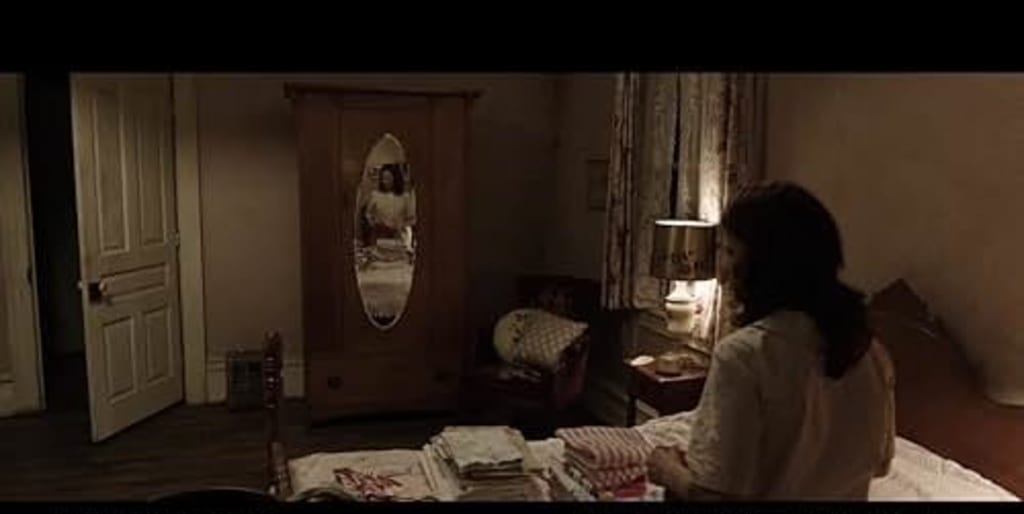
Horror movies don’t usually stick with me. They don’t keep me up at night, because 99% of the time, I can just rationalize it: it's a movie. Sure, great white sharks, genetically mutated sharks, or ancient super sharks are scary in the moment, but at the end of the day, they're completely fictional.
And yeah, some slasher films are loosely based on real-life serial killers—but I deal with unhinged people all the time. I work on the internet, after all. Ba doom shing! No, what really gets under my skin is that little voice in the back of your head that says, “What if supernatural stuff is actually real?” That’s why The Conjuring movies freak me out so much. It’s not just that they’re well-made psychological horror films—it’s that they claim to be based on true events.
If you're not familiar, The Conjuring universe includes two main films focused on haunted houses and demonic possession, two Annabelle movies about a creepy haunted doll (I mean, just look at it), and now The Nun, which features a demonic nun with what looks like a severe case of jaundice.
ow, the Annabelle story should be taken with a grain of salt, and The Nun with, like, an entire kilo—but The Conjuring and its sequel are actually pretty compelling.
So here’s the thing—Ed and Lorraine Warren, the main characters in The Conjuring, aren’t just fictional ghost hunters. They’re based on real people who actually claimed that these events really happened. Like, they straight-up believed these were real hauntings.
And that got me thinking about two things:
First—why don’t I own any Holy Water?
Second—how real are these stories, actually?
Because if these movies are even halfway legit, then yeah, they're absolutely terrifying. But should I be freaking out? Are we talking about stories that are “real” just because Ed and Lorraine said they happened? Or are there actual, verifiable facts behind them? Is this a true story—or just a good story?
So grab a flashlight, maybe say a quick prayer, and definitely don’t look behind you at that shadow slowly creeping up the wall... Because today, we’re diving into the scariest thing of all this Halloween: THE TRUTH.
“New England. 1970s. The Perron family moves into an unassuming farmhouse—only to be plagued by strange noises, foul smells, and something... sinister. Carolyn, the mother, begins to believe she’s being attacked by a dark, female entity.”
That’s when Ed and Lorraine Warren enter the picture—paranormal investigators who identify the force as an evil spirit tied to a woman named Bathsheba… allegedly a witch.according to legend, Bathsheba was an old woman who once lived in the house—and not just any old woman. She allegedly sacrificed her week-old baby to the devil, then took her own life in 1863. Creepy doesn’t even begin to cover it.
In the film, Carolyn—the mother of the Perrin family—ends up possessed by Bathsheba’s spirit. The Warrens step in, perform an exorcism, and ultimately manage to drive the entity out. so that’s the story as The Conjuring tells it. But how much of that actually holds up in the real world?
Well, to begin with, Ed and Lorraine Warren were real people, and they were arguably the most well-known paranormal investigators of their time. I mean, it’s not like they had a lot of competition for the title of “top demonologist couple of the 20th century.”
That said, their resume was packed. Aside from the Perrin case, they were involved in several other famous hauntings that also got the Hollywood treatment—like The Amityville Horror and A Haunting in Connecticut. as for Bathsheba and the Perrin family—that part’s not made up. The family’s real names were used in the film, and their story did, according to them, happen.
Andrea Perrin, the eldest daughter, has given several interviews over the years. She’s said that while the movie took some creative liberties, it captured the essence of what they experienced. She’s described her mother’s exorcism in vivid, terrifying detail:
"I thought I was going to pass out." my mother began to speak a language not of this world, in a voice that wasn’t her own." her chair levitated. She was thrown across the room."whoever the spirit was, she believed herself to be the rightful mistress of the house—and she clearly wasn’t happy about my mother’s presence."
Her father, Roger, has backed up parts of the story as well. now, of course—these are just interviews. Eyewitness testimony, even dramatic ones, aren’t exactly foolproof. Memory’s slippery, and it’s easy to exaggerate or even fabricate over time.
But the whole Bathsheba angle? That gives us a little more to dig into. There’s some history there—and history means we might be able to fact-check at least part of this chilling tale.
IHorror movies don’t usually stick with me. They don’t keep me up at night, because 99% of the time, I can just rationalize it: it's a movie. Sure, great white sharks, genetically mutated sharks, or ancient super sharks are scary in the moment, but at the end of the day, they're completely fictional.
And yeah, some slasher films are loosely based on real-life serial killers—but I deal with unhinged people all the time. I work on the internet, after all. Ba doom shing! No, what really gets under my skin is that little voice in the back of your head that says, “What if supernatural stuff is actually real?” That’s why The Conjuring movies freak me out so much. It’s not just that they’re well-made psychological horror films—it’s that they claim to be based on true events.
If you're not familiar, The Conjuring universe includes two main films focused on haunted houses and demonic possession, two Annabelle movies about a creepy haunted doll (I mean, just look at it), and now The Nun, which features a demonic nun with what looks like a severe case of jaundice.
ow, the Annabelle story should be taken with a grain of salt, and The Nun with, like, an entire kilo—but The Conjuring and its sequel are actually pretty compelling.
So here’s the thing—Ed and Lorraine Warren, the main characters in The Conjuring, aren’t just fictional ghost hunters. They’re based on real people who actually claimed that these events really happened. Like, they straight-up believed these were real hauntings.
And that got me thinking about two things:
First—why don’t I own any Holy Water?
Second—how real are these stories, actually?
Because if these movies are even halfway legit, then yeah, they're absolutely terrifying. But should I be freaking out? Are we talking about stories that are “real” just because Ed and Lorraine said they happened? Or are there actual, verifiable facts behind them? Is this a true story—or just a good story?
So grab a flashlight, maybe say a quick prayer, and definitely don’t look behind you at that shadow slowly creeping up the wall... Because today, we’re diving into the scariest thing of all this Halloween: THE TRUTH.
“New England. 1970s. The Perron family moves into an unassuming farmhouse—only to be plagued by strange noises, foul smells, and something... sinister. Carolyn, the mother, begins to believe she’s being attacked by a dark, female entity.”
That’s when Ed and Lorraine Warren enter the picture—paranormal investigators who identify the force as an evil spirit tied to a woman named Bathsheba… allegedly a witch.according to legend, Bathsheba was an old woman who once lived in the house—and not just any old woman. She allegedly sacrificed her week-old baby to the devil, then took her own life in 1863. Creepy doesn’t even begin to cover it.
In the film, Carolyn—the mother of the Perrin family—ends up possessed by Bathsheba’s spirit. The Warrens step in, perform an exorcism, and ultimately manage to drive the entity out. so that’s the story as The Conjuring tells it. But how much of that actually holds up in the real world?
Well, to begin with, Ed and Lorraine Warren were real people, and they were arguably the most well-known paranormal investigators of their time. I mean, it’s not like they had a lot of competition for the title of “top demonologist couple of the 20th century.”
That said, their resume was packed. Aside from the Perrin case, they were involved in several other famous hauntings that also got the Hollywood treatment—like The Amityville Horror and A Haunting in Connecticut. as for Bathsheba and the Perrin family—that part’s not made up. The family’s real names were used in the film, and their story did, according to them, happen.
Andrea Perrin, the eldest daughter, has given several interviews over the years. She’s said that while the movie took some creative liberties, it captured the essence of what they experienced. She’s described her mother’s exorcism in vivid, terrifying detail:
"I thought I was going to pass out." my mother began to speak a language not of this world, in a voice that wasn’t her own." her chair levitated. She was thrown across the room."whoever the spirit was, she believed herself to be the rightful mistress of the house—and she clearly wasn’t happy about my mother’s presence."
Her father, Roger, has backed up parts of the story as well. now, of course—these are just interviews. Eyewitness testimony, even dramatic ones, aren’t exactly foolproof. Memory’s slippery, and it’s easy to exaggerate or even fabricate over time.
But the whole Bathsheba angle? That gives us a little more to dig into. There’s some history there—and history means we might be able to fact-check at least part of this chilling tale.
I did some research, and yes, there really was a woman named Bathsheba Sherman who lived in the same region as the Perrin family in the mid-1800s. But there’s no solid evidence that she ever lived in the exact house the Perrins moved into, and more importantly, no credible proof that she was a witch.
It’s true that three of her four children died young, but child mortality was unfortunately common back then. This was an era when babies were given gin and opium to calm them down—so, losing children, while tragic, wasn’t exactly unusual or suspicious enough to be considered witchcraft.
The rumors of Bathsheba’s involvement in the occult seem to have started after a baby mysteriously died while under her care—reportedly killed by a large sewing needle driven into the base of the skull. But there’s no official record of her ever being charged, let alone convicted, for the death. And considering that she was buried in a local cemetery right next to her children, it seems the community didn’t believe she was some kind of Satanist. That kind of burial would have been highly unlikely in a Christian town if the accusations were taken seriously.
Still, the fact that Lorraine Warren supposedly walked into the Perrin house and identified the name "Bathsheba" right away is definitely eerie... until you realize that the Warrens were brought in by a local paranormal group. It's very possible that they were told about the local legends beforehand.
So, at the end of the day, the people, the place, and some of the details in the story are real—but whether the ghosts and witches were real is another question entirely.
You’d expect the sequels and spin-offs in The Conjuring universe to drift further into pure fiction. But surprisingly, that’s not what happened.
The Conjuring 2 is actually based on another well-documented case: the Enfield poltergeist in 1970s England. And yes, the Warrens were involved in that one too. In this case, Janet Hodgson, the second-oldest of four kids, claimed to be possessed by the spirit of an old man named Bill Wilkins—who insisted he still owned the house and wanted it back.
Unlike the first Conjuring film, this isn’t just a dramatized movie scene — it’s based on actual events. The BBC even produced a documentary on the alleged haunting, and investigators captured extensive audio recordings of 11-year-old Janet Hodgson speaking in a deep, raspy voice that sounded more like a 100-year-old coal miner with a lifelong smoking habit.
It takes a while, but if you keep listening, she eventually claims to be the spirit of an old man named Bill Wilkins — who supposedly died of a brain hemorrhage while sitting in a very specific chair in the house.Sounds like a spooky story a kid might make up, right?
Well… maybe — until you find out that Bill Wilkins’ son, Terry, heard the recordings and said the voice sounded strikingly similar to his late father’s. Not only that, but the cause and location of Bill's death matched the story exactly.
And if that wasn’t unsettling enough, the very events that drew the Warrens into the case are tough to dismiss. Both in the movie and in real life, a police officer was called to the Hodgson home in the 1970s. She reported witnessing a chair slide across the room by itself and even signed an official affidavit to back up her statement. In most ghost stories, it’s usually the family who might have a motive to exaggerate or fabricate events — but it’s hard to see what a third-party officer would stand to gain by lying.
Over the following 18 months, more than 30 people — including neighbors, journalists, and psychic researchers — claimed to witness heavy furniture moving on its own and objects flying through the air.
Now, if you’ll excuse me, I’m about to turn on every single light in the house and arm myself with at least five crucifixes. and that's gonna be a big heaping helping a nope. No, no, no, no no
And when it comes to Annabelle and Annabelle: Creation, those films are also inspired by real investigations — this time involving a truly unsettling doll the Warrens encountered even before the events of The Conjuring.
About the Creator
ADIR SEGAL
The realms of creation and the unknown have always interested me, and I tend to incorporate the fictional aspects and their findings into my works.
Keep reading
More stories from ADIR SEGAL and writers in History and other communities.
The Burial Mask of Pop Culture
A mummy is generally understood as any corpse that has been remarkably preserved, and its story stretches across nearly every corner of the globe. But when it comes to monsters, it’s nearly impossible not to picture that iconic, linen-wrapped, upright figure.
By ADIR SEGAL11 months ago in History
Selim I: The Ottoman Prince Who Ordered the Execution of His Own Family
In the long and dramatic history of the Ottoman Empire, few rulers are remembered as fiercely and controversially as Selim I, also known as Selim the Grim. Rising to power in 1512, Selim I transformed the Ottoman Empire into a dominant force in the Islamic world. Yet his reign began with a chilling series of executions that shocked even his contemporaries. To secure the throne, Selim reportedly ordered the deaths of his own brothers, nephews, and even some of his sons—an act that reflected the brutal political realities of the Ottoman dynasty.
By Irshad Abbasi 5 days ago in History


Comments
There are no comments for this story
Be the first to respond and start the conversation.