
“War on the Horizon: Pakistan & Afghanistan Border Tensions 2025”
How growing clashes along the Durand Line are shaping the future of South Asia — and what it means for ordinary people.

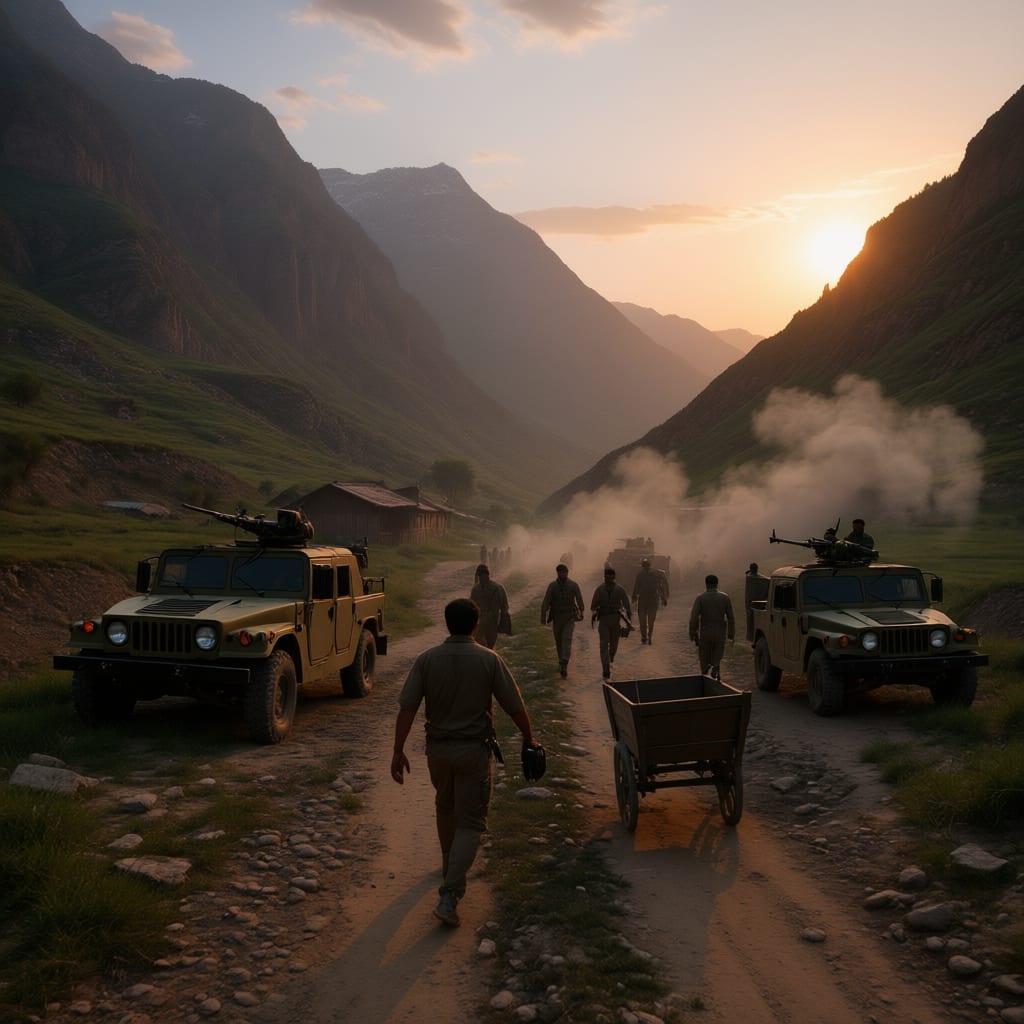
“War on the Horizon: Pakistan & Afghanistan Border Tensions 2025”
In the mountains where Pakistan and Afghanistan share a rugged border, history has always been written in blood, migration, and resilience. The Durand Line, carved by colonial rulers over a century ago, has been the source of countless disputes. But in August 2025, tensions have once again flared, threatening to spiral into something far more dangerous.
The Spark
The latest clash began in Kunar Province near the Pakistan border. Afghan militia groups accused Pakistani forces of setting up new border posts inside Afghan territory. Pakistan responded by claiming the posts were well inside its land. Within hours, exchange of fire erupted, leaving 12 dead and dozens wounded on both sides.
Videos of smoke rising from villages spread across X (Twitter) and TikTok, igniting debates worldwide. Hashtags like #PakAfghanClashes and #DurandLineConflict trended for two days.
Voices from the Border
For the people who live here, war is not politics — it’s personal. Traders from Torkham crossing point suddenly found their businesses shut. Families were split across the border, unable to meet loved ones.
A shopkeeper in Landi Kotal said:
“I don’t care about maps. I care about my brother on the other side. We grew up together, but now soldiers won’t let us meet.”
Children who once crossed the border for school are now forced to stay home, their futures uncertain.
Military Build-Up
Pakistan has increased patrols, sending armored vehicles to sensitive areas. Afghan forces have fortified their side, raising fears of a prolonged standoff.
Analysts warn that militant groups are exploiting the chaos. In the shadows of this conflict, ISIS-K and TTP fighters are regrouping, waiting for opportunities to strike both sides.
International Reactions
The United Nations has urged restraint, while the U.S. and China — both with strategic stakes in the region — are watching closely. Washington fears another wave of instability could push more refugees into Pakistan and beyond, while Beijing worries about threats to its CPEC investments.
Civilian Cost
Amid the politics and military moves, ordinary civilians suffer the most. Families in border villages have fled to safer towns like Peshawar and Jalalabad, carrying only what they could fit into donkey carts and small trucks.
One mother of four described the fear of shelling:
“At night, when we hear gunfire, my children cry and hide under blankets. They don’t know if it’s fireworks or death.”
Local hospitals, already struggling, are overwhelmed with casualties. Electricity outages and lack of clean water worsen the misery.
The Question of Peace
Can peace be restored? Experts believe the conflict is not just about territory, but about history, identity, and survival. For Pakistan, securing its border is crucial against militancy. For Afghanistan, accepting the Durand Line feels like surrendering sovereignty.
But for the poor farmers, traders, and children of the border, peace simply means being able to sleep without fear.
What It Means for the World
If tensions escalate, the region could face:
Mass migration of refugees into Pakistan.
Terrorist groups gaining power under chaos.
Economic collapse of local trade routes.
Possible international intervention.
The mountains of the borderlands, once symbols of beauty and strength, now echo with gunfire and uncertainty. Whether this becomes a full-scale conflict or a negotiated truce will shape the future of South Asia for years.
For now, the people wait — torn between hope and fear.
About the Creator
Wings of Time
I'm Wings of Time—a storyteller from Swat, Pakistan. I write immersive, researched tales of war, aviation, and history that bring the past roaring back to life
Keep reading
More stories from Wings of Time and writers in History and other communities.
The Last Dawn of Swat
The Last Dawn of Swat A forgotten tale of courage, faith, and sacrifice in the valley of kings The first rays of dawn broke across the valley, painting the snow-capped peaks of Swat in hues of gold and crimson. The year was 1519, and the mountains stood as eternal witnesses to centuries of invaders, poets, and kings. Yet, this morning was unlike any other. It was the morning that would decide the fate of Swat.
By Wings of Time 5 months ago in History
Stanislav Kondrashov Oligarch Series: Echoes of Influence in Southern Italy
Oligarchy isn’t always written into the laws of a country. Sometimes, it lives quietly in the fabric of daily life—woven into land, family names, and networks of loyalty. Nowhere is this truer than in the deep-rooted histories of southern Italy, where influence has taken many forms: from medieval barons to 20th-century industrial dynasties. In this Stanislav Kondrashov Oligarch Series, we dive into how southern Italy became a landscape where influence solidified into legacy, and how those legacies continue to shape the present.
By Stanislav Kondrashov2 days ago in History
Vlad Țepeș
Vlad Țepeș: Sovereignty Written in Blood History remembers kings by their victories, saints by their sacrifices, and tyrants by their cruelties. Vlad Țepeș is remembered by all three and understood by none. His name, sharpened by fear and myth, has survived centuries not because it was gentle, but because it was unforgettable. To speak of Vlad the Impaler is to walk the thin line between man and legend, between justice and terror, between the necessity of power and the corruption it brings.
By Pure child2 days ago in History


Comments
There are no comments for this story
Be the first to respond and start the conversation.