
Voted Out
The deportation of Japanese-Canadians in 1946



The pounding on the Shibata family’s door at 8am didn’t sound like a neighbor. And, whoever it was wasn't leaving.
Henry, 16, watched as his father opened the door to four stocky men holding stern looks on their faces. Their red uniforms, wet with Vancouver’s drizzle, showed they were with the Royal Canadian Mounted Police.
One held out a paper. “We have a court order to escort you to a deportation center. All members of the household need to come with us.”
Henry translated for his parents, their English still tentative after 40 years in Canada.
It wasn’t their first arrest. Their ordeal should have been over by now. It was 1946, and a year earlier, Canada celebrated the end of World War 2, and they had been freed from internmen where they spent three years in a miserable work camp in Canada’s interior. Now, they were being arrested all over again.
In another era, the Canadian mounties might have apologized and said they were “just doing their job”, but in 1946 their eyes burned with contempt. Memories of the war were fresh, and the Shibatas were the enemy.
“What have we done? My parents have never broken a law. We have done everything you asked us," Henry blurted out.
“Sorry. There’s nothing I can do. Pack your things,” the man holding the paper said.
“Syou ga nai”, Henry’s mother whispered. It can’t be helped. Her bowed head hid her tears.
The Japanese are a fatalistic people, with a culture accustomed to accepting whatever hardship life serves up. Living for thousands of years on an unstable island, beset by typhoons and earthquakes, probably developed that mentality.
Henry grabbed his suitcase, it was already packed.
Coming to Canada
Between 1900-1908, 10,000 Japanese immigrants crossed the Pacific to British Columbia.
In the late 1800s, Japan was overpopulated. There was no land left to farm, or fish in the sea to catch. In contrast, the lands around Vancouver contained a limitless bounty of fish, timber, and farmland. Leaving rural villages in Japan, the men came first, and once settled, called for their wives, or arranged brides, to join them.
That’s the path the Shibatas followed, and by the 1930s, Jiro and Michiko Shibata after decades of hard work, were running a successful restaurant in Vancouver’s Japantown area. Despite isolated incidents of discrimination, their lives were stable enough to start a family, and their first child, Henry, was born in 1930.
Henry enjoyed a happy childhood in Vancouver was shattered when Japan attacked Pearl Harbor on December 7, 1941. This unleashed a wave of anti-Japanese sentiment across North America. Soon, white children were calling him “Jap” and saying he was their enemy.
Following America’s lead, in early 1942, Prime Minister Mackenzie King’s ordered the Canadian government to remove over 21,000 Japanese-Canadians from the West Coast, branding them “enemy aliens” despite many being Canadian-born citizens with no ties to Japan.
At age 11, Henry, with his family, were taken from their home. They packed their personal belongings into wooden boxes, and were stripped of all other property and possessions. They lost their house and their car and their restaurant.
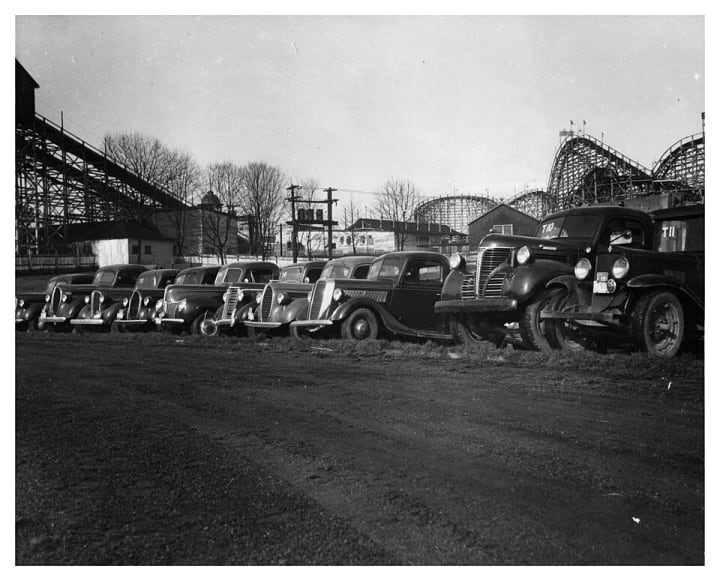
The Japanese in their area were packed into trucks and taken to Hastings Park, a livestock facility at Vancouver’s fairgrounds, where 2,000 people were crammed into bunk beds on a dirt floor.
Soon, the Shibata family was relocated to an isolated farm in British Columbia’s vast interior, where they would live the next four years. In the cold Canadian winters, they slept huddled together in a drafty stable with only a wood burning potbelly stove for warmth. The managers of the farm said they had children fighting in the war against the Axis Powers, and held no sympathy. The Shibatas were prisoners of war.
After three years of imprisonment, in 1945, the Shibatas were released from the work farm to the streets of Toronto with $40 Canadian dollars, no belongings, and a need to start their lives over again begging for food and work.
They barely got by, living day by day, until in 1946, they were detained again.

On Board
June 1946: The SS General Meigs docked in Vancouver Harbor, a repurposed American troop ship leased by the Canadian government.
Trucks transported the Shibatas from Hastings Park to the SS General Meigs.
A soldier onboard explained to Henry that his father had signed a letter stating his loyalty to Japan.
He asked for Henry’s passport. The man carefully recorded his name onto a ledger, and then stamped Henry’s passport: REVOKED in black ink. With one stamp, Canada had erased his citizenship.
On board, confused reigned. Some had been pressured to sign the deportation letter; others, including Henry's father, didn’t remember letter or know why they were there. A few willingly wanted to return to Japan after their treatment in Canada during the war.
Few were in contact with their relatives in Japan, No one knew what awaited them. They were returning to a homeland ravaged by war.
Henry described the journey as an initial “great adventure” for a child. He didn’t understand he was being returned to Hiroshima, a city reduced to rubble by the atomic bomb. Deportees were sent to their parents’ or grandparents’ places of origin,
For his parents, the reality was grim— Hiroshima was a landscape of rubble, filled with starvation, disease, despair, and radiation.
On disembarking, a doctor told them they didn’t need to worry about the atomic bomb. The previous year, the deaths from the radiation peaked about a month after the bombing, and largely ended after two months. (A 1946 U.S. Army report noted ~7,000 deaths from radiation sickness among survivors.)
The Shibatas were given a shack with no heat or running water. Henry didn’t even speak proper Japanese—just playground words and phrases from his mother.
Henry was soon bullied as a "gaijin" (outsider) by the Japanese children. When he tried to talk to the American soldiers, they were suspicious of him and called him Jap. Henry scoured the streets searching for scraps of food. Eventually, as conditions stabilized, Henry found work with the U.S. occupation forces as a translator.
Henry later told a journalist, "I lost my childhood twice—once in the internment camps, and again in Japan.”

The Politicians Who Signed the Orders
“In a pure democracy, 51% of the people can pee in the cornflakes of 49% of the people.” Jonah Goldberg, Journalist.
Hugh L. Keenleyside (Deputy Minister)
"The Japanese are not wanted in British Columbia, and as far as Canada is concerned, the general feeling is that they should be sent back to Japan." — Memo to Cabinet, 1945
Brooke Claxton (Minister of National Defence)
"No matter how honourable they may be, we can never accept them as Canadians."
— Cabinet meeting, 1945
Prime Minister Mackenzie King (to Parliament):
"It is a fact that no person of Japanese race born in Canada has been charged with any act of sabotage or disloyalty during the war. But the government has decided… that it is in the best interests of Canada that they should go.”
Defending the seizure and sale of Japanese-Canadian homes/farms:
"The government has the right to dispose of enemy property as it sees fit."
The government’s actions were rooted in baseless paranoia—no Japanese-Canadians were ever charged with disloyalty—yet the policy devastated lives. The Canadian government’s claim of “voluntary” repatriation is undermined by the coercive nature of the loyalty survey, where over 10,000 initially signed under pressure, and 4,527 later tried to revoke their applications—requests the government largely ignored.
While politicians in British Columbia promoted deportations, public opposition grew in early 1946, This led to the Cabinet referring the matter to the Supreme Court of Canada for a constitutional review. In a 5-2 decision, the Court upheld the validity of deporting Japanese nationals and naturalized subjects under the Orders, but a 4-3 split questioned the deportation of unwilling Canadian-born citizens, creating legal ambiguity.
No vote in Parliament or Supreme Court decision explicitly enabled the deportations to proceed, yet the process began in May 1946, with 3,964 individuals deported, often against their will, as many had signed repatriation requests under duress and later sought revocation (4,527 of 6,844 adults by April 1946).
By 1947, mounting public protest and legal challenges forced the Cabinet to reverse the deportation policy, allowing remaining individuals to stay, though over 4,000 had already been sent to Japan.
The government’s narrative framed this as a wartime necessity, but the absence of a clear parliamentary vote and the subsequent reversal suggest a policy driven by racial prejudice rather than legislative consensus.
In contrast, no Japanese-Americans were deported from the United States after the war’s end.
Epilogue:
Henry Shibata graduated from Hiroshima Medical School, returned to Canada in 1961 after studying surgery in the U.S., and became a Professor Emeritus at McGill University, retiring in 2015.
Other stories of deportation from the Canadian Archives:
Mary (Miyeko) Kitagawa – A Child’s Perspective
- Deported at age 9 with her family to Kagoshima.
- Memories: "We were starving. My little brother cried every night for milk, but there was none."
- Locals resented them for getting Red Cross packages (seen as "privileged").
- School bullying: "They called me 'Amerikajin' [American] and threw rocks."
- Return to Canada: Her family managed to come back in 1951, but their home and farm in BC had been sold off by the government.
Roy Ito – A Nisei’s Struggle in Postwar Japan
- A Canadian-born Nisei (second-gen), Roy was 19 when deported.
- Shock of Arrival:
- Expected "the Japan of samurai and cherry blossoms" but found bombed-out cities and famine.
- "I was a foreigner in my own blood."
- Work: Forced into manual labor (clearing rubble, farming) for food.
- Escape: In 1947, he stowed away on a ship to the U.S. and eventually made it back to Canada.
The Uprooted – The Story of the Miki Family
- Forced onto the SS General Meigs (a deportation ship) in 1946.
- Father’s Diary Entry:
- "They told us we were going 'home.' But home was Steveston, BC. Now we sleep on straw in a burned-out train station in Shizuoka."
- One daughter later wrote:
- "In Canada, we were 'Japs.' In Japan, we were 'Canadians.' We belonged nowhere."
Those Who Returned – George Tanaka
A few managed to re-enter Canada in the 1950s after policy changes.
- George Tanaka, who came back in 1956, said, "When I landed in Vancouver, I kissed the ground. But nothing was the same. Our neighbors had taken our house."
Where to Find These Stories:
Online:
Henry Shibata, interviewed by Josh Labove, in 2016.
Books:
- "The Enemy That Never Was" (Ken Adachi) – Covers deportee experiences.
- "Nikkei Legacy" (Toyoshi Tanaka) – Oral histories of displaced families.
- Enemy Alien" by Kass Sunahara
- The Exiles: An Oral History of the Displacement of Japanese Canadians"* by Muriel Kitagawa
- Tatsuo Kage’s book Uprooted Again: Japanese Canadians Move to Japan After World War II (an English version of his 1998 Japanese text)
Documentaries:
- "Tokyo Rose: An American Patriot" (touches on deportees).
- "Sleeping Tigers: The Asahi Baseball Story" (mentions post-deportation life).
Archives:
- Nikkei National Museum (Burnaby, BC) has letters from deportees.
- Library and Archives Canada holds deportation records.
About the Creator
Scott Christenson🌴
Born and raised in Milwaukee WI, living in Hong Kong. Hoping to share some of my experiences w short story & non-fiction writing. Have a few shortlisted on Reedsy:
https://blog.reedsy.com/creative-writing-prompts/author/scott-christenson/
Keep reading
More stories from Scott Christenson🌴 and writers in History and other communities.
A Family Affair
Time goes fast. It feels like just yesterday I was young, full of dreams, and convinced that life would stretch out endlessly. Now, as I look back, I realize how fleeting the moments were. And how many of life's sweetest moments are connected to our fourth sense.
By Scott Christenson🌴about a year ago in History
The 1969 Libyan Coup: How Muammar Gaddafi Overthrew the King
On September 1, 1969, Libya experienced a dramatic political transformation when a group of young military officers staged a coup that overthrew the country’s monarchy. The revolution ended the rule of King Idris I of Libya and brought a 27-year-old army officer, Muammar Gaddafi, to power. What made this event remarkable was not only its success but also the fact that it was almost entirely bloodless. Within hours, the monarchy that had ruled Libya since independence collapsed, and a new revolutionary government emerged.
By Irshad Abbasi 5 days ago in History




Comments (5)
Wooohooooo congratulations on your honourable mention! 🎉💖🎊🎉💖🎊
Another great entry. How sad it is that we never learn
It is so important to remember these stories, especially now!
It's a shame what man does to man. We're cruel.
It never seems to end. One dictator down, another rises. happy for Henry in the end after all the sadness.