
The Day the Sky Over Tehran Changed Forever
How a Single Night of Precision Strikes Reshaped Power, Fear, and the Future of the Middle East

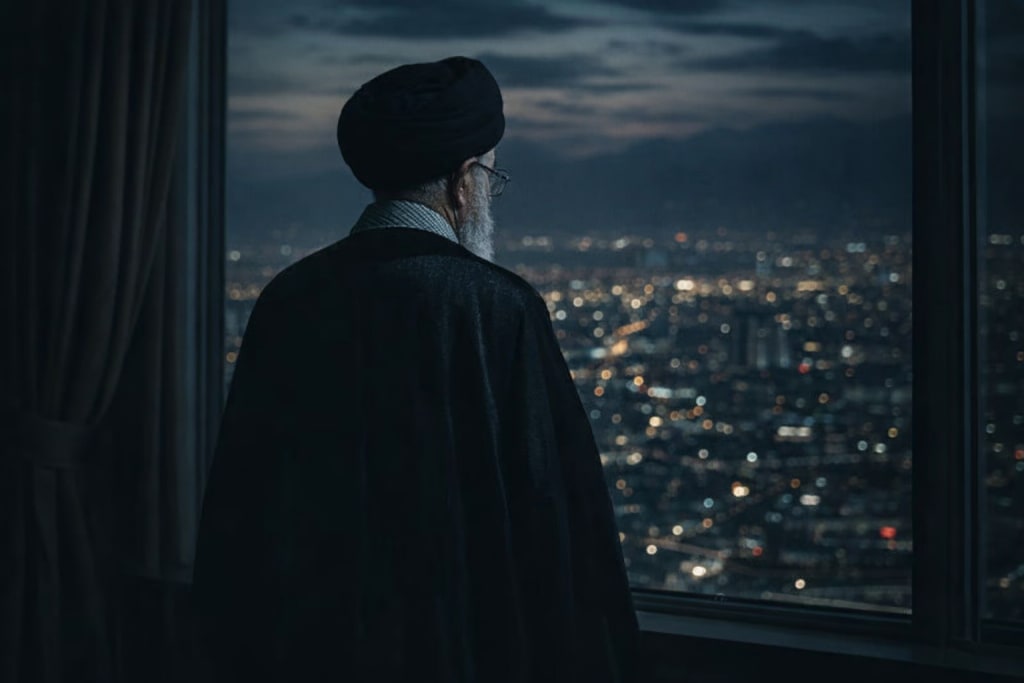
History rarely announces itself gently.
Sometimes it arrives with speeches.
Sometimes with protests.
And sometimes — with silence before the storm.
On a tense February night in 2026, the world watched as coordinated strikes by the United States and Israel reportedly targeted key military and leadership sites inside Iran.
Within hours, global media began reporting that Iran’s Supreme Leader, Ayatollah Ali Khamenei, had been killed.
For millions of Iranians — supporters and critics alike — it was not just a political event.
It was the end of an era.
The Strategic Planning Behind the Strike
Military actions of this magnitude are never spontaneous. They are built on years of tension, intelligence assessments, diplomatic failures, and strategic calculations.
Reports suggest the operation was the result of:
Long-term intelligence gathering
Surveillance of high-level military infrastructure
Cyber and satellite monitoring
Regional coordination between U.S. and Israeli defense forces
Such operations typically rely on precision airstrikes and missile systems designed to target specific compounds rather than broad civilian areas. The planning phase would likely have involved months — possibly years — of analysis regarding location, timing, and geopolitical consequences.
But strategy is one thing.
Consequences are another.
Why This Happened: The Growing Tension
Relations between Iran and both Israel and the United States have been strained for decades.
Israel has long viewed Iran’s regional influence and nuclear ambitions as an existential threat.
The United States has accused Iran of supporting armed groups across the Middle East and destabilizing regional security.
When diplomacy weakens, deterrence often takes its place.
And when deterrence fails, force becomes the language of last resort.
According to statements from U.S. President Donald Trump and Israeli Prime Minister Benjamin Netanyahu, the strikes were framed as necessary to prevent future escalation and protect national security.
But security for one nation can feel like devastation for another.
The Emotional Shock Inside Iran
In Tehran, reports described confusion before confirmation.
At first, uncertainty.
Then official acknowledgment.
Then mourning.
For supporters of the Supreme Leader, his death symbolized an attack not only on a political figure, but on national sovereignty and religious authority.
For critics inside Iran, the moment carried complicated emotions — shock mixed with fear about what might follow.
When a long-standing leader is suddenly removed, a country does not simply “move on.”
It pauses.
It trembles.
It waits.
A Region Holding Its Breath
The Middle East has always been a region where political events ripple outward.
The death of a figure like Khamenei does not stay contained within borders. It reshapes alliances, influences military postures, and tests fragile diplomatic bridges.
Will Iran retaliate more aggressively?
Will regional actors escalate?
Or will this moment, paradoxically, force negotiations that had previously failed?
History offers no easy answers.
The Human Cost Behind Political Decisions
It is easy to talk about strategy.
It is harder to talk about the human weight of decisions made in war rooms.
Every strike — no matter how precise — sends fear through ordinary households. Parents hold children closer. Markets close early. Messages go unanswered.
The psychological impact of such events can last far longer than the sound of explosions.
Geopolitical moves may be calculated in terms of deterrence and leverage.
But for civilians, they are measured in anxiety and uncertainty.
The End of an Era
Ayatollah Ali Khamenei led Iran for decades. His tenure shaped domestic policy, foreign relations, and the identity of the Islamic Republic.
His death marks:
A leadership vacuum
A test for Iran’s succession system
A pivotal turning point in U.S.–Iran–Israel relations
Moments like these become chapters in history books. But when they happen in real time, they feel less like history and more like standing at the edge of something unknown.
What Happens Next?
The future now depends on restraint — or its absence.
Political assassinations and targeted strikes rarely end conflicts. More often, they redefine them.
The question facing the region is not just who was killed.
It is whether this act reduces long-term danger — or ignites something far larger.
Final Reflection
When powerful nations make irreversible decisions, they rarely do so lightly.
But history teaches us that even calculated moves carry unpredictable consequences.
The sky over Tehran changed that night.
Whether it changed toward peace or deeper instability — only time will tell.
About the Creator
Keep reading
More stories from imtiazalam and writers in History and other communities.



Comments
There are no comments for this story
Be the first to respond and start the conversation.