
USA VS IRAN WAR 2025
Tensions Escalate into a 12-Day Conflict

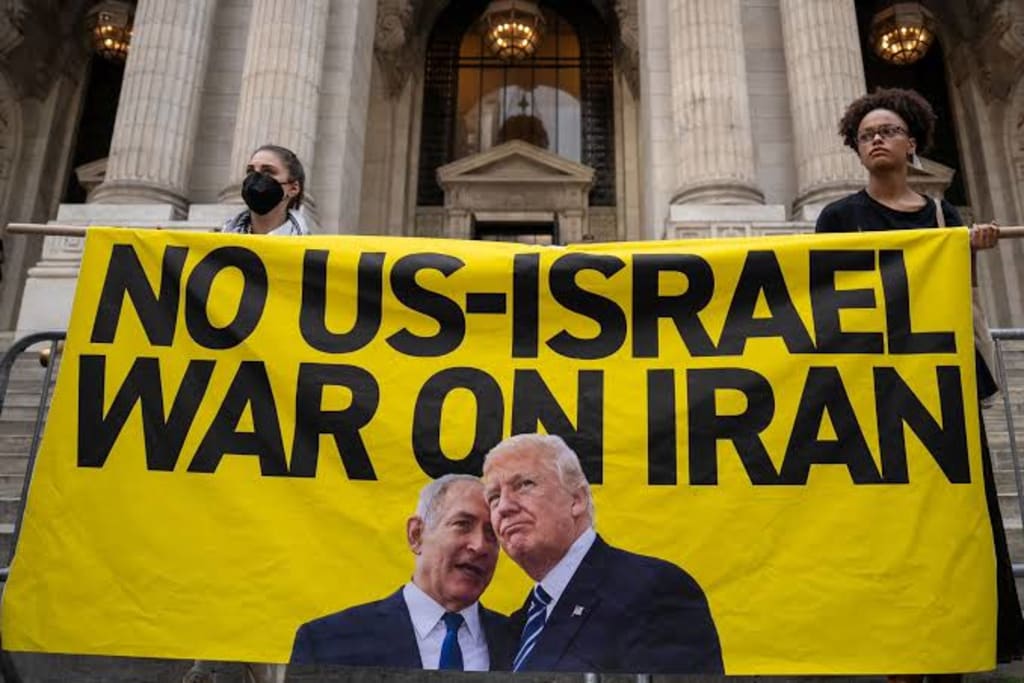
In June 2025, the Middle East witnessed a brief but intense conflict between Iran, Israel, and the United States, marking a significant escalation in long-standing regional tensions. The 12-day war, primarily driven by Israeli and U.S. military actions against Iran’s nuclear facilities, reshaped geopolitical dynamics and raised global concerns about the potential for broader conflict. This article provides an overview of the events, key points, and underlying reasons for the confrontation, drawing on recent developments.

Overview
The conflict began on June 13, 2025, when Israel launched a preemptive military operation, codenamed "Rising Lion," targeting Iranian nuclear and military infrastructure. The operation included airstrikes and covert actions aimed at crippling Iran’s nuclear program, particularly facilities at Fordow, Natanz, and Isfahan. On June 21, the United States joined the conflict, with President Donald Trump announcing "successful" strikes on these sites using advanced weaponry, including GBU-57 Massive Ordnance Penetrator bombs. Iran retaliated with ballistic missile attacks on Israel and a strike on the U.S. Al Udeid Air Base in Qatar, though it reportedly warned Qatar in advance. The war concluded with a ceasefire on June 23, mediated by regional actors like Qatar, though tensions persisted as Iran suspended cooperation with the International Atomic Energy Agency (IAEA) and issued warnings of further retaliation.

Key Points
Israeli Initiative: Israel’s operation targeted Iran’s nuclear facilities and air defenses, aiming to neutralize a perceived existential threat. The strikes reportedly killed Iranian military personnel and nuclear scientists, significantly damaging infrastructure.
U.S. Involvement: The U.S. intervened on June 21, bombing Fordow, Natanz, and Isfahan. President Trump claimed the strikes “obliterated” Iran’s nuclear program, though some reports, including intercepted Iranian communications, suggested the damage was less severe than claimed.
Iranian Response: Iran launched ballistic missiles at Israel and attacked the U.S. base in Qatar, signaling its intent to retaliate against both nations. Iranian officials, including Foreign Minister Abbas Araghchi, condemned the U.S. actions as “savage aggression” and reserved the right to further respond.
Ceasefire and Aftermath: A ceasefire was declared on June 23, with both sides claiming victory. Iranian President Masoud Pezeshkian called it a “total victory,” while Israeli Prime Minister Benjamin Netanyahu and Trump hailed the operation’s success. However, Iran’s suspension of IAEA cooperation and warnings from Supreme Leader Ayatollah Ali Khamenei underscored ongoing tensions.
Global Reactions: Latin American countries like Cuba condemned the U.S. strikes, while China criticized the U.S. for undermining diplomacy. A PBS News poll indicated that 75% of Americans feared Iranian retaliation, reflecting widespread concern about escalation.

Reasons for the Conflict
- Iran’s Nuclear Ambitions: The U.S. and Israel have long viewed Iran’s nuclear program as a threat, particularly its stockpile of 60% enriched uranium, close to weapons-grade. Israeli leaders, backed by U.S. intelligence, argued that only military action could prevent Iran from developing nuclear weapons.
- Geopolitical Rivalries: Iran’s support for groups like Hezbollah and Hamas, coupled with its anti-Israel rhetoric, heightened tensions. Israel’s preemptive strike aimed to weaken Iran’s regional influence and its ability to support proxy groups.
- U.S. Policy Shift: President Trump’s decision to abandon diplomacy, after previously withdrawing from the 2015 nuclear deal, reflected a return to a hardline stance. His administration’s use of bunker-busting bombs signaled a willingness to escalate militarily.
- Regional Power Dynamics: The conflict occurred amid broader Middle East instability, including Israel’s operations against Hezbollah and ongoing Gaza violence. Iran’s alliances with Russia and China, though not militarily supportive during the conflict, added complexity to the geopolitical landscape.
- Domestic Pressures: In Iran, hardline voices like Hossein Shariatmadari called for aggressive retaliation, while in the U.S., Trump faced pressure from both hawkish advisors and a domestic base wary of prolonged wars, influencing his push for a quick ceasefire.

About the Creator
Abubakar Khan
I am an aspiring author and creative writer on Vocal Media
passionate about crafting compelling stories, poetry, and articles across various genres.
Keep reading
More stories from Abubakar Khan and writers in History and other communities.
OPERATION SINDOOR
On the night of May 6-7, 2025, India launched Operation Sindoor, a meticulously planned military operation targeting terrorist infrastructure in Pakistan and Pakistan-occupied Jammu and Kashmir (PoJK). This operation was a direct retaliation for the April 22, 2025, Pahalgam terrorist attack, where 26 civilians, including one Nepali national, were killed by the Pakistan-based terrorist group The Resistance Front (TRF), a proxy of Lashkar-e-Taiba (LeT). The attack, marked by its deliberate targeting of Hindu men, was the deadliest civilian assault in India since the 2008 Mumbai attacks, prompting a swift and decisive response from the Indian government. Operation Sindoor not only showcased India’s military precision but also marked a significant evolution in its counter-terrorism doctrine, emphasizing preemptive and non-escalatory strikes against terrorist networks.
By Abubakar Khan6 months ago in History
Corruption's Impact On Society
Corruption, a term with a broad spectrum of definitions, is often a result of government officials overpowering legal policies. Corruption can weaken the ideal democracy within a nation, erode trust in the relationship between the government and society, and exacerbate inequality and poverty. Forms of this act can include bribery, lobbying, extortion, cronyism, nepotism, parochialism, and embezzlement. Furthermore, corruption is the deterioration of moral and ethical standards that are characterized by the prioritization of personal gain over public good, abuse of power, and a lack of transparency.
By Katherine Roteman3 days ago in History
From Desert Sands to a Global City
Long before Dubai became a city of glittering skyscrapers and global ambition, it was a quiet settlement shaped by the desert, the sea, and the determination of its people. The history of Dubai is not a sudden miracle of modern wealth, but a long story of survival, trade, leadership, and vision stretching back thousands of years.
By The best writer 2 days ago in History



Comments
There are no comments for this story
Be the first to respond and start the conversation.