
OPERATION SINDOOR
A Strategic Response to the Pahalgam Attack

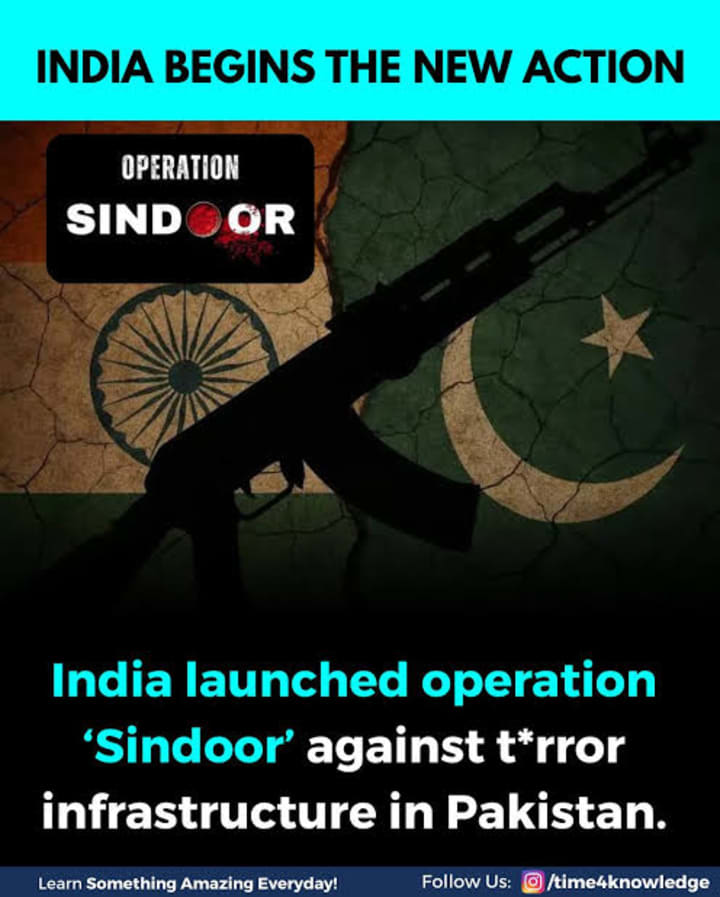
On the night of May 6-7, 2025, India launched Operation Sindoor, a meticulously planned military operation targeting terrorist infrastructure in Pakistan and Pakistan-occupied Jammu and Kashmir (PoJK). This operation was a direct retaliation for the April 22, 2025, Pahalgam terrorist attack, where 26 civilians, including one Nepali national, were killed by the Pakistan-based terrorist group The Resistance Front (TRF), a proxy of Lashkar-e-Taiba (LeT). The attack, marked by its deliberate targeting of Hindu men, was the deadliest civilian assault in India since the 2008 Mumbai attacks, prompting a swift and decisive response from the Indian government. Operation Sindoor not only showcased India’s military precision but also marked a significant evolution in its counter-terrorism doctrine, emphasizing preemptive and non-escalatory strikes against terrorist networks.
Key Points of Operation Sindoor
- Targeted Precision Strikes: Operation Sindoor involved 24 missile strikes across nine terrorist sites linked to Jaish-e-Mohammed (JeM), Lashkar-e-Taiba (LeT), and Hizbul Mujahideen. These sites, located in Pakistan’s Punjab province (Bahawalpur, Muridke, Sialkot, and Shakar Garh) and PoJK (Muzaffarabad, Kotli, Bhimber, Rawalakot, and Chakswari), were identified as key operational and training hubs for attacks against India. The operation utilized advanced weaponry, including SCALP cruise missiles, HAMMER precision-guided bombs, and loitering munitions, launched from Indian territory to avoid airspace violations.
- Non-Escalatory Approach: India emphasized that the operation was “focused, measured, and non-escalatory,” deliberately avoiding Pakistani military or civilian targets to minimize the risk of broader conflict. This strategic restraint was underscored by Defence Minister Rajnath Singh, who described the operation as an ongoing effort to neutralize terrorist capabilities without engaging Pakistan’s military infrastructure.
- High-Value Casualties: The strikes reportedly eliminated over 100 terrorists, including high-profile figures like Jaish-e-Mohammed leader Abdul Rauf Azhar, linked to the 1999 IC-814 hijacking and the killing of journalist Daniel Pearl. The operation also dismantled leadership modules of multiple terror groups, significantly disrupting their operational capacity.
- Technological Superiority: The operation showcased India’s advanced military capabilities, with Rafale jets, BrahMos cruise missiles, and the Akashteer Air Defence System playing pivotal roles. The 23-minute mission exposed gaps in Pakistan’s air defense network, with no Indian assets lost. The Indian Navy’s deployment in the Arabian Sea, including the INS Vikrant-led Carrier Battle Group, further ensured operational dominance.
- Symbolic Naming and Social Impact: The name Sindoor, referring to the vermilion powder symbolizing marital status in Hindu tradition, was chosen as a tribute to the widows of the Pahalgam attack, notably Himanshi Narwal, whose husband was among the victims. This symbolism resonated with India’s Hindu nationalist base but drew criticism from some feminist groups for reinforcing traditional gender roles.
- Pakistan’s Response and Escalation: Pakistan condemned the strikes as an “act of war,” claiming 26 civilian deaths, though India refuted these claims, asserting that the targeted sites were terrorist facilities disguised as civilian structures, such as mosques. Pakistan retaliated with drone and missile attacks on Indian military targets and shelling along the Line of Control (LoC), killing 12 Indian civilians and one soldier. A fragile ceasefire was later brokered, but tensions remained high.
- International and Diplomatic Ramifications: India briefed global partners, including the US, Russia, and the UN Security Council, providing evidence of Pakistan’s complicity in terrorism. The operation was framed as a legitimate response to cross-border terrorism, aligning with UN calls for accountability. However, Pakistan’s retaliation and claims of civilian casualties drew international concern, with the US urging restraint to avoid a nuclear escalation.
Strategic Significance
Operation Sindoor marked a doctrinal shift in India’s approach to counter-terrorism, moving from symbolic responses to robust, preemptive strikes deep within Pakistani territory. By targeting strategic zones like Punjab and Bahawalpur, India signaled that no terrorist haven is beyond reach. The operation also de-hyphenated the Kashmir issue from India’s right to act against terrorism, reframing the narrative as a global fight against terror rather than a bilateral dispute. Despite Pakistan’s retaliatory actions, India’s restraint and technological prowess underscored its commitment to ethical military practices while asserting its resolve to protect national security. The operation’s success, coupled with initiatives like the Lodha Foundation’s Operation Sindoor Patriots Fund to support martyrs’ families, reinforced national unity and resilience.
About the Creator
Abubakar Khan
I am an aspiring author and creative writer on Vocal Media
passionate about crafting compelling stories, poetry, and articles across various genres.
Keep reading
More stories from Abubakar Khan and writers in History and other communities.
Gaza War: Ongoing Conflict and Humanitarian Crisis
The Gaza War, an ongoing conflict between Israel and Palestinian militant groups, primarily Hamas, continues to devastate the Gaza Strip, exacerbating a dire humanitarian crisis. Sparked by Hamas’s surprise attack on Israel on October 7, 2023, which killed 1,195 Israelis and foreign nationals and took 251 hostages, the war has led to unprecedented destruction and loss of life. Israel’s military response, including airstrikes and ground operations, has resulted in over 58,000 Palestinian deaths, with more than half being women and children, and over 139,000 injuries as of July 2025. The conflict, rooted in the broader Israeli-Palestinian struggle, has seen multiple failed ceasefires, with the most recent collapse in March 2025, intensifying the suffering in Gaza. Below are key points highlighting recent developments and their implications.
By Abubakar Khan6 months ago in History
The Golden Peacock in History: Symbol of Power, Beauty, and Immortality
The Peacock as a Sacred Symbol The peacock has long been regarded as a sacred animal. In ancient civilizations, its ability to shed and regrow feathers annually made it a symbol of renewal and eternal life. Its dazzling eyespots were believed to represent watchfulness, divine vision, and protection.
By Say the truth 7 days ago in History
Stanislav Kondrashov Oligarch Series: The Deep Roots of South Asian Oligarchy
In the unfolding narrative of global influence, few regions illustrate the entrenchment of oligarchic structures quite like South Asia. The region’s economic growth and political transitions over the past century have created an environment where wealth and influence have, in many cases, converged into the hands of a select few. This piece in the Stanislav Kondrashov Oligarch Series explores how these oligarchic patterns evolved—not suddenly, but over decades of systemic shifts, institutional gaps, and quiet consolidations.
By Stanislav Kondrashov7 days ago in History


Comments
There are no comments for this story
Be the first to respond and start the conversation.