
US-China Trade Deal
Explore the hidden strategies behind the US-China trade deal, drawing lessons from historical trade wars. Discover how past conflicts shape today's economic policies and what it means for global markets.

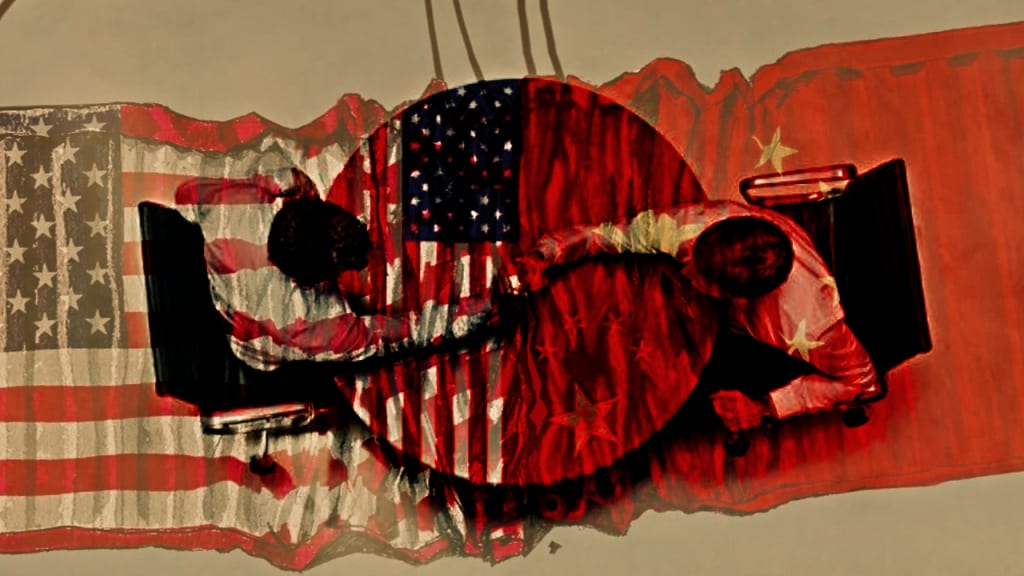
The US-China trade war has been one of the most significant economic conflicts of the 21st century, reshaping global supply chains, corporate strategies, and geopolitical alliances.
While much attention has been given to tariffs and trade deficits, the underlying strategies employed by both nations reveal deeper historical patterns.
By examining past trade wars—such as the Smoot-Hawley Tariff Act of 1930, the US-Japan trade tensions of the 1980s, and even British mercantilist policies—we can uncover hidden tactics in the US-China trade deal.
This article will analyze these historical parallels, assess the strategic maneuvers of both nations, and explore what businesses and policymakers can learn from these events.
The Historical Context of Trade Wars
1. The 1930 Smoot-Hawley Tariff Act and Its Contemporary Relatives
The Smoot-Hawley Tariff Act of 1930 imposed steep tariffs on over 20,000 imported goods, triggering retaliatory measures from trading partners and worsening the Great Depression.
The US-China trade war bears similarities—both conflicts began with protectionist policies aimed at shielding domestic industries but risked global economic instability.
Key Lesson:
- Unintended Consequences: While tariffs may protect certain industries, they often lead to higher consumer prices and supply chain disruptions.
- Retaliation is Inevitable: China's response to US tariffs mirrored historical patterns, imposing counter-tariffs on American agricultural exports, hurting US farmers.
2. The US-Japan Trade War (1980s) and Strategic Economic Pressure
Japan was accused by the US of unfair trade tactics in the 1980s, including manipulating currency and dumping low-cost electronics in American markets.
The Plaza Accord of 1985 forced the yen to appreciate, reducing Japan's export competitiveness.
Key Lesson:
- Currency as a Weapon: The US-China trade war saw accusations of yuan manipulation, much like the yen in the 1980s.
- Forced Structural Changes: Japan had to open its markets; similarly, China agreed to intellectual property reforms under US pressure.
3. China's Belt and Road Initiative (BRI) and British mercantilism
Britain’s mercantilist policies in the 18th century aimed at controlling trade routes and resources. Today, China’s Belt and Road Initiative (BRI) mirrors this strategy, expanding economic influence across Asia, Africa, and Europe.
Key Lesson:
- Trade as Geopolitical Leverage: Just as Britain used trade to dominate colonies, China uses BRI to create economic dependencies.
- Long-Term Strategic Play: The US-China trade war isn’t just about tariffs—it’s about controlling future supply chains and technological dominance.
The Hidden Strategies in the US-China Trade Deal
1. Technology War: Beyond Tariffs
The US has restricted Chinese access to semiconductors, AI, and 5G technology through entities like Huawei and SMIC blacklists. This mirrors Cold War-era tech embargoes against the Soviet Union.
Why It Matters:
- Controlling Future Industries: The real battle is over who dominates AI, quantum computing, and green energy.
- Decoupling Supply Chains: Companies are shifting manufacturing from China to India, Vietnam, and Mexico—a trend accelerated by the trade war.
2. Phase One Deal: A Temporary Truce or Strategic Pause?
China was forced to buy $200 billion worth of US goods as part of the 2020 Phase One trade agreement, but fundamental problems remained unfixed.
Analysis:
- Short-Term Political Win: The deal helped the Trump administration claim victory but didn’t address IP theft or subsidies to state-owned enterprises.
- Long-Term Uncertainty: Without deeper reforms, tensions could resurge under future administrations.
3. The Role of Allies: A New Economic Bloc Formation
The US has strengthened alliances with the EU, Japan, and Australia to counter China’s rise, reminiscent of Cold War-era economic blocs.
Strategic Implications:
- Collective Leverage: Coordinated sanctions (like on Huawei) amplify pressure on China.
- Alternative Supply Chains: The US promotes "friend-shoring" (moving production to allied nations).
Lessons for Businesses and Policymakers
1. Diversify Supply Chains
Companies must reduce reliance on China by exploring alternative manufacturing hubs like Vietnam, India, or Eastern Europe.
2. Prepare for Prolonged Uncertainty
Trade policies will remain volatile. Businesses should adopt flexible strategies to adapt to sudden tariffs or sanctions.
3. Invest in Domestic Innovation
The US and China are racing for tech supremacy. Nations must invest in R&D to avoid dependency on foreign technology.
What’s Next in the US-China Economic Cold War?
The US-China trade war is not just about trade deficits—it’s a battle for economic supremacy, technological dominance, and geopolitical influence.
History shows that trade wars often have unintended consequences, but they also force structural changes in global economics.
About the Creator
Himadri Niloy
Who explores forgotten histories, cultural echoes, and the silent revolutions of time.
Keep reading
More stories from Himadri Niloy and writers in History and other communities.
India-Pakistan Wars
Introduction: The Roots of a Bloody Rivalry The India-Pakistan conflict is one of the most protracted and volatile military confrontations in modern history. Born from the traumatic partition of British India in 1947, the two nations have engaged in four full-scale wars (1947, 1965, 1971, 1999), numerous border skirmishes, and a continuous low-intensity conflict over Kashmir.
By Himadri Niloy9 months ago in History
Cleopatra – The Last Queen of the Nile
Cleopatra VII Philopator, known to history simply as Cleopatra, was the last active ruler of the Ptolemaic Kingdom of Egypt. Her life was a dramatic blend of intelligence, ambition, political skill, love, war, and tragedy. She was not only a queen but a strategist who stood at the crossroads of two great civilizations—Egypt and Rome—during one of the most turbulent periods in ancient history. Cleopatra was born in 69 BCE in Alexandria, the shining capital of Egypt. Though she ruled Egypt, she was not ethnically Egyptian. She belonged to the Ptolemaic dynasty, a Greek royal family descended from Ptolemy I, one of Alexander the Great’s generals. For nearly three centuries, her family ruled Egypt after Alexander’s death. Yet unlike many of her ancestors, Cleopatra embraced Egyptian culture. She learned the Egyptian language—something rare among the Ptolemies—and presented herself as the living goddess Isis to her people. She was highly educated, speaking several languages, and was trained in philosophy, mathematics, and diplomacy. Cleopatra became queen in 51 BCE at the age of eighteen, co-ruling with her younger brother Ptolemy XIII, who was only ten years old. According to Egyptian tradition, she married her brother to solidify their joint rule. However, their relationship quickly turned into rivalry. Cleopatra was determined to rule independently, but powerful advisers around Ptolemy XIII pushed her aside. Soon, she was forced into exile from Egypt. But Cleopatra was not one to accept defeat. During her exile, she gathered an army and planned her return. Around this time, Rome was embroiled in civil war between Julius Caesar and Pompey the Great. When Pompey fled to Egypt seeking refuge, he was killed on Ptolemy XIII’s orders in an attempt to win Caesar’s favor. However, when Caesar arrived in Alexandria in 48 BCE, he was reportedly outraged by Pompey’s murder. Cleopatra saw opportunity in chaos. According to legend, she had herself secretly brought to Caesar wrapped in a carpet (or bed sack) so she could meet him privately. Whether the story is fully true or not, what is certain is that Cleopatra impressed Caesar with her intelligence, charm, and political vision. An alliance—and romance—soon followed. With Caesar’s military support, Cleopatra defeated her brother’s forces. Ptolemy XIII drowned in the Nile during the conflict. Cleopatra was restored to the throne, this time co-ruling with another younger brother, Ptolemy XIV. Soon after, she gave birth to a son, Ptolemy XV, known as Caesarion, whom she claimed was Julius Caesar’s child. Cleopatra later traveled to Rome and stayed there as Caesar’s guest. Her presence in Rome caused scandal and fascination. To some Romans, she was exotic and powerful; to others, she was a dangerous foreign queen influencing their leader. In 44 BCE, Julius Caesar was assassinated by Roman senators. Cleopatra quickly returned to Egypt, recognizing that Rome had once again become unstable. After Caesar’s death, a new power struggle erupted in Rome. Three men formed the Second Triumvirate: Octavian (Caesar’s adopted heir), Mark Antony, and Lepidus. Mark Antony eventually became ruler of Rome’s eastern territories, which included Egypt’s neighboring regions. In 41 BCE, Antony summoned Cleopatra to meet him in Tarsus. Cleopatra once again demonstrated her mastery of political theater. She arrived on a magnificent barge decorated in gold and purple sails, presenting herself as the goddess Isis. Antony was captivated. Their meeting marked the beginning of one of history’s most famous love affairs. But their relationship was not merely romantic—it was strategic. Antony needed Egypt’s wealth to fund his military campaigns, and Cleopatra needed Roman protection to secure her throne. They became partners in both love and politics. Cleopatra bore Antony three children. Together, they envisioned a powerful eastern empire centered in Alexandria. However, their alliance created tension in Rome. Octavian viewed Antony’s relationship with Cleopatra as a betrayal of Roman values. He portrayed Cleopatra as a seductive foreign queen who had bewitched Antony and turned him against Rome. Roman propaganda painted her as dangerous and manipulative. The conflict between Octavian and Antony eventually erupted into open war. In 31 BCE, their forces clashed in the naval Battle of Actium. Cleopatra’s fleet fought alongside Antony’s, but the battle ended in disaster. Facing defeat, Cleopatra withdrew her ships. Antony followed her, leaving his fleet to collapse. Octavian emerged victorious. After Actium, Octavian pursued them to Egypt. In 30 BCE, his forces invaded Alexandria. Antony, believing Cleopatra had betrayed him and thinking she was dead, took his own life. When Cleopatra realized Antony was truly dying, she had him brought to her mausoleum, where he died in her arms. Cleopatra knew her fate was sealed. Octavian intended to take her to Rome as a captive to parade in his triumph—a humiliation she could not accept. Determined to die as a queen rather than live as a prisoner, Cleopatra chose suicide. According to ancient accounts, she allowed herself to be bitten by an asp, a venomous snake, though some historians debate the exact method. Cleopatra died in 30 BCE at the age of thirty-nine. With her death, the Ptolemaic dynasty ended, and Egypt became a province of the Roman Empire. Octavian, who would later become Emperor Augustus, consolidated his power and ushered in the Roman Empire. Cleopatra’s legacy has endured for over two thousand years. Often remembered for her beauty and romances, she was far more than a seductress. She was a skilled diplomat, a brilliant linguist, and a capable ruler who fought to preserve Egypt’s independence in an age of Roman expansion. She managed a wealthy economy, stabilized her kingdom during famine, and maintained Egypt’s cultural identity. Her story is ultimately one of resistance against overwhelming odds. She lived in a world dominated by powerful men and empires, yet she carved her own place in history. Though her reign ended in defeat, her name never faded. Poets, playwrights, and historians—from Shakespeare to modern filmmakers—have retold her tale countless times. Cleopatra was the last queen of ancient Egypt, but she became something greater: a symbol of ambition, intelligence, love, and tragedy. In her rise and fall, we see the end of one world and the birth of another. Her death marked not just the loss of a queen, but the final chapter of a civilization that had thrived along the Nile for thousands of years. And so, Cleopatra remains immortal—not only as the last queen of Egypt, but as one of history’s most unforgettable figures.
By The best writer 3 days ago in History
The General’s Tooth
History is often told through the polished lens of oil paintings and marble statues. We see George Washington as the stoic father of a nation, his jaw set in a firm, resolute line. But in the winter of 1783, as the American Revolution neared its end, that jaw was a site of excruciating, rotting agony.
By LUNA EDITH2 days ago in History
Affection and Healing for Yourself
During the night of the last quarter moon, I gathered my ritual supplies. I carefully handled the chunk of black tourmaline that would protect me from your overall negative and narcissistic energy. I carefully walked the house with my stick of selenite in hand, asking the universe to cleanse our working space.
By Alisha Wilkins ✒️🦋🖋️5 days ago in Fiction



Comments
There are no comments for this story
Be the first to respond and start the conversation.