
India-Pakistan Wars
Dive deep into the history of India-Pakistan wars with this detailed analysis. From the 1947 Kashmir conflict to the 1999 Kargil War, explore causes, key battles, outcomes, and geopolitical impacts.

Introduction: The Roots of a Bloody Rivalry
The India-Pakistan conflict is one of the most protracted and volatile military confrontations in modern history. Born from the traumatic partition of British India in 1947, the two nations have engaged in four full-scale wars (1947, 1965, 1971, 1999), numerous border skirmishes, and a continuous low-intensity conflict over Kashmir.
This article provides an exhaustive historical and analytical breakdown of each major war, examining:
- Causes and triggers
- Key battles and military strategies
- Diplomatic interventions and peace agreements
- Long-term consequences and current tensions
By the end, you’ll have a comprehensive understanding of how these wars shaped South Asia’s geopolitics and why peace remains elusive.
1. The conflict that began it all was the First Kashmir War (1947–1948).
Historical Background
When British India was partitioned in August 1947, the princely states were given the choice to join either India or Pakistan. Jammu & Kashmir (J&K), a Muslim-majority region ruled by Hindu Maharaja Hari Singh, became the epicenter of conflict.
Key Events & Battles
Pakistan’s Tribal Invasion (October 1947)
- Pakistani-backed Pashtun tribesmen (Lashkars) invaded Kashmir, capturing Muzaffarabad, Baramulla, and moving towards Srinagar.
- Massacres and chaos ensued, with reports of atrocities against civilians.
Maharaja’s Accession to India (October 26, 1947)
- Despite the imminent collapse, Maharaja Hari Singh signed the Instrument of Accession, bringing J&K together with India.
- In a spectacular resistance, India drove the invaders back by airlifting soldiers to Srinagar.
Siege of Poonch & Indian Counteroffensive
- Pakistani forces besieged Poonch, leading to a months-long standoff.
- Indian Army launched Operation Easy, securing key routes.
UN Intervention & Ceasefire (January 1949)
The war reached a stalemate, leading to UN-mediated ceasefire on January 1, 1949.
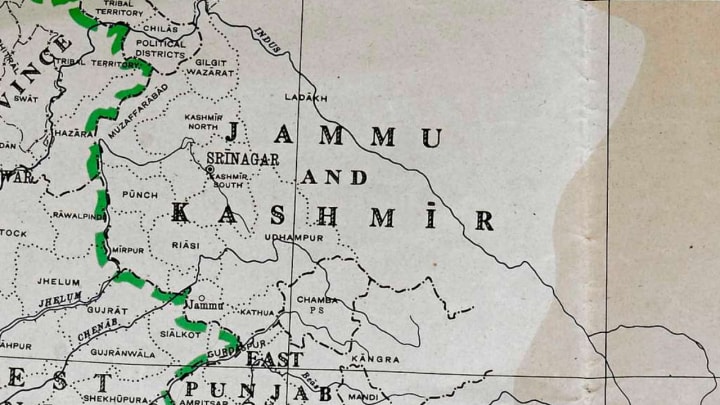
With the establishment of the Line of Control (LoC), Kashmir was divided into the following:
- Indian-administered J&K
- Pakistan-administered Azad Kashmir & Gilgit-Baltistan
Outcome & Consequences
- Kashmir dispute internationalized, with Pakistan refusing to accept accession.
- First Indo-Pak war set the stage for future conflicts, with no permanent resolution.
2. The Indo-Pakistani War of 1965 – A Clash of Titans
Background: Operation Gibraltar & Pakistan’s Miscalculation
In 1965, Pakistan’s military dictator Ayub Khan launched Operation Gibraltar, sending infiltrators into Kashmir to incite rebellion. After this failed, Pakistan moved on to a full-scale conflict.
Key Battles & Turning Points:
Operation Grand Slam (September 1, 1965)
- Pakistan attacked Akhnoor to cut off Indian supply lines in J&K.
- India retaliated by opening a new front in Punjab, shifting the war’s momentum.
Battle of Asal Uttar (September 10, 1965)
- One of history's biggest tank engagements.
- Indian forces decimated Pakistan’s Patton tanks, turning the tide.
Battle of Haji Pir Pass (August 28, 1965)
- Indian Para Commandos captured the strategic Haji Pir Pass, a key infiltration route.
Ceasefire & Tashkent Agreement (1966)
- After 17 days of intense fighting, both sides agreed to a UN-brokered ceasefire.
- The Tashkent Agreement (1966), mediated by the Soviet Union, restored pre-war boundaries but did not address Kashmir.
Aftermath & Lessons Learned
- Pakistan failed to seize Kashmir, proving India’s military resilience.
- Both nations realized the limits of conventional warfare, leading to later nuclearization.
3.India's overwhelming triumph in the war of 1971 and the establishment of Bangladesh
Background: East Pakistan’s Liberation Struggle
1970 Elections: Sheikh Mujibur Rahman’s Awami League won in East Pakistan, but West Pakistan refused to transfer power.
Operation Searchlight (March 1971): Pakistan Army launched a brutal crackdown, leading to genocide (3 million killed, 10 million refugees).
India’s Intervention & War Strategy:
Operation Chengiz Khan (December 3, 1971)
- Pakistan preemptively bombed Indian airbases, triggering war.
Eastern Front: Blitzkrieg in Bangladesh
- Indian Army + Mukti Bahini (Bengali guerrillas) advanced rapidly.
- Battle of Hilli & Battle of Basantar showcased India’s superior tactics.
Western Front: Stalemate but Strategic Wins
- Battle of Longewala (Rajasthan): 120 Indian soldiers held off 2000 Pakistani troops + 45 tanks with air support.
Naval Blockade & Fall of Dhaka
- Karachi was blocked by the Indian Navy's Operation Trident, which sunk Pakistani ships.
- December 16, 1971: Pakistan surrendered; Bangladesh was born.
Simla Agreement (1972) & Long-Term Impact
- Pakistan lost half its territory & population, a humiliating defeat.
- Simla Agreement established bilateral dispute resolution (no UN mediation).
4. The Kargil War (1999) – Pakistan’s Stealth Invasion & India’s Tough Response
Background: Pakistan’s Infiltration into Kargil
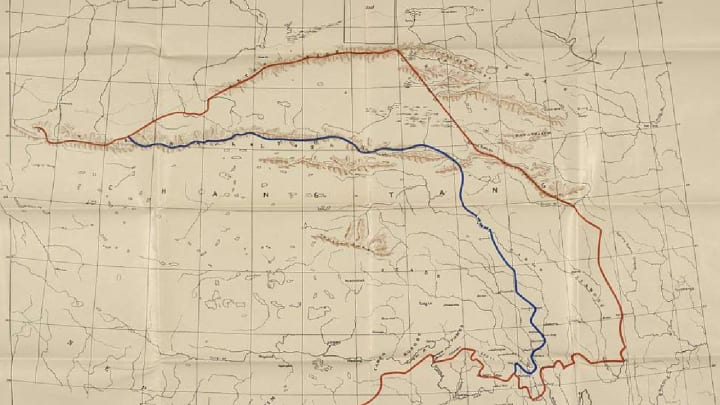
- Pakistan Army + mujahideen occupied strategic peaks in Kargil-Dras sector, aiming to cut off NH-1 (Siachen supply route).
Key Battles & India’s Counterattack:
Operation Vijay (May-July 1999)
- Indian Air Force (IAF) launched airstrikes (first use of airpower since 1971).
- Battle of Tiger Hill (July 4, 1999): Indian troops recaptured the peak in a brutal assault.
Tololing & Batalik Victories
- There was fierce close fighting between the Grenadiers and the Rajputana Rifles.
US Pressure & Pakistani Withdrawal
- Under US President Bill Clinton’s pressure, Pakistan withdrew.
- India regained all territory, but Pakistan denied official involvement.
Aftermath: Nuclear Brinkmanship & Diplomatic Fallout
- Pakistan’s credibility damaged internationally.
- India reinforced LoC surveillance, leading to fencing & increased military presence.
5. Other Major Conflicts & Ongoing Tensions
Siachen Conflict (1984-Present) – The World’s Highest Battlefield
- Operation Meghdoot (1984): India preemptively seized Siachen Glacier.
- Extreme weather & skirmishes make it one of the deadliest standoffs.
2001-2002 Military Standoff (Parliament Attack & Near-War)
- After Lashkar-e-Taiba’s attack on Indian Parliament (Dec 2001), both nations mobilized 1 million troops.
- War averted due to diplomatic efforts.
2016 Uri & 2019 Balakot Strikes
- 2016 Uri Attack: India responded with surgical strikes across LoC.
- 2019 Balakot Airstrike: After Pulwama suicide bombing (40 CRPF deaths), India bombed Jaish-e-Mohammed camps in Balakot, Pakistan.
Conclusion: Why Peace Remains Elusive
- Pakistan supports militancy in Kashmir, which continues to be the central contention.
- Nuclear deterrence prevents full-scale war but fuels proxy conflicts.
- Permanent peace has not been achieved via diplomatic initiatives (the Agra Summit, the Lahore Declaration).
What’s the future of India-Pakistan relations?
Share your thoughts below! Subscribe and follow for updates on military history in greater detail.
About the Creator
Himadri Niloy
Who explores forgotten histories, cultural echoes, and the silent revolutions of time.
Keep reading
More stories from Himadri Niloy and writers in History and other communities.
10 Unsolved Mysteries from Ancient Egypt
Ancient Egypt continues to be one of the most fascinating civilizations in history. Known for its monumental architecture, advanced knowledge of astronomy, and intricate religious beliefs, Egypt has left behind countless mysteries that continue to perplex archaeologists and historians. After decades of investigation, many questions remain.
By Himadri Niloy9 months ago in History
3 Times the Wrong Person Was in Charge at the Worst Possible Moment
Leadership matters most when things go wrong. In calm times, almost anyone can appear competent. Meetings happen. Papers get signed. Coffee is consumed with confidence. But crises are different. Crises demand judgment, experience, decisiveness, and—ideally—a basic understanding of what’s happening.
By Enoch Sagini4 days ago in History



Comments
There are no comments for this story
Be the first to respond and start the conversation.