
Unsolved Mysteries of the World
Delving into the Puzzles That Baffle Science and Imagination
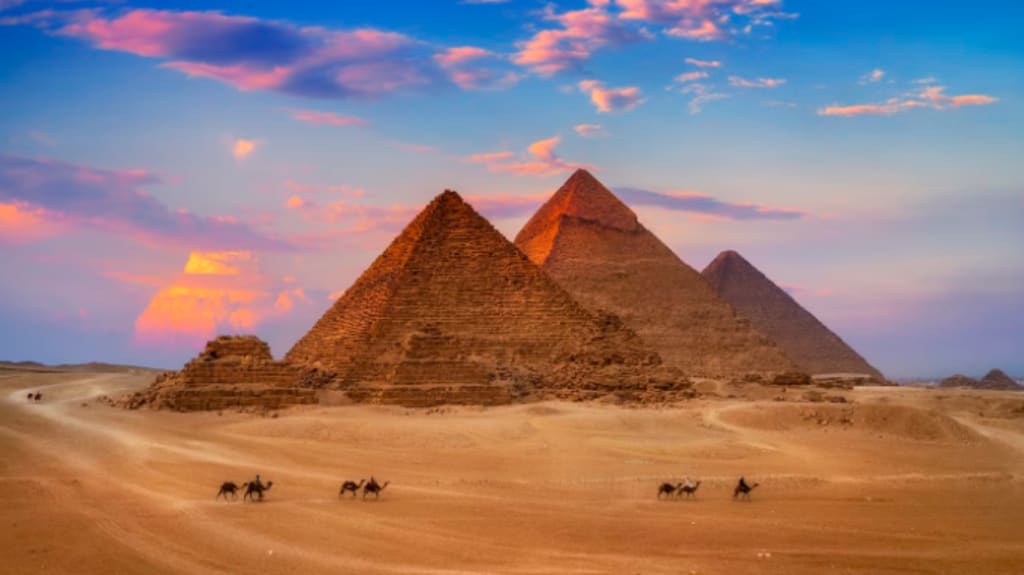
Located at the bottom of our planet lies the frigid expanse of Antarctica, considered the coldest and most unwelcoming continent globally, spanning over 5 million square miles. Antarctica is covered in ice sheets that extend more than a mile deep. The average daily temperature drops to negative 49 degrees Fahrenheit, and wind speeds can exceed 100 miles per hour. At present, the sole inhabitants of this harsh terrain are scientists stationed in scattered research stations. Conventional belief among geologists has held that due to its hostile climate, ancient humans never settled in Antarctica. However, in a surprising turn of events, satellite images from 2016 revealed an intriguing structure emerging from the ice. Some researchers speculate that it could be a man-made pyramid. Recent reports have highlighted the presence of large pyramids resembling those in Egypt, protruding from the ice and snow. These structures are not only similar to their Egyptian counterparts but also larger in size. This discovery raises questions about the possibility that our ancestors may have reached and potentially settled on the Antarctic continent.
The notion of a man-made pyramid beneath the Antarctic ice challenges mainstream geological assumptions. The proposal suggests that a pyramid-like structure could exist under the ice, leading to questions about its construction, timing, and creators. Geologists traditionally believed that Antarctica had been covered by ice for millions of years. However, evidence suggests that certain areas might have been ice-free until around 4000 BC. Polynesian cultural stories mention "culture heroes" who reached Antarctica, describing a peculiar land with white rocks emerging from the water, alongside creatures like seals and penguins. These narratives seem to align with the features of present-day Antarctica. The Polynesian people considered this area the place of their ancestors' origin. If these stories have any truth, it challenges the idea that the coldest place on Earth was once hospitable enough for human habitation.
In 2017, German geologists collected core samples from deep within the frozen Antarctic seafloor to study the continent's past climate. Surprisingly, their findings indicated the presence of plant taxa similar to those found in rainforests, suggesting a past climate resembling that of Northern Italy. This discovery challenges the prevailing assumption that Antarctica's extreme climate has always prevented vegetation growth.
While the idea of the universe "evaporating" is captivating, it remains a speculative notion that requires further research and confirmation. The theoretical framework behind this concept extends Stephen Hawking's work on black hole evaporation to suggest that all massive objects could emit Hawking radiation and gradually lose energy. However, this idea is not universally accepted and represents one of many hypotheses about the universe's fate.
In summary, the concept of the universe or Antarctic structures "evaporating" and ancient humans settling in Antarctica introduces intriguing possibilities that challenge established scientific views. These ideas are based on theoretical extensions and require rigorous investigation to determine their validity.Engineer Emir Barrez successfully uncovered the Sphinx from the desert sands, revealing the entire sculpture instead of just its disembodied head. This revelation marks a pivotal moment in our understanding of the Sphinx. Archaeologists and Egyptologists, including myself, believe that the Sphinx was carved around 2500 BC as part of King Khafre's funerary complex. However, there's significant disagreement among scholars about its origins and creation date. A crucial historical document related to the Sphinx's dating is the Inventory Stela. This stone commemorates Pharaoh Khufu's restoration of the Sphinx after a lightning strike. Notably, Khufu predates Khafre, the pharaoh typically associated with building the Sphinx. The Inventory Stela's inscription, dating back around 4,600 years, suggests that the Sphinx is older than conventionally believed, with the ancient Egyptians adopting, repairing, and venerating it. Some researchers even propose that the Sphinx could predate recorded human history.
During my initial visit to the Sphinx in the summer of 1990, I focused on studying erosional features on the sculpture's body and compared them to erosional patterns on the Giza plateau. The results were intriguing: while the plateau exhibited classic wind erosion, the Sphinx's body and enclosure walls displayed signs of water weathering. This observation was puzzling because the Sphinx sits on the edge of the Sahara Desert, which has been dry for thousands of years. This led me to conclude that the body of the Sphinx and its enclosure were subjected to rainfall precipitation, a phenomenon inconsistent with the surrounding desert's arid conditions.
About the Creator
The Year 1991 in Review: Fun Facts, Trivia, and Historic Highlights
This quick read is a collection of fun facts, trivia, and historic events from the year 1991. Discover the year’s top news stories, most influential people, sports facts, historic firsts, entertainment trivia, and much more.
By Gregory DeVictor4 days ago in History



Comments
There are no comments for this story
Be the first to respond and start the conversation.