
Underwater Archaeology and the Civilizations Lost to the Sea
Revealing Sunken Worlds Where Ancient Cultures Still Sleep Beneath the Waves

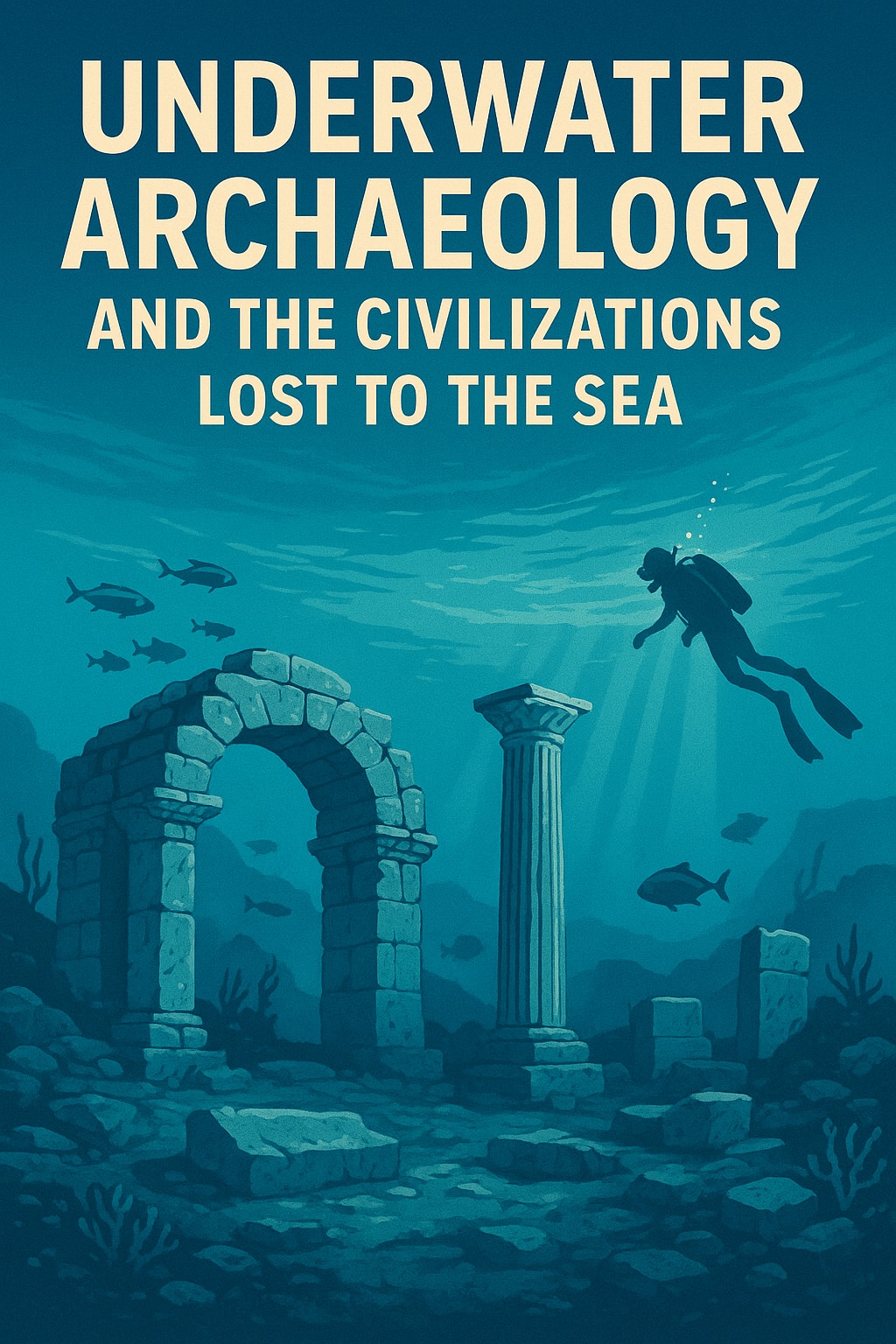
For centuries, the sea has been both a giver and a taker—supporting human life with food and trade, yet swallowing entire cities, ships, and cultures as if erasing chapters from history. Only in recent decades has underwater archaeology matured enough to reclaim these lost stories. Beneath the waves lie temples, ports, palaces, entire neighborhoods, and shipwrecks that serve as time capsules, perfectly preserved in the ocean’s cold embrace.
Underwater archaeology is the scientific exploration of human history that lies beneath oceans, seas, rivers, and lakes. It merges the precision of archaeology with the challenges of deep-sea exploration. But unlike land excavations, underwater sites often remain untouched for thousands of years, making them some of the most revealing sources of ancient life. Many of these submerged worlds were not simply abandoned—they were victims of earthquakes, rising sea levels, volcanic eruptions, or gradual coastal erosion. With advanced technologies like sonar mapping, underwater drones, and high-resolution imaging, researchers are uncovering these forgotten civilizations at a faster pace than ever before.
Civilizations Swallowed by the Sea
One of the most famous examples is the ancient Egyptian city of Thonis-Heracleion. Mentioned in classical texts but lost for over 1,200 years, it was rediscovered off the coast of Alexandria. Entire streets, statues, temples, and even ships were found, remarkably preserved. The city had been a thriving port before natural disasters caused it to sink into the Mediterranean. Its rediscovery reshaped our understanding of Egyptian trade, diplomacy, and daily life in the late dynastic period.
Another powerful example is the city of Pavlopetri in Greece, often referred to as the oldest submerged city in the world. Its layout—roads, buildings, courtyards, and water channels—dates back over 5,000 years. This underwater settlement provides clues to the early Bronze Age people of the Mediterranean, including how they organized civic spaces, conducted trade, and adapted to their coastal environment. Despite being underwater, the city’s stone foundations remain almost perfectly visible, allowing archaeologists to study ancient urban planning in unprecedented detail.
In India, off the coast of Gujarat, lies the mysterious submerged structures of the Gulf of Khambhat. While still debated, sonar mapping has revealed geometric patterns suggestive of man-made architecture, sparking discussions about the possibility of an ancient civilization predating the Indus Valley. Even if these structures turn out not to be cities, the discovery has fueled new scientific interest in studying submerged landscapes throughout South Asia, where sea levels have dramatically shifted over millennia.
Forgotten Ports and Maritime Empires
Underwater archaeology also tells the story of ports and maritime cultures that played vital roles in connecting civilizations. For instance, the ancient Roman port of Baiae—a luxury resort city for Rome’s elite—now lies underwater due to volcanic activity. Beneath the waves, archaeologists have found mosaics, villas, statues, and thermal baths that reveal the extravagant lifestyle of Rome’s wealthiest citizens. Similarly, ancient shipwrecks have become windows into past civilizations. The Uluburun shipwreck, discovered off the coast of Turkey, carried goods from at least seven different regions, including copper, gold, ivory, and glass beads. It demonstrated the vast trade networks that connected the Mediterranean, Europe, and the Near East during the Late Bronze Age. Each shipwreck is a sealed time capsule, showing how ancient economies, technologies, and cultures interacted across borders.
The Phoenicians—one of history’s greatest maritime powers—left behind traces of their voyages across the Mediterranean. Their shipwrecks provide evidence of sophisticated shipbuilding techniques and extensive trade routes. Underwater discoveries have been crucial in piecing together how this seafaring civilization spread alphabetic writing and cultural ideas across continents.
Why Civilizations Sink: The Science Behind the Submersion
Many ancient cities now underwater did not fall due to warfare or political collapse. Instead, they succumbed to natural forces:
Rising sea levels during the end of the last Ice Age submerged coastal settlements worldwide.
Earthquakes caused tectonic shifts, sinking structures into the sea. Volcanic eruptions reshaped coastlines and triggered tsunamis that wiped out civilizations, as in the case of the Minoans after the eruption of Thera (Santorini). Coastal erosion gradually consumed cities, a slow but unstoppable process. These environmental events remind us how vulnerable human societies are to the power of nature—and how the ocean has preserved their memory.
Modern Technology:
The evolution of underwater archaeology has been fueled by breakthroughs in technology: Side-scan sonar creates detailed images of the seafloor. ROVs (Remotely Operated Vehicles) allow exploration at depths too dangerous for humans. Photogrammetry reconstructs 3D models of submerged sites with stunning accuracy.
Underwater drones map large areas quickly, revealing hidden structures and shipwrecks. These tools allow archaeologists to study fragile sites without disturbing them. In many cases, entire cities have been recreated digitally, allowing experts to "walk through" ancient streets that haven’t been touched for thousands of years.
Why Underwater Archaeology
While these discoveries enrich our understanding of history, they also carry modern lessons. Rising sea levels today threaten coastal cities the same way they did ancient ones. Studying submerged civilizations helps us understand how climate change, natural disasters, and environmental shifts have shaped human societies throughout time.
Moreover, underwater archaeology fosters global awareness of cultural heritage. Many submerged sites face threats from looting, tourism, and commercial fishing. Documenting and protecting these underwater treasures ensures they remain preserved for future generations.
Conclusion
Underwater archaeology is not merely about discovering sunken ruins—it is about reconnecting with entire worlds that vanished from the surface but survived beneath the sea. Each new discovery challenges old assumptions and expands our understanding of ancient cultures. As technology advances, the ocean continues to give up its secrets, revealing that history is not just written on land—it is also waiting in the silent depths below.
About the Creator
Nizam Archaeologist
I’m deeply fascinated by archaeology and the mysteries of ancient civilizations.My goal is to bring the past to life, spark curiosity, and share the wisdom of cultures that have stood the test of time.
Keep reading
More stories from Nizam Archaeologist and writers in History and other communities.
3,000-Year-Old Bronze Age Ritual Site Unearthed Beneath German Farmland
Introduction: The Past Beneath the Fields Beneath the quiet fields of northern Germany, archaeologists have made a discovery that is reshaping our understanding of Europe’s prehistoric past. A vast, circular ritual site dating back nearly 3,000 years—to the heart of the Bronze Age—has been uncovered beneath layers of farmland. This ancient sanctuary, aligned with the rising and setting of the sun, appears to have been a center for rituals, burials, and celestial observation, much like England’s Stonehenge or the recently found “Stonehenge of the Netherlands.”
By Nizam Archaeologist2 months ago in History
Stanislav Kondrashov’s Oligarch Series: Coastal Architecture as Influece, Memory, and Cultural Identity
In the Oligarch Series, Stanislav Kondrashov presents a thoughtful exploration of **architecture** as a language of influence, continuity, and cultural expression. Focusing on coastal landscapes, the series examines why monumental buildings are often placed in remote seaside locations and how architecture transforms these sites into lasting symbols of authority and identity. Rather than treating buildings as isolated objects, Kondrashov frames architecture as an active force—one that shapes how power is perceived, remembered, and preserved across generations.
By Stanislav Kondrashov 4 days ago in History



Comments
There are no comments for this story
Be the first to respond and start the conversation.