
Title: The United States and Pakistan: A Political Love Story.
"Navigating Diplomatic Complexities for Mutual Gain"

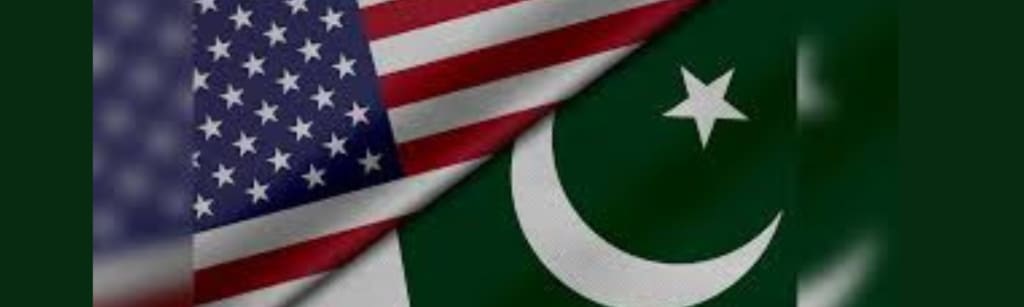
Introduction:
Love stories are often associated with romance, passion, and affection. However, love can take various forms, and in the realm of international politics, relationships between nations can be characterized by complex emotions, strategic interests, and diplomatic entanglements. The connection between the United States and Pakistan is one such example of a unique love story that has unfolded over the decades, with its fair share of highs and lows. This article will delve into the political angle of the love story between America and Pakistan, tracing its origins, examining key events, and exploring the underlying dynamics that have shaped their relationship.
I. The Origins: Mutual Interests and Cold War Dynamics
The roots of the American-Pakistani love story can be traced back to the early years of Pakistan’s independence in 1947. During the Cold War, the United States sought to counter Soviet influence in the region, leading to its engagement with Pakistan. The shared interest in containing communism became the foundation for a strategic alliance, with the United States providing military assistance and economic aid to Pakistan. This marked the beginning of a complex relationship built on mutual interests and strategic calculations.
II. The Rollercoaster Ride: From Allies to Estrangement
a) The Soviet-Afghan War and the Mujahideen:
The relationship between America and Pakistan reached its pinnacle during the Soviet-Afghan War in the 1980s. Pakistan, serving as a frontline state, became a key partner for the United States in supporting the Afghan Mujahideen against Soviet forces. The CIA, in collaboration with Pakistan’s Inter-Services Intelligence (ISI), provided extensive support to the Mujahideen, including weapons, training, and financial aid. This period marked the zenith of the American-Pakistani love affair, driven by their common goal of defeating the Soviet Union.
b) Post-9/11 Realignment and Diverging Interests:
The events of September 11, 2001, dramatically altered the trajectory of the American-Pakistani relationship. As the United States launched its War on Terror, it sought Pakistan’s cooperation in combating Al-Qaeda and the Taliban in neighboring Afghanistan. However, the subsequent years revealed a growing divergence of interests between the two countries. While the United States expected Pakistan to act decisively against terrorist elements, Pakistan’s approach remained nuanced, driven by its strategic considerations. This divergence strained the relationship and led to periods of estrangement and mistrust.
III. The Balancing Act: Counterterrorism and Regional Dynamics
a) Counterterrorism Cooperation:
Despite the challenges, counterterrorism cooperation has remained a significant component of the American-Pakistani relationship. The United States has provided substantial military aid and financial assistance to Pakistan, aiming to build its capacity to tackle terrorist organizations. Simultaneously, Pakistan has made efforts to address American concerns by conducting military operations against extremist groups within its borders. The love story between the two nations, though strained, has demonstrated resilience in the face of shared security challenges.
b) Regional Dynamics and Geopolitical Considerations:
The American-Pakistani relationship is also influenced by regional dynamics and geopolitical considerations. Pakistan’s proximity to India and its historical rivalry with its neighbor add another layer of complexity. The United States has often found itself walking a tightrope, attempting to maintain a balance between its alliance with India and its engagement with Pakistan. These dynamics further complicate the love story, as strategic interests, arms sales, and nuclear proliferation concerns come into play.
IV. The Future of the Love Story: Navigating Challenges and Opportunities
The future trajectory of the American-Pakistani love story remains uncertain, with both challenges and opportunities on the horizon. The United States' gradual withdrawal from Afghanistan has implications for the region, and Pakistan’s role in achieving stability in Afghanistan will be crucial. It presents an opportunity for both nations to reevaluate their relationship and rebuild trust.
Economic cooperation and trade can also play a significant role in shaping the love story between America and Pakistan. Enhancing economic ties can foster mutual understanding and pave the way for a more stable and sustainable relationship. Addressing issues such as human rights, democracy, and governance will also be crucial for the long-term success of the love story.
Conclusion:
The political love story between the United States and Pakistan has witnessed dramatic highs and lows, driven by strategic interests, regional dynamics, and shared security concerns. From their initial alignment during the Cold War to the complexities of the post-9/11 era, the relationship has endured numerous challenges. While strains and differences persist, both nations continue to engage with each other, recognizing the importance of cooperation in addressing shared threats. The future of their love story will depend on their ability to navigate these challenges, adapt to evolving regional dynamics, and build a foundation of trust and mutual respect.
About the Creator
Keep reading
More stories from Apurva Tibrewal and writers in History and other communities.
Augmented Reality vs. Virtual Reality: Which Will Shape the Future?
Introduction As technology continues to advance at an exponential rate, the lines between the real world and digital experiences are blurring. Augmented Reality (AR) and Virtual Reality (VR) are two transformative technologies that are revolutionizing various industries and shaping the future of human interaction with digital content. In this article, we will explore the key differences between AR and VR, examine real-life examples of their applications, and discuss their potential impact on our lives. Join us on this exciting journey into the realm of augmented reality and virtual reality!
By Apurva Tibrewal3 years ago in Geeks
3 Times Ordinary Objects Did Something Deeply Unsettling
Objects surround us every day. They make life easier, more comfortable, or more entertaining. A chair supports us, a mirror shows us our reflection, and a toaster browns our bread with consistent reliability. Most of the time, they behave exactly as expected.
By Enoch Sagini5 days ago in History
When Allies Disagree: How Global Partnerships Are Being Redefined
When Allies Disagree: How Global Partnerships Are Being Redefined For much of the modern era, global alliances appeared firm and predictable. Powerful countries formed blocs, promised mutual support, and stood together during times of war and crisis. But in today’s world, those alliances are changing. Recent disagreements between long-standing partners show that global cooperation is no longer based on automatic loyalty—it is increasingly shaped by national interests, public opinion, and long-term stability.
By Wings of Time 4 days ago in History




Comments
There are no comments for this story
Be the first to respond and start the conversation.