
Thomas Alva Edison: The Wizard of Menlo Park
Thomas Alva Edison

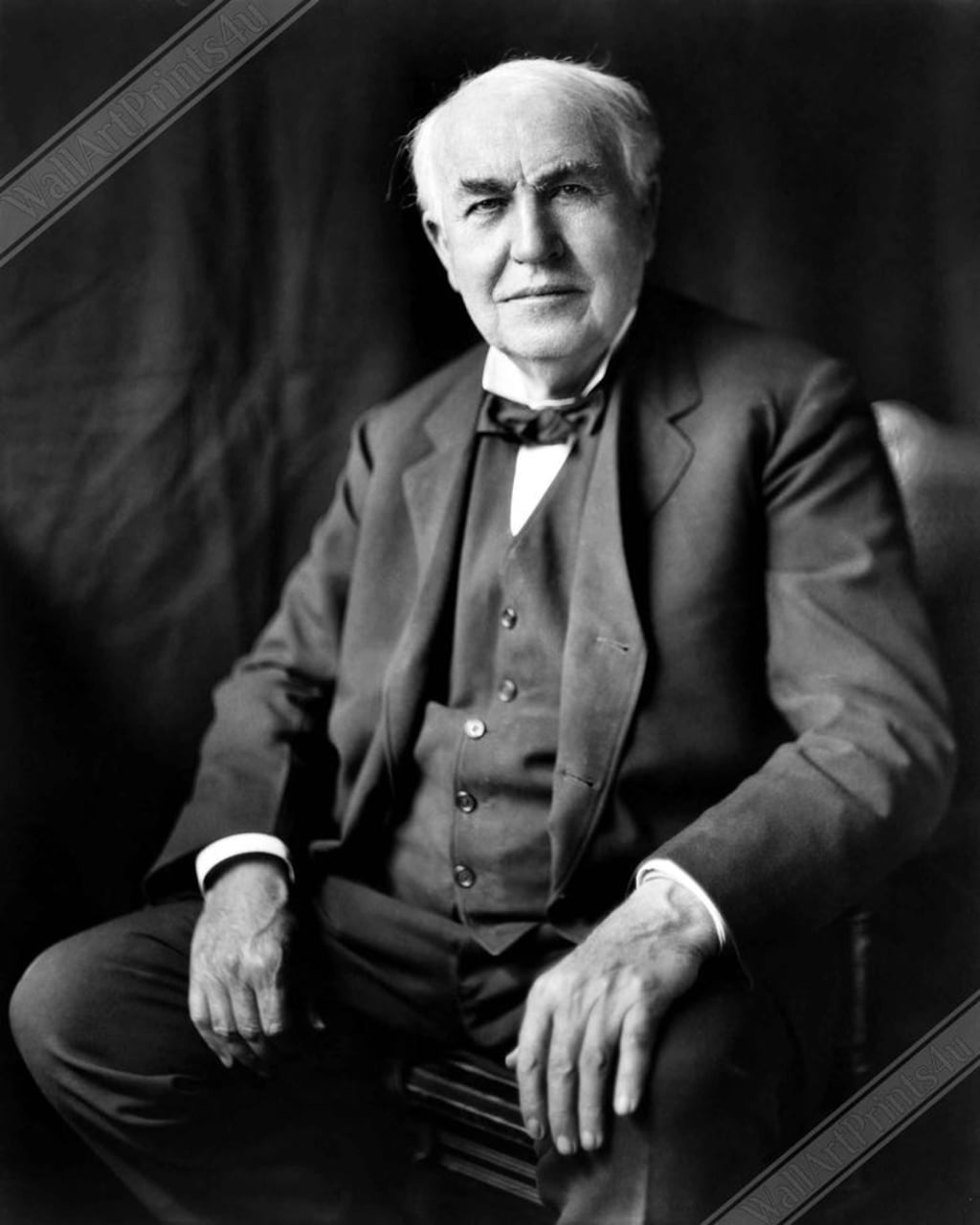
Thomas Alva Edison: The Wizard of Menlo Park
Introduction
Thomas Alva Edison, born on February 11, 1847, in Milan, Ohio, remains one of the most prolific inventors in history. Known as the "Wizard of Menlo Park," Edison is credited with transforming modern life through his groundbreaking innovations, which laid the foundation for contemporary technology. His inventions, including the phonograph, electric light bulb, and motion picture camera, continue to impact our daily lives. This article explores Edison’s life, achievements, and legacy.
Early Life and Education
Edison was the youngest of seven children in a modest family. His father, Samuel Ogden Edison Jr., was an exiled political activist from Canada, and his mother, Nancy Matthews Elliott, was a school teacher who significantly influenced Edison’s early education.
Edison’s formal education lasted only a few months. His teachers considered him a slow learner, leading his mother to homeschool him. She nurtured his curiosity, allowing him to explore books and conduct experiments. Edison developed a voracious appetite for learning, particularly in science and mechanics, which would later define his career.
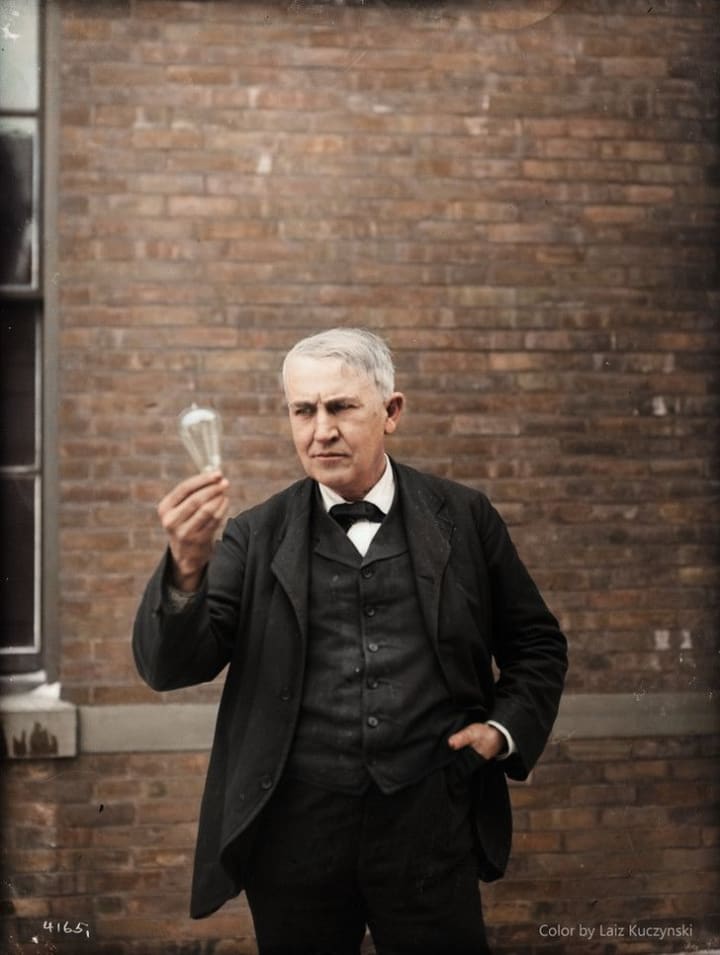
First Steps into Invention
At the age of 12, Edison started working as a newsboy on trains to support his family financially. During his spare time, he conducted experiments in a small lab he set up in a train baggage car. One notable incident during this period was an accidental chemical fire, which led to his dismissal from the job.
Despite this setback, Edison’s ingenuity shone when he saved a stationmaster’s child from being hit by a train. In gratitude, the stationmaster taught Edison telegraphy. By 15, Edison was proficient in telegraphy and began experimenting with ways to improve communication systems.
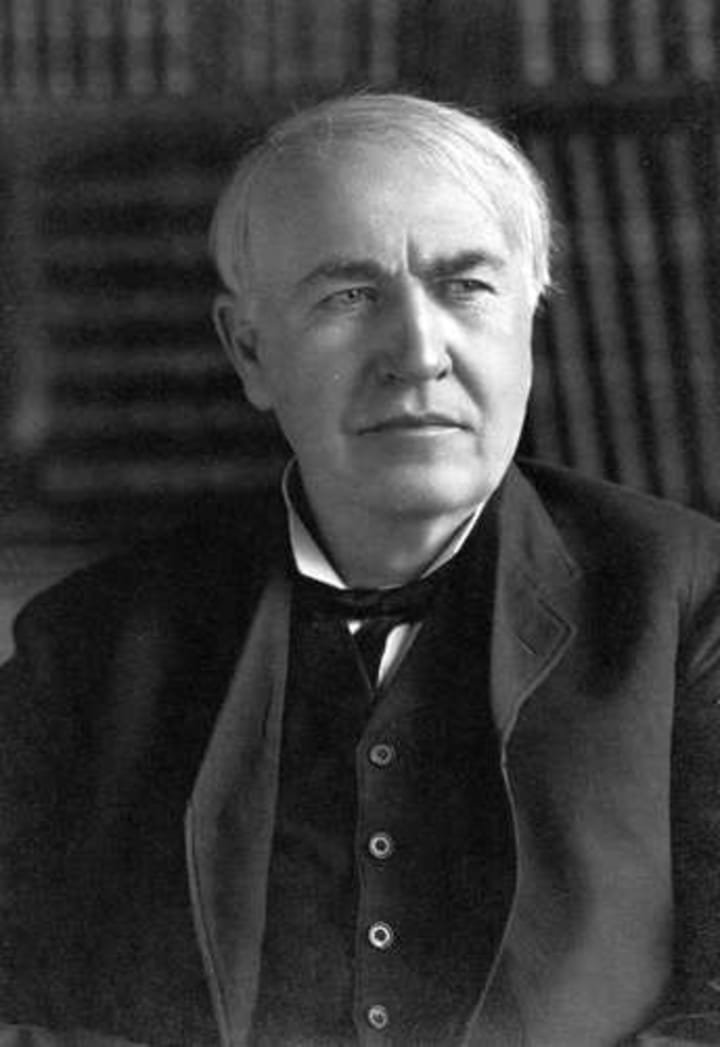
Rise to Fame
Edison’s career as an inventor took off in 1869 when he patented his first significant invention: the Universal Stock Ticker. This device revolutionized the stock market by transmitting stock prices electronically, earning Edison $40,000. He used this money to establish his first lab in Newark, New Jersey.
The Menlo Park Laboratory
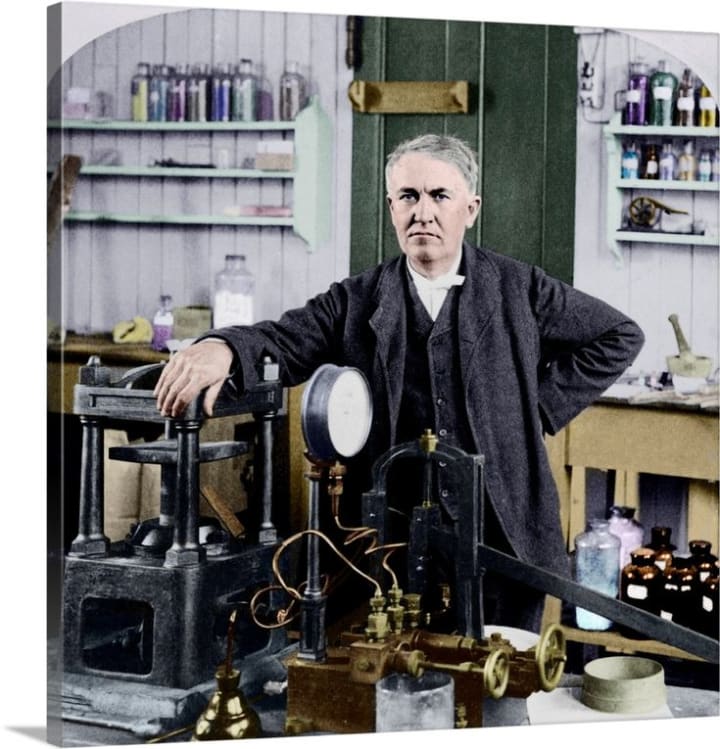
In 1876, Edison opened his famous Menlo Park laboratory in New Jersey. This facility became the world’s first industrial research lab, where teams of scientists and inventors collaborated under Edison’s guidance. It was at Menlo Park that Edison earned the nickname "The Wizard of Menlo Park."
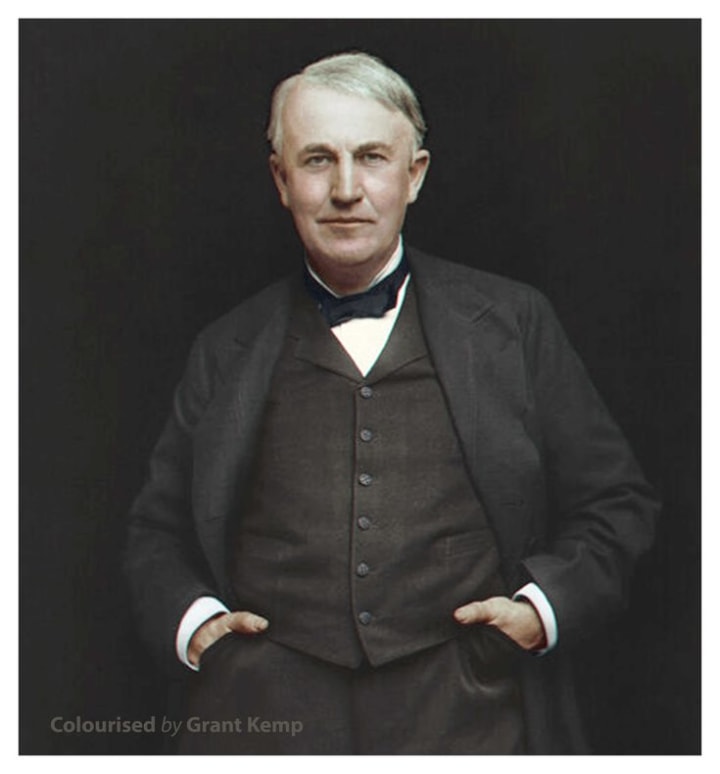
Major Inventions
The Phonograph
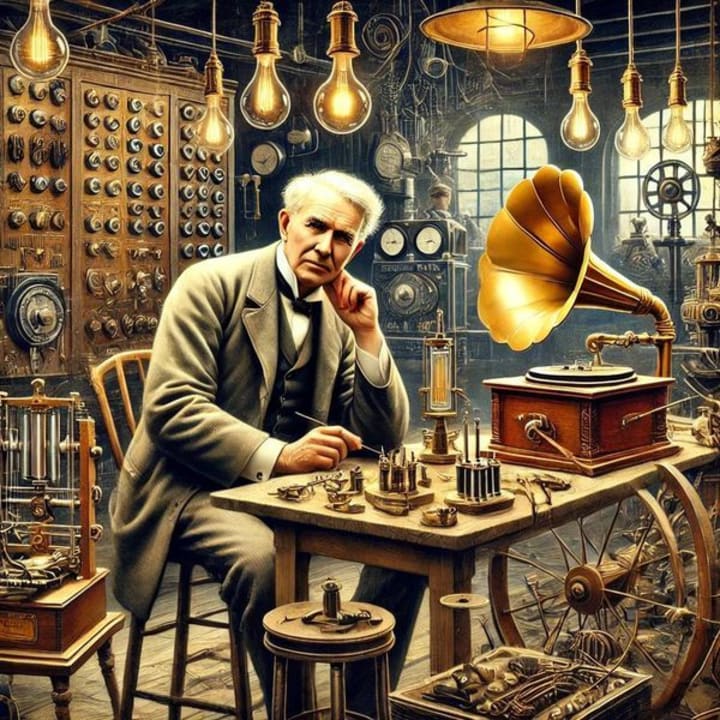
Edison invented the phonograph in 1877, marking the first time sound could be recorded and played back. This groundbreaking invention captivated the public and established Edison as a leading figure in innovation. Initially used for dictation and music, the phonograph eventually laid the groundwork for the music and entertainment industries.
The Electric Light Bulb
Edison’s most celebrated invention is the electric light bulb. Although not the first to work on electric lighting, Edison refined existing designs to create a practical, long-lasting, and affordable bulb. In 1879, he successfully demonstrated a carbon-filament bulb that could burn for hours. This invention revolutionized modern life by making electric lighting accessible to homes and businesses.
The Motion Picture Camera
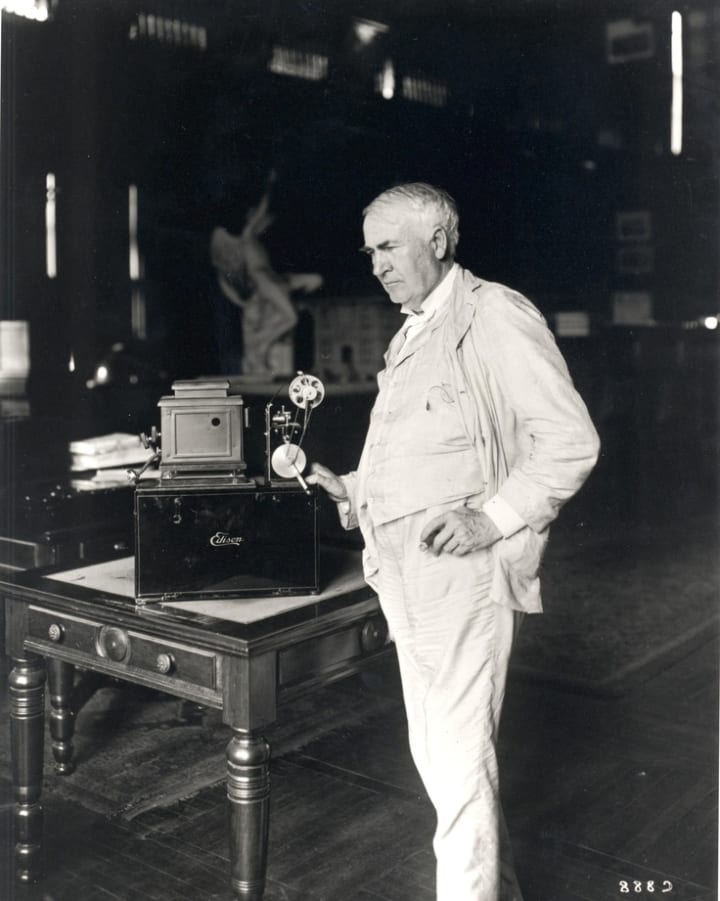
In the 1890s, Edison and his team developed the kinetoscope, an early motion picture viewing device. This innovation paved the way for the modern film industry. Edison’s advancements in motion picture technology included improvements in projectors and film reels, making movies a popular form of entertainment.
Edison and Business Ventures
Edison was not just an inventor but also a shrewd businessman. He founded several companies, the most notable being General Electric (GE), which remains one of the largest multinational corporations today. Edison understood the importance of commercializing his inventions, ensuring they reached the public effectively.
However, his business practices were sometimes controversial. He was known for fierce competition with rivals, particularly Nikola Tesla. The rivalry, famously known as the "War of Currents," involved Edison’s direct current (DC) system competing against Tesla and George Westinghouse’s alternating current (AC) system. Although AC eventually became the standard, Edison’s contributions to electrical engineering remain foundational.
Challenges and Criticisms
Edison’s career was not without challenges. He faced failures and criticism throughout his life. For instance, his venture into mining and ore milling proved unsuccessful, resulting in significant financial losses. Additionally, his treatment of employees and rivals has been scrutinized, with some accusing him of taking credit for others’ work.
Despite these challenges, Edison’s resilience and determination kept him focused on innovation. He famously said, "I have not failed. I've just found 10,000 ways that won't work," illustrating his perspective on setbacks.
Legacy
Thomas Edison’s contributions to science, technology, and industry have left an indelible mark on history. He held 1,093 patents in the United States alone, a testament to his creativity and persistence. His inventions laid the groundwork for advancements in energy, communication, and entertainment, shaping the modern world.
Cultural Impact
Edison’s life story has inspired countless inventors and entrepreneurs. His dedication to problem-solving and innovation serves as a model for scientific inquiry and creativity. Museums and institutions worldwide celebrate his legacy, with his Menlo Park laboratory preserved as a historical site.
Educational Contributions
Edison’s approach to learning through experimentation has influenced educational practices, emphasizing hands-on experiences and critical thinking. His belief in the power of curiosity and hard work continues to resonate in STEM (Science, Technology, Engineering, and Mathematics) education today.
Conclusion
Thomas Alva Edison was more than an inventor; he was a visionary who transformed ideas into reality. His work not only improved life in his era but also laid the foundation for future technological advancements. Edison's journey from a curious boy in Ohio to a global icon of innovation demonstrates the power of imagination, perseverance, and relentless pursuit of knowledge. His legacy endures, reminding us that progress is driven by those who dare to dream and act.
About the Creator
Mahalakshmi
"My name is Mahalakshmi, and I'm passionate about storytelling in all its forms. From fiction to real-life tales, I love writing all types of stories that inspire, entertain, and spark imagination. Join me on this creative journey!"
Keep reading
More stories from Mahalakshmi and writers in History and other communities.
Alexander Graham Bell: The Life and Legacy of a Visionary Inventor
Alexander Graham Bell: The Life and Legacy of a Visionary Inventor Early Life and Education Alexander Graham Bell was born on March 3, 1847, in Edinburgh, Scotland, into a family deeply invested in the study of communication and elocution. His father, Alexander Melville Bell, was a renowned speech therapist and the inventor of "Visible Speech," a system to teach the deaf how to speak. Bell's mother, Eliza Grace Symonds, was deaf, which profoundly influenced his interest in helping the hearing-impaired.
By Mahalakshmiabout a year ago in History
The London Smog of 1952: The "Great Smog" that killed 12,000 people in four days of absolute, yellow darkness.
The taste of a copper penny coated in rotten egg yolk. That was the first warning. It was Friday, December 5, 1952. A blind man led a sighted businessman across Euston Road, tapping his white cane against the invisible curb. The businessman couldn't see his own shoes. The air had turned into a thick, yellowish-green soup that smelled of burning hair and raw sulfur. It was not a fog. It was an executioner. Over the next four days, twelve thousand Londoners would choke to death in their own beds, murdered by the very fireplaces they lit to keep warm.
By The Chaos Cabineta day ago in History



Comments
There are no comments for this story
Be the first to respond and start the conversation.